
Are AI Toys Safe for Kids? Privacy Risks and Parent Checks
Are AI toys safe for kids? Explore the evidence, privacy risks, age advice and practical parent checks for recording, controls, subscriptions and security.
Contents
- What counts as an AI chatbot toy?
- What the research and recent coverage actually establish
- Product tests found problems, not a universal failure rate
- Developmental concerns need careful wording
- Calls for a ban are not the same as a ban
- Before buying: a practical parent checklist
- Ask for evidence behind learning claims
- Privacy compliance does not certify conversation safety
- If your family already owns one
- When to pause use and contact the company
- Sources and image credit
A toy's friendly voice, soft body or “educational” label does not establish that its AI conversations are safe for children. Before buying an internet-connected chatbot toy, check the intended age, what it records, how parents can delete data, the controls available and the cost of keeping it working. If those answers are unclear, postpone the purchase.
Safety is also not one question. A product can meet physical requirements while raising separate concerns about its conversations, personal data or the relationship it encourages with a child. Conversely, findings from a few tested products do not prove that every electronic or robotic toy behaves the same way.
Reviewed on 6 November 2026. This guide focuses on conversational AI toys, with UK regulatory context and separately identified U.S. privacy guidance. Horus Valley has not conducted hands-on tests of the products discussed.
What counts as an AI chatbot toy?
Start with what the product actually does. A toy that plays a fixed recording, a programmable robot and an internet-connected companion generating open-ended replies are different products. The word “smart” alone will not tell you which one you are buying.
Ask whether conversations are generated live, whether speech goes to a remote service, whether the toy remembers previous sessions and which features stop without an account or internet connection. A plush cover can conceal a complicated service involving an app, a toy manufacturer and an AI provider.
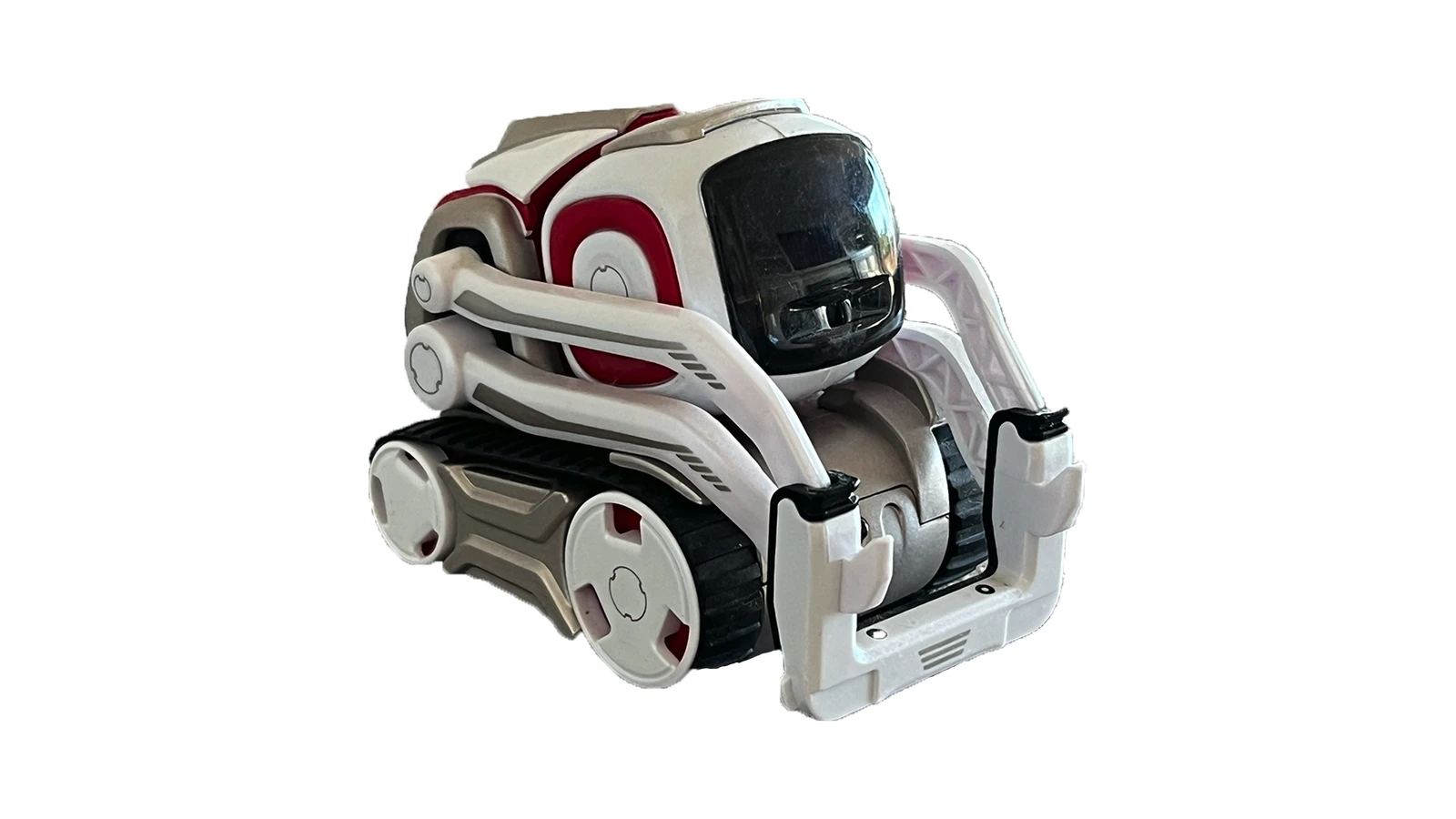
The photograph accompanying this guide shows an older Cozmo robotic toy for illustration. It is not one of the generative chatbot toys in the evaluations below, and the image should not be read as a safety finding about Cozmo.
What the research and recent coverage actually establish
Product tests found problems, not a universal failure rate
In its assessment updated on 22 January 2026, Common Sense Media's Youth AI Safety Institute tested Grem, Bondu and Miko 3, using accounts set to ages 6–13. It reported inappropriate responses in 27% of the outputs it assessed, alongside privacy, reliability and emotional-attachment concerns.
That percentage belongs to the organisation's test conditions. It is not the probability that any child's next conversation will be harmful, nor a score for every toy currently sold. Software, settings and testing methods matter.
The organisation recommends avoiding AI toys for children 5 and under and urges caution for ages 6–12. This is its safety recommendation, not a statutory age limit or an official approval scheme.
Developmental concerns need careful wording
A University of Cambridge CHIA summary published on 13 March 2026 describes observations of young children interacting with generative AI toys. The researchers reported difficulties with pretend play, misunderstanding and responses to emotions. They also recognised potential language and communication benefits, and recommended shared family spaces and parental involvement.
These observations deserve attention, but they are not proof that every child using such a toy will develop an attachment problem. The American Psychological Association's 1 November feature discusses experts' concerns that automated companionship may displace responsive human interaction. Long-term developmental effects remain a question for research, not a diagnosis to apply to a particular child.
Calls for a ban are not the same as a ban
On 3 November, Sky News reported that parliamentarians urged retailers to remove chatbot toys and asked the government to ban them. Its coverage included a retailer's investigation of a particular product. Those requests and actions do not establish a nationwide ban on all AI toys.
The UK's Office for Product Safety and Standards call for evidence, published on 6 July and now closed, explicitly includes emerging risks from connected and AI-enabled toys. It is a policy review, not a list of products certified safe for children.
Before buying: a practical parent checklist
Use this table to identify questions the seller or manufacturer should be able to answer. These are screening checks, not a home certification test.
| Check | Ask for a specific answer | If the answer is missing |
|---|---|---|
| Age and purpose | What age is supported by the manual, app terms and product listing? | Resolve conflicting ages before buying; do not rely on the toy's appearance |
| Recording | Is there a microphone or camera, how is it activated, and what signals when it is recording? | Do not assume silence means the device is not listening |
| Data handling | Who receives audio and transcripts, how long are they retained, and how can a parent review or delete them? | Ask for the relevant policy and deletion instructions |
| Conversation controls | Which parental controls exist, what are their defaults, and can open-ended chat be disabled? | Treat a claim such as “child-safe AI” as a claim requiring evidence |
| Support | Until when will the app and toy receive security updates? | Avoid relying on a device with unclear or expired support |
| Ongoing cost | What requires a subscription, and what remains usable after cancellation? | Compare the continuing service cost, not just the purchase price |
The U.S. Federal Trade Commission's connected-toy checklist likewise asks parents to examine recording, controls, storage, sharing and deletion. It remains useful as a checklist; a seller answering those questions is not evidence that a regulator has endorsed the product.
Ask for evidence behind learning claims
If a seller says a toy improves language, confidence or emotional skills, ask which product version was studied, the children's ages, what outcome was measured and whether a comparison group was used. A demonstration showing an engaging conversation is not the same as evidence of sustained learning.
For example, a toy may answer a vocabulary question correctly yet misunderstand a child's attempt at pretend play. “It can answer questions” and “it supports social development” are different claims requiring different evidence.
Privacy compliance does not certify conversation safety
For the United States, the FTC's COPPA guidance explains how the rule applies to covered online services, including connected toys, collecting children's personal information. It addresses notice, parental consent and access or deletion rights, subject to the rule's scope and exceptions.
COPPA is a U.S. privacy framework, not a UK product-safety label. The FTC also makes clear that it was not designed to protect children from particular kinds of online content. A manufacturer claiming COPPA compliance has therefore not answered every question about conversation quality or developmental suitability.
For any market, read the policy for the actual toy and app. Check who operates the service rather than assuming the retailer, toy brand and AI provider are the same organisation.
If your family already owns one
The following precautions can help you understand and manage a device; they cannot make an unsuitable product safe.
- Review it as an adult first. Read the manual, privacy information, account settings and available parental controls. Do not give a false age to bypass restrictions.
- Keep use observable. Cambridge's researchers recommend shared family spaces. Play alongside the child and discuss what the toy says, rather than treating it as an independent caregiver.
- Explain what it is. Use simple language: “This toy makes replies using a computer. It can get things wrong. You can always stop and ask me.”
- Review security settings. The UK National Cyber Security Centre recommends checking defaults, keeping devices updated and considering manufacturer support. Follow the instructions for your specific model.
- Check the exit route. Locate subscription cancellation and account/data-deletion instructions before deciding to keep the toy. Resetting hardware and deleting cloud-held information may be separate steps.
A short adult demonstration is not exhaustive safety testing: it cannot rule out a problematic response later. Supervision also should not be used to override a manufacturer's age restriction or an evidence-based concern about the product.
When to pause use and contact the company
Pause the interaction if the toy produces sexual or dangerous content, pressures the child to keep talking, encourages secrecy, or leaves the child distressed. Reassure the child that they have done nothing wrong and that a toy's answer is not an instruction they must follow.
Record the model, app/software version, approximate time and the minimum information needed to explain the problem. Contact the seller or manufacturer through its official support route. Keep children's recordings and identifying details private rather than posting them publicly to demonstrate the fault.
If you cannot establish how the microphone is controlled or how personal information is handled, stop connected use while you seek clarification. A software update may change behaviour, but a promise of improvement is not evidence that a reported issue has been resolved.
For a separate physical toy-safety issue, see our NeeDoh and squishy-toy warning guide. Physical hazards, conversational safeguards and privacy require their own checks.
Sources and image credit
- Common Sense Media: AI Toys risk assessment, updated 22 January 2026.
- Cambridge CHIA: research and recommendations, 13 March 2026.
- APA: Chatbots in the Crib, 1 November 2026.
- Sky News: parliamentarians' calls for action, 3 November 2026.
- UK OPSS policy review, FTC connected-toy questions, FTC COPPA guidance and NCSC smart-device guidance.
Featured photograph: Anki Cozmo by DecafPotato, 19 October 2022, licensed CC BY-SA 4.0. The photographer isolated the background; this version was resized, placed on white and converted to WebP, retaining the same licence. It illustrates a robotic toy, not a tested generative-AI product or a safety endorsement.
You may also like
 Technology & How-To
Is Tesla Discontinuing the Cybertruck? What We Know
Tesla plans a Cybertruck production wind-down in Texas around mid-2027. See what is confirmed, what remains unknown, and…
 Technology & How-To
iPhone Trust This Computer Not Showing? Windows and Mac Fixes
Restore the iPhone computer-trust prompt with checks for unlocking, Apple Devices or Finder, USB data cables and targeted…
 Technology & How-To
Chrome Keeps Showing Fake Virus Notifications? Stop Them Safely
Stop deceptive Chrome website notifications on Windows, Mac and Android. Identify the sender, revoke permission and check whether…