
Why Your Boiler Keeps Losing Pressure and When to Call an Engineer
Boiler pressure dropping again? Learn the normal UK boiler pressure range, safe ways to check for leaks, when to top up and when to book a Gas Safe engineer.
Contents
- First, what should your boiler pressure be?
- A real example of a heating-system pressure gauge
- Why a boiler can keep losing pressure
- 1. A small leak in a radiator valve or heating pipe
- 2. Recent radiator bleeding or other maintenance
- 3. An expansion vessel that is not working correctly
- 4. A pressure-relief valve that opens or continues dripping
- 5. Filling-loop problems, trapped air or a faulty reading
- A safe five-minute check before calling an engineer
- How to repressurise a boiler safely — if the manual permits it
- What the pattern of pressure loss may tell you
- When should you call an engineer?
- Book a Gas Safe engineer promptly if:
- Gas smell or carbon-monoxide alarm: an emergency, not a pressure problem
- What if you rent your home in the UK?
- How to reduce the chance of another winter breakdown
- The bottom line
- Sources and further reading
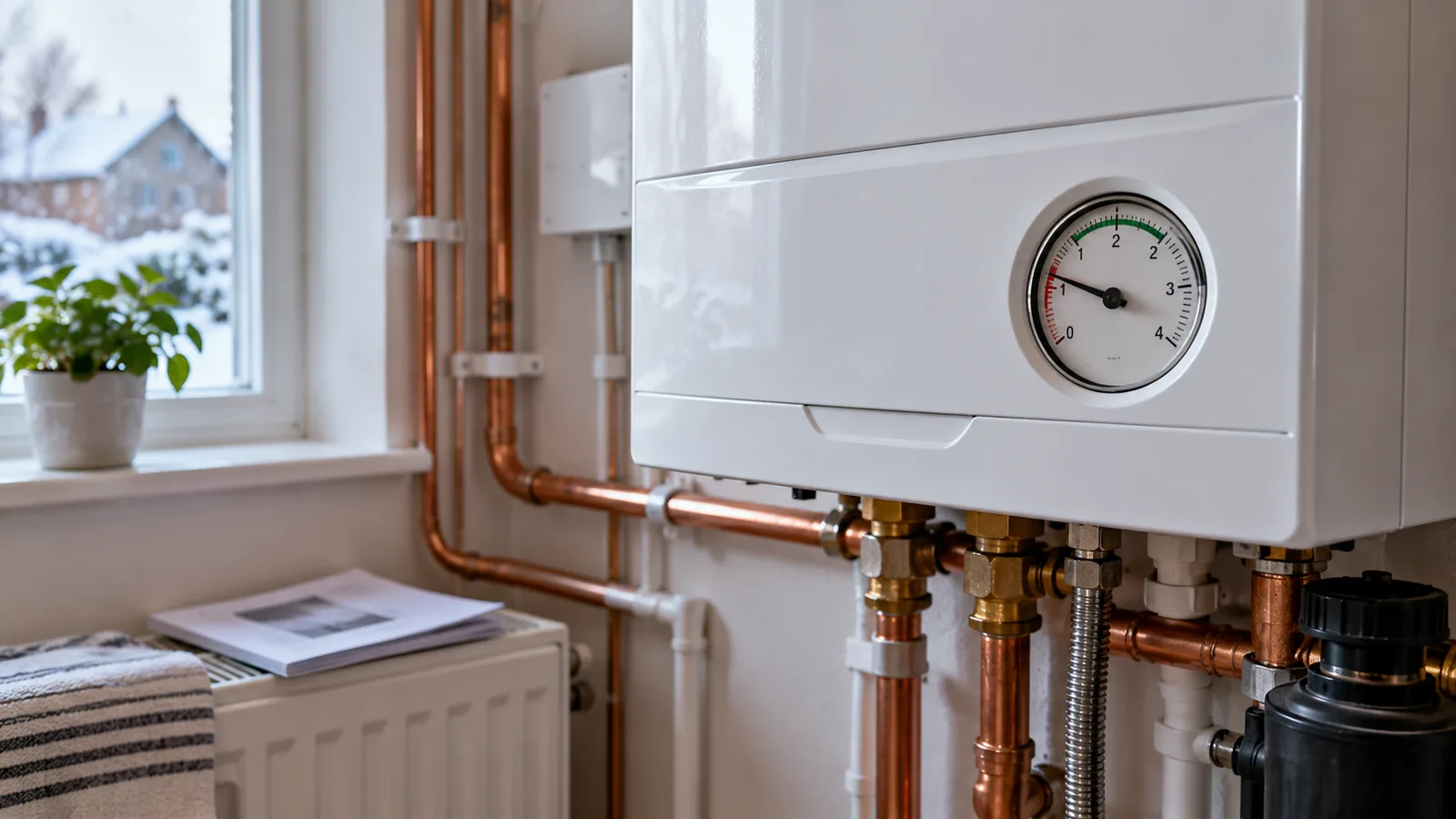
You check your boiler before leaving for work and the pressure is under 1 bar again. You added water only last week, so why has it dropped? A little pressure variation as a sealed central-heating system warms and cools is normal; repeatedly losing pressure is not. The cause may be as small as a radiator-valve leak or as involved as an expansion-vessel or pressure-relief-valve fault.
This guide explains how to read the gauge, what you can check safely, how to top up pressure only when your manufacturer allows it, and when to call a qualified engineer. It focuses on typical UK sealed-system combi and system boilers; open-vented heating installations work differently.
First, what should your boiler pressure be?
For many UK sealed heating systems, a cold pressure of around 1.0–1.5 bar is the normal starting range. Worcester Bosch gives that range for a cool system; check your own model’s manual because the acceptable pressure varies with the equipment and installation. The pressure will typically climb somewhat when the radiators heat up. Worcester Bosch’s guidance explains both the normal cold range and when frequent topping up deserves attention.
If the gauge drops below 1 bar when cold, some boilers display a warning or shut down. A reading near zero, persistent red-zone warnings, or a rapid drop after refilling calls for professional assessment. At the opposite extreme, pressure that climbs towards 3 bar can trigger a safety relief valve. Do not assume that “higher pressure means stronger heating.”
A real example of a heating-system pressure gauge
Photograph: heating-system pressure and temperature gauge (illustrative example, not a specific boiler model). Photo credit: Nenad Stojković / Wikimedia Commons user Shixart1985. Source: Wikimedia Commons. License: Creative Commons Attribution 2.0. Shown without cropping or recolouring; the actual safe range depends on your appliance.
Why a boiler can keep losing pressure
1. A small leak in a radiator valve or heating pipe
A sealed central-heating system should retain most of its water. Even a slow leak at a radiator tail, towel rail, pipe joint or concealed section can gradually lower the gauge. Look for damp flooring, dried mineral stains, corrosion, water marks or a recurring wet patch after the heating runs. Vaillant’s homeowner guidance identifies leaks and pressure changes after radiator bleeding as common explanations.
Do not pull up flooring, remove panels or loosen fittings to investigate. A pipe that feels cool and wet might also have condensation, so one damp spot is a clue rather than proof. Take photographs for the engineer and keep the area safe if water is near electrical equipment.
2. Recent radiator bleeding or other maintenance
Bleeding a radiator releases trapped air and sometimes water. The system can read lower afterwards, especially if several radiators were bled. A one-off, modest adjustment after approved maintenance is different from a boiler that needs new water every few days. If pressure falls again after a correct top-up, investigate the cause rather than continually repeating the process.
3. An expansion vessel that is not working correctly
Water expands as it heats. The expansion vessel contains a compressible gas cushion to accommodate that change. If its charge is lost or the internal diaphragm fails, pressure may climb unusually high while the heating is on, then plunge when it cools. A discharge through the pressure-relief valve can make the subsequent cold reading look like a mysterious water loss.
That hot-then-cold pattern is a useful observation, not a definitive diagnosis. Worcester Bosch says a rise of more than roughly 1 bar between cool and fully warmed conditions may call for an engineer to check the expansion vessel. See its pressure guidance. Do not attempt to recharge or dismantle the vessel yourself.
4. A pressure-relief valve that opens or continues dripping
A pressure-relief valve protects the system from excessive pressure. If it has opened during a pressure surge, or no longer seals properly, water may leave through a discharge pipe. Depending on your setup, you might see drips from an external copper pipe or dampness where it terminates.
Never block, cap or redirect this safety outlet. Tell an engineer if it drips after the heating cycle or if the gauge repeatedly approaches the high-pressure zone. The underlying fault can be an expansion problem, overfilling, or the valve itself.
5. Filling-loop problems, trapped air or a faulty reading
Filling-loop valves left partly open can allow unwanted mains water into some systems, producing higher pressure rather than a simple steady drop. Meanwhile, a failing pressure sensor or gauge can give confusing readings. Trapped air after recent work may also temporarily change the indicated pressure. These possibilities are reasons to record a few readings and have a professional test the system—not to keep turning unidentified valves.
A safe five-minute check before calling an engineer
- Read the gauge when the system is cool. Photograph the display, any fault code and the boiler’s model label without removing a casing.
- Check the heating timeline. Does pressure drop overnight while cold, only after heating, or soon after radiators were bled?
- Look for obvious leaks. Inspect visible radiator joints, exposed pipe connections and nearby floors. Do not touch hot pipes or open the boiler.
- Look from a safe place at the outside discharge pipe. Note any dripping; do not tamper with it or mistake the separate condensate drain for a pressure-relief outlet.
- Check whether the filling valves are fully closed if their identity and intended position are clearly explained in your model’s manual.
Write down the date, cold pressure, approximate warmed-up pressure, and whether the heating and hot water are working. Three clear readings often help a qualified engineer more than an uncertain description such as “it keeps going red.”
How to repressurise a boiler safely — if the manual permits it
If the system is low on pressure but you have no reason to suspect a gas leak, carbon monoxide, significant water damage, or a serious internal fault, some UK manufacturers allow homeowners to refill the heating-water circuit using a designated filling link. The exact procedure differs among internal keys, levers and external hoses. Follow your exact model’s instructions, not a generic video showing another boiler. Worcester Bosch describes several model-dependent filling mechanisms; Citizens Advice gives a general cold-system target.
- Switch off the heating and let the system cool. Check the manufacturer’s cold-pressure target, commonly 1–1.5 bar.
- Identify the correct manufacturer-approved filling arrangement. Stop if you cannot confidently identify it or if access would require removing the boiler’s sealed casing.
- Follow the manual to admit water slowly, monitoring the gauge. Stop within the specified cold range; do not overfill.
- Close the filling valves completely and restore any external filling hose or cap only as the manual instructs.
- Recheck after the next heating cycle. If it loses pressure again, arrange an inspection instead of topping up repeatedly.
Repressurising replaces missing water; it does not repair the leak or faulty component that allowed the pressure to fall.
If the gauge stays extremely low, water escapes, pressure immediately races upwards, or you feel uncertain about the controls, stop. Do not remove the boiler casing, loosen gas connections, adjust safety valves, or bypass a lockout. A renter should normally report the fault to the landlord or managing agent rather than undertake a repair.
What the pattern of pressure loss may tell you
Pressure falls gradually over several days. A small radiator or pipe leak is a reasonable possibility, although only a proper inspection can locate it. Look for signs of damp and note whether refilling becomes more frequent.
Pressure increases sharply when heating starts, then drops when the system cools. Ask an engineer to assess the expansion vessel and pressure-relief valve. The thermal expansion itself is normal; an excessive increase or repeated discharge is not.
Pressure dropped after bleeding radiators. A modest one-time drop can follow that work. Use approved instructions if a small top-up is appropriate, then monitor whether it stays stable.
The gauge reads low but there is no visible leak. Concealed pipework, an external discharge pipe, a pressure-sensing issue or a slow internal leak may be involved. An absence of visible water does not prove the system is sound.
Pressure rises continually even when the heating is off. An improperly closed filling loop or another fault can be involved. Do not experiment with unfamiliar valves; seek professional advice.
When should you call an engineer?
Book a Gas Safe engineer promptly if:
- You need to top up pressure repeatedly—particularly every few days, or more often than the manufacturer advises.
- The gauge drops soon after a correct refill, or the boiler repeatedly locks out with low-pressure errors.
- The reading rises sharply when hot, approaches the high-pressure zone, or water is regularly escaping from a safety discharge pipe.
- You find a persistent damp patch, leaking radiator valve, or unexplained water near the boiler.
- The gauge behaves erratically, you cannot safely identify the filling arrangement, or heating and hot water do not work reliably.
Use the official Health and Safety Executive guidance to verify Gas Safe registration and check that the engineer is qualified for boilers, not just other gas appliances. An engineer may inspect pipework, test the expansion vessel, examine the pressure-relief valve, check pressure sensors and look for hidden leaks. The findings—not a single gauge reading—determine whether repair or replacement is required.
Gas smell or carbon-monoxide alarm: an emergency, not a pressure problem
If you smell gas or a carbon-monoxide alarm sounds, leave the property and seek emergency help. In Great Britain, call the National Gas Emergency Service on 0800 111 999 from a safe place. Avoid flames and electrical switches and follow official emergency advice. If anyone is unwell or may have been exposed to carbon monoxide, seek urgent medical help. See National Gas emergency guidance.
Do not attempt repressurisation or routine troubleshooting while you suspect a gas or carbon-monoxide emergency. Low water pressure alone does not prove a gas leak; the two hazards must not be confused.
What if you rent your home in the UK?
In England, landlords are generally responsible for keeping installations for space heating and hot water in repair, including the boiler. Notify your landlord or letting agent in writing as soon as pressure loss affects heating or hot water; include the model, fault code, pressure photographs and times. Citizens Advice explains the landlord’s repair responsibilities. Rules and remedies differ in Scotland, Wales and Northern Ireland, so use the guidance for your nation.
Do not hire a repairer or withhold rent on your own assumption that the cost will be reimbursed. If a landlord fails to address a serious loss of heating or hot water, obtain advice from your council, a housing adviser or Citizens Advice about the appropriate next step.
How to reduce the chance of another winter breakdown
Keep the model manual and fault-code reference somewhere accessible. Check the cold pressure periodically instead of obsessively watching the dial. Arrange appropriate routine servicing, and report recurring pressure loss before temperatures plunge. When you bleed a radiator, note the pressure before and afterwards; avoid unnecessary bleeding if there is no trapped-air symptom.
If the boiler is still in warranty or covered by a service contract, contact the manufacturer or approved provider first. Repeatedly adding fresh water is not preventive maintenance: it can introduce oxygen and may aggravate corrosion in a heating circuit if the underlying defect remains.
The bottom line
A boiler reading around 1–1.5 bar when cold is typical for many UK sealed systems, but the correct range is always model-specific. A small, isolated drop after maintenance may be manageable under the owner’s manual. Persistent pressure loss, repeated lockouts, water discharge or a large hot-to-cold swing warrant a professional inspection. Observe and record what the system does; do not open or tamper with the boiler to make the problem disappear.
Sources and further reading
- Worcester Bosch — How often should I top up pressure? (manufacturer guidance on normal pressure and expansion-vessel clues).
- Worcester Bosch — Boiler Pressure (model-dependent filling methods).
- Vaillant UK — Why is my boiler losing pressure? (possible causes and visible leak checks).
- Citizens Advice — Getting your broken boiler repaired or replaced (safe checks and homeowner guidance for England).
- Health and Safety Executive — Check an engineer (Gas Safe verification).
- National Gas — Emergency contacts (UK emergency number and safety advice).
- Citizens Advice — Check if your landlord has to do repairs (England-specific tenancy responsibilities).
You may also like
 Technology & How-To
NHS App Prescription Not Showing? Check GP Approval, Pharmacy Status and Tracking
Find out why a prescription or medicine is missing from the NHS App in England. Separate repeat requests,…
 Technology & How-To
Google Wallet Not Working After Switching Phones? Fix Card Setup and Tap to Pay
Google Wallet transferred but tap to pay fails? Separate card verification, bank approval, NFC, screen lock and device…
 Technology & How-To
iCloud Family Sharing Not Working? Why You Still See 5GB and How to Fix It
Still seeing 5GB after joining an iCloud family plan? Check the account, invitation, sharing settings, personal plan and…