
Why Your Washing Machine Smells Even After Cleaning: Find the Real Cause
Washer still smells after a clean cycle? Diagnose gasket buildup, detergent drawers, pump filters, drains and laundry habits with a safe step-by-step guide.
Contents
- First, use the smell to narrow down the source
- Why a washer can smell even after a cleaning cycle
- 1. A drum-clean cycle does not scrub the rubber door seal
- 2. The detergent drawer and its housing remain coated
- 3. The drain pump filter holds stale water and debris
- 4. Wastewater is returning through the drain connection
- 5. Cool cycles and unsuitable detergent dosing leave buildup
- 6. Clean laundry is left damp inside the machine
- A safe, structured cleaning plan that avoids guesswork
- Which cleaning product should you use?
- Front-loader versus top-loader: the checks are different
- A 48-hour odor-isolation test: find the source before buying parts
- Three realistic scenarios and the next best action
- Scenario A: the drum smells clean, but the next towels smell sour
- Scenario B: the smell returns every morning near the lower front panel
- Scenario C: the washer smells like sewer gas even when unused
- When to stop DIY cleaning and call a professional
- A practical maintenance schedule to keep the smell from returning
- What to remember before running another hot cycle
- Official manufacturer references
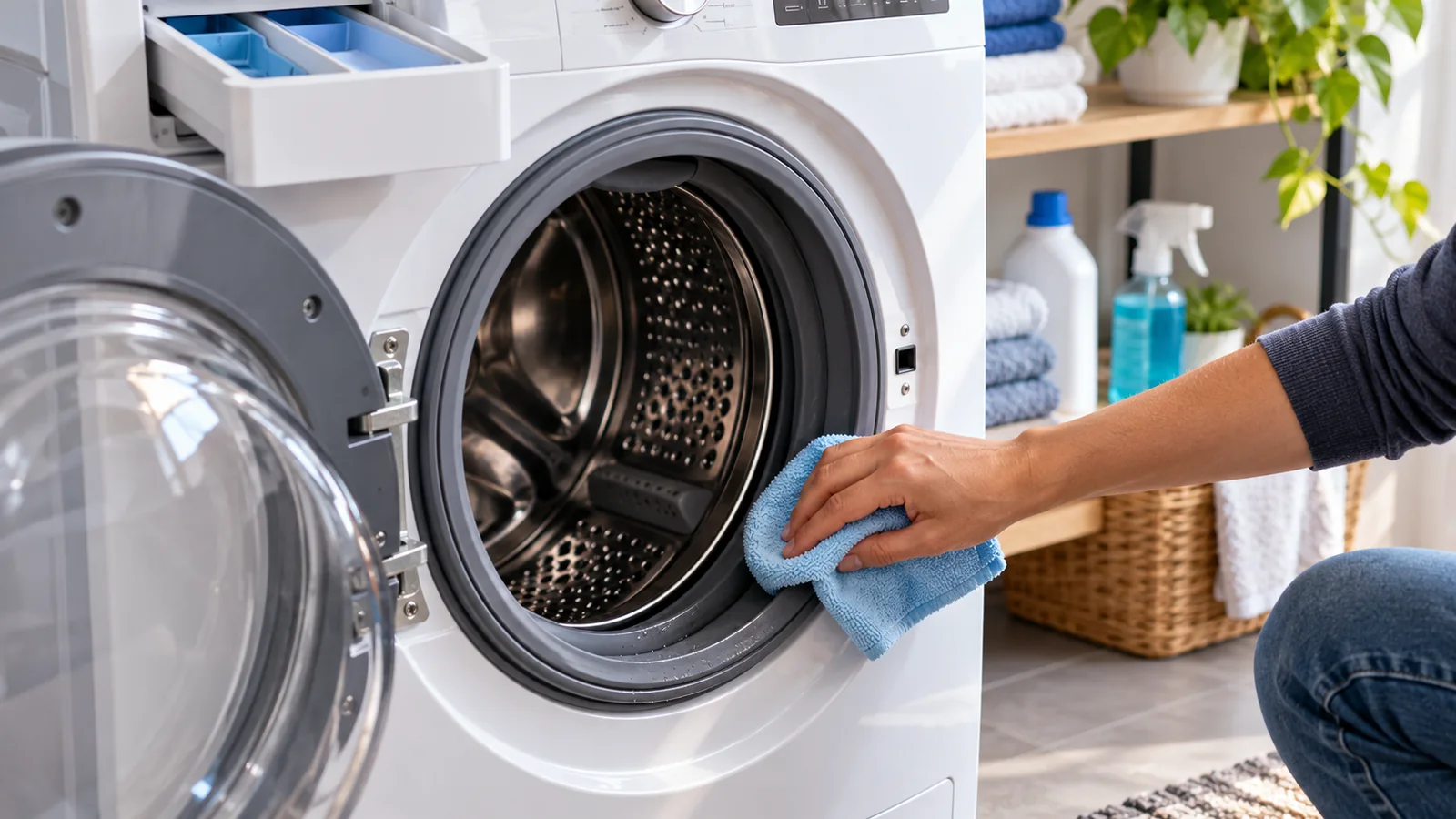
You ran a washer-cleaning cycle, wiped the drum and expected the bad smell to disappear. Instead, the machine still smells musty, sour or like sewage—and sometimes the next load of clothes smells worse than before. The key is to identify where the odor originates rather than repeat the same drum-cleaning cycle. The stainless-steel drum may look clean while damp residue remains in the door seal, detergent dispenser, drain filter or plumbing connection.
This guide covers front-loading and top-loading washing machines in the US, UK and Europe. The steps are designed for homeowners and renters, but the exact access panels, cleaning products and temperature settings depend on your model. Safety first: stop using the machine if you notice burning, smoke, electrical faults or a leak near electrical equipment. Never mix bleach with vinegar, acids, ammonia or other cleaners.
First, use the smell to narrow down the source
| What you notice | Most useful first check | What it may indicate |
|---|---|---|
| Musty odor strongest at door | Pull back gasket folds with a light | Moisture, lint or biofilm trapped in seal |
| Sour odor near detergent drawer | Remove and inspect drawer and housing | Detergent or fabric-softener residue |
| Rotten-egg or sewer smell near standpipe | Check drain connection and nearby drains | Plumbing odor or wastewater backflow |
| Odor plus slow drainage | Check pump filter and drain hose per manual | Debris or standing water |
| Only towels or clothes smell | Compare clean drum versus damp load | Overloading, poor rinsing, delayed drying |
| Hot rubber or electrical smell | Stop machine and disconnect power if safe | Potential mechanical or electrical fault |
The table is a diagnostic starting point, not proof of a particular fault. A smell can travel through the room. Compare the machine when empty, immediately after a wash, and several hours later. If the odor is stronger near a wall drain than the drum, cleaning the drum again is unlikely to address its source.
Why a washer can smell even after a cleaning cycle
1. A drum-clean cycle does not scrub the rubber door seal
Front-loading washers have a flexible gasket that forms folds around the door. Water, hair, lint, tissues and detergent residue can sit in those folds. A hot empty cycle may circulate water through the drum without physically removing debris caught behind the seal. LG’s washer odor guidance specifically identifies the door gasket, dispenser and pump filter as separate areas to inspect.
With the washer off and the door open, use a flashlight to inspect the visible gasket folds. Remove loose debris gently and wipe the accessible rubber with a soft cloth and a product permitted by the manufacturer. Do not pry the gasket off its mounting, puncture it with a tool or pour concentrated chemicals into the folds. Dry the accessible area when finished.
2. The detergent drawer and its housing remain coated
Liquid detergent, powder and fabric softener can leave sticky deposits in the drawer and in the cavity behind it. Even if the drawer itself looks clean, the top of its housing may retain buildup. Remove the drawer only by following the release method in your user manual. Rinse removable pieces with warm water, use a soft brush where permitted, clean the accessible housing and dry before refitting.
A strong fragrance from detergent can temporarily mask an odor without removing the deposit. More detergent is not automatically better: excess suds and residue may worsen the problem, especially in high-efficiency washers. Follow the detergent label and the washer’s instructions for load size, soil level and water hardness.
3. The drain pump filter holds stale water and debris
Some front-loading models have a user-accessible drain pump filter behind a small lower panel. Coins, lint, hair and other objects can restrict drainage. Water left in the machine can smell, and an empty hot cycle will not necessarily clear a physical blockage. Bosch’s drainage instructions describe isolating power, releasing water carefully and inspecting the pump area on supported models.
Before opening a filter: switch the machine off, unplug it, let hot water cool, and prepare shallow trays and towels. Follow your model’s instructions for any emergency-drain hose. Open the filter slowly because water may spill. Never remove a filter while a cycle is running, and do not assume every top-loader has a user-serviceable filter. If the machine is built in, inaccessible or still under warranty, consult the manufacturer before dismantling anything.
4. Wastewater is returning through the drain connection
A washer can be clean internally and still smell if its drain hose is kinked, incorrectly positioned or connected to plumbing that allows wastewater to flow back. A nearby floor drain or standpipe can also release sewer odor. Bosch notes that water flowing back into a washer can contribute to odor. Check the installation diagram for the required hose height, standpipe arrangement and connection method; there is no universal height that applies to every appliance.
Look for visible kinks, a hose pushed too far into the standpipe, leaks or water remaining in the tub after a completed drain. Do not permanently seal an air gap or improvise a plumbing modification. If sewer odor persists or other fixtures gurgle or drain slowly, contact a qualified plumber or your landlord rather than adding more washer cleaner.
5. Cool cycles and unsuitable detergent dosing leave buildup
Low-temperature washes can be useful for energy savings and delicate fabrics, but a long pattern of cool cycles with unsuitable detergent dosing may allow residue to accumulate. Bosch advises periodic higher-temperature washing when suitable for the machine and laundry, together with correct detergent quantities. See its official odor guidance. Do not wash delicate items at 60°C simply to clean the washer: use the manufacturer’s empty maintenance cycle instead.
6. Clean laundry is left damp inside the machine
Even a well-maintained washer can develop a stale smell when a finished load sits wet for hours. Transfer laundry promptly, leave the drum and dispenser able to dry where safe, and check whether the room itself is humid. Whirlpool also recommends removing wet clothes promptly and keeping the door-seal area clean. Whirlpool’s gasket-cleaning guidance provides practical maintenance context.
A safe, structured cleaning plan that avoids guesswork
- Step 1 — Empty and inspect: remove laundry, check the drum for small objects, and note whether the odor comes from the seal, drawer, filter or drain.
- Step 2 — Clean accessible contact surfaces: wipe the door glass, gasket folds and detergent drawer using methods approved for the model.
- Step 3 — Check drainage: if the machine drains slowly or retains water, inspect the accessible filter and hose using the manufacturer’s procedure.
- Step 4 — Run the designated maintenance cycle: use Tub Clean, Drum Clean or Clean Washer with the product and dose specified in the manual. Keep the drum empty.
- Step 5 — Dry and reassess: wipe accessible moisture, ventilate the drum where safe and smell-check after several hours, not only immediately after the hot cycle.
- Step 6 — Test one normal load: wash a small, appropriate load with correctly measured detergent; remove it promptly and compare the odor of the drum and laundry.
LG recommends monthly tub cleaning as routine maintenance and notes that stubborn mustiness may require repeated maintenance cycles under its model-specific instructions. It also recommends cleaning the dispenser, gasket and drain filter. The exact frequency and approved product depend on your washer. See LG’s tub-clean instructions. Do not run back-to-back high-temperature cycles indefinitely if the odor remains; first identify the untreated source.
Which cleaning product should you use?
| Method | When it may help | Important limitation |
|---|---|---|
| Manufacturer-approved washer cleaner | Maintenance cycle and detergent buildup | Follow exact product and model instructions |
| Warm water and soft cloth | Accessible drawer, door glass and gasket | Do not soak electrical components |
| Chlorine bleach | Only when explicitly allowed for that cycle/model | Never combine with acids, vinegar or ammonia |
| Vinegar or baking soda | Often suggested in DIY guides | Not a universal manufacturer-approved substitute |
| Fragrance beads or scent boosters | May change laundry fragrance | Do not remove drain clogs or biofilm |
Different manufacturers and models specify different products. Bosch advises against relying on generic household cleaners for washer odors and recommends a tested washing-machine cleaner. Some LG instructions permit particular cleaning agents, while others caution that acidic or chlorine-based products can harm components. Do not assume a social-media cleaning recipe is safe for your machine. Check the model manual and cleaning-product label, and never mix chemicals.
Front-loader versus top-loader: the checks are different
| Component | Front-loading washer | Top-loading washer |
|---|---|---|
| Door or lid seal | Inspect the rubber door boot and folds | Inspect lid rim, dispenser and accessible seals |
| Pump filter | Some models have lower access panel | May be internal or not user-serviceable |
| Dispenser | Often removable drawer | Drawer, tray or built-in dispenser varies |
| Maintenance cycle | Tub/Drum/Clean Washer depending on model | Tub/Clean Washer depending on model |
| Drying between loads | Leave door and drawer ajar if safe | Leave lid open if safe |
A top-loader with an agitator, impeller or auto-dosing system may have additional model-specific cleaning points. Do not remove internal components without the manual. LG’s top-loader maintenance guide recommends dispenser cleaning, appropriate detergent use and regular tub cleaning.
A 48-hour odor-isolation test: find the source before buying parts
This is a repeatable home troubleshooting method, not a laboratory test. It helps separate a residue problem from a drainage or laundry-handling problem without claiming to identify microbes or measure air quality.
- Observation A — immediately after cleaning: with the drum empty, note the strongest smell location. Do not put your face into a drain opening.
- Observation B — after the washer has dried: return a few hours later and compare the gasket, drawer opening and area around the standpipe. If the drum is fresher but the standpipe smells, investigate plumbing.
- Observation C — after one normal load: note whether odor returns only after washing and whether the clothes themselves smell. Record load size, detergent dose and cycle type.
- Observation D — next day: inspect for new standing water, a damp gasket or moisture around the drain connection. A recurring puddle or incomplete drainage warrants service.
Write down the observations rather than repeatedly adding cleaner. For example, a washer that smells fine when dry but sour after a heavy softener load suggests checking dispenser deposits and dosing. A washer that smells like sewage before any cycle, with odor strongest at the wall, points toward plumbing inspection. Neither observation is a definitive diagnosis by itself.
Three realistic scenarios and the next best action
Scenario A: the drum smells clean, but the next towels smell sour
A household runs an empty maintenance cycle and the drum smells fresh. A full towel load then comes out sour. Check whether the load was overloaded, the detergent was correctly measured, and the towels were transferred promptly. Test a smaller load and inspect the drawer and gasket. If only the laundry smells, avoid assuming the pump is faulty.
Scenario B: the smell returns every morning near the lower front panel
A front-loader smells worst near its lower service area and sometimes finishes with water in the drum. If the manual provides a user-accessible pump filter, inspect it safely for debris after disconnecting power and allowing water to cool. If the machine still drains slowly, stop repeated cycles and arrange a service inspection.
Scenario C: the washer smells like sewer gas even when unused
A clean, empty washer is near a standpipe that smells strongest after other fixtures drain. Inspect the visible hose installation and ask a plumber to check the drain and trap arrangement. Do not pour washer-cleaning chemicals into household plumbing to disguise a persistent sewer smell.
When to stop DIY cleaning and call a professional
- The smell is burning, electrical or like overheated rubber: stop the cycle, switch off power if safe and arrange qualified service.
- Water leaks near outlets or the machine trips a breaker: avoid contact with wet electrical equipment and seek service.
- The washer repeatedly fails to drain, overflows or leaves significant water after a cycle.
- A seal is torn, visibly deteriorating or leaking; wiping it cannot repair damaged rubber.
- Sewer odor persists around the drain or multiple household fixtures have drainage problems: contact a plumber.
- Persistent odor remains after the manufacturer-recommended cleaning sequence and safe accessible checks: contact the appliance manufacturer or repair technician.
LG’s burning-smell guidance distinguishes some transient odors in new appliances from persistent smells that need inspection. If the odor is accompanied by smoke, abnormal heat or electrical symptoms, do not continue running the machine to see whether it disappears.
A practical maintenance schedule to keep the smell from returning
| When | Task | Why it matters |
|---|---|---|
| After a wash day | Remove clothes, wipe visible seal moisture, ventilate safely | Limits trapped dampness |
| Weekly or as needed | Inspect drawer and gasket for residue | Catches deposits early |
| Monthly or per manual | Run approved empty maintenance cycle | Reduces tub buildup |
| When draining slows | Inspect filter/hose only if user-serviceable | Addresses retained water |
| After installation or moving | Check hose routing against installation manual | Helps prevent drainage and backflow issues |
Keep the door or lid ajar only where it does not create a hazard for children or pets. In shared accommodation, ensure that ventilation and access remain safe. Regular maintenance can reduce the chance of odor, but it does not fix a faulty pump, damaged seal or incorrect drain installation.
What to remember before running another hot cycle
If your washing machine still smells after cleaning, do not treat the entire appliance as one surface. Separate the drum from the gasket, dispenser, pump filter, laundry routine and drain plumbing. Start with safe visual checks and manufacturer-approved cleaning; move to a repair professional when drainage, electrical or plumbing symptoms persist. This targeted approach is more useful than repeatedly running a hot cycle without knowing where the odor starts.
Official manufacturer references
You may also like
 Technology & How-To
Android Auto Keeps Disconnecting? How to Fix USB and Wireless Dropouts
Android Auto keeps disconnecting? Separate USB, wireless and app failures, check Galaxy USB mode, compare connection methods and…
 Technology & How-To
Netflix Says Your TV Isn’t Part of the Household? How to Fix It
Fix a Netflix household warning by separating home verification, permanent household updates and temporary travel access, with genuine…
 Technology & How-To
Google Photos Stopped Backing Up from Your PC? What Changed and How to Fix It
Google Photos stopped backing up your computer folders? Understand the Drive for desktop change, configure browser folder backup…