
How to Reduce Damp and Condensation in a UK Home Without Expensive Renovations
A practical UK guide to reducing damp, condensation and mould with low-cost steps, ventilation checks, safe cleaning and advice for tenants.
Contents
- Start here: identify what kind of damp you have
- Why condensation forms on windows and walls
- A seven-day low-cost action plan
- 1. Ventilate effectively without throwing away all your heat
- 2. Reduce moisture where it is produced
- 3. Use a hygrometer to spot patterns, not to diagnose the building
- 4. Keep cold surfaces warmer without wasting money
- 5. Does a dehumidifier actually help?
- 6. Remove small mould patches carefully — and know when not to DIY
- 7. What to do if condensation is between double-glazed panes
- 8. Renting in England: landlord duties and a practical reporting template
- Mistakes that make condensation worse
- When to call a professional immediately
- A practical maintenance routine for the next month
- Official guidance and further reading
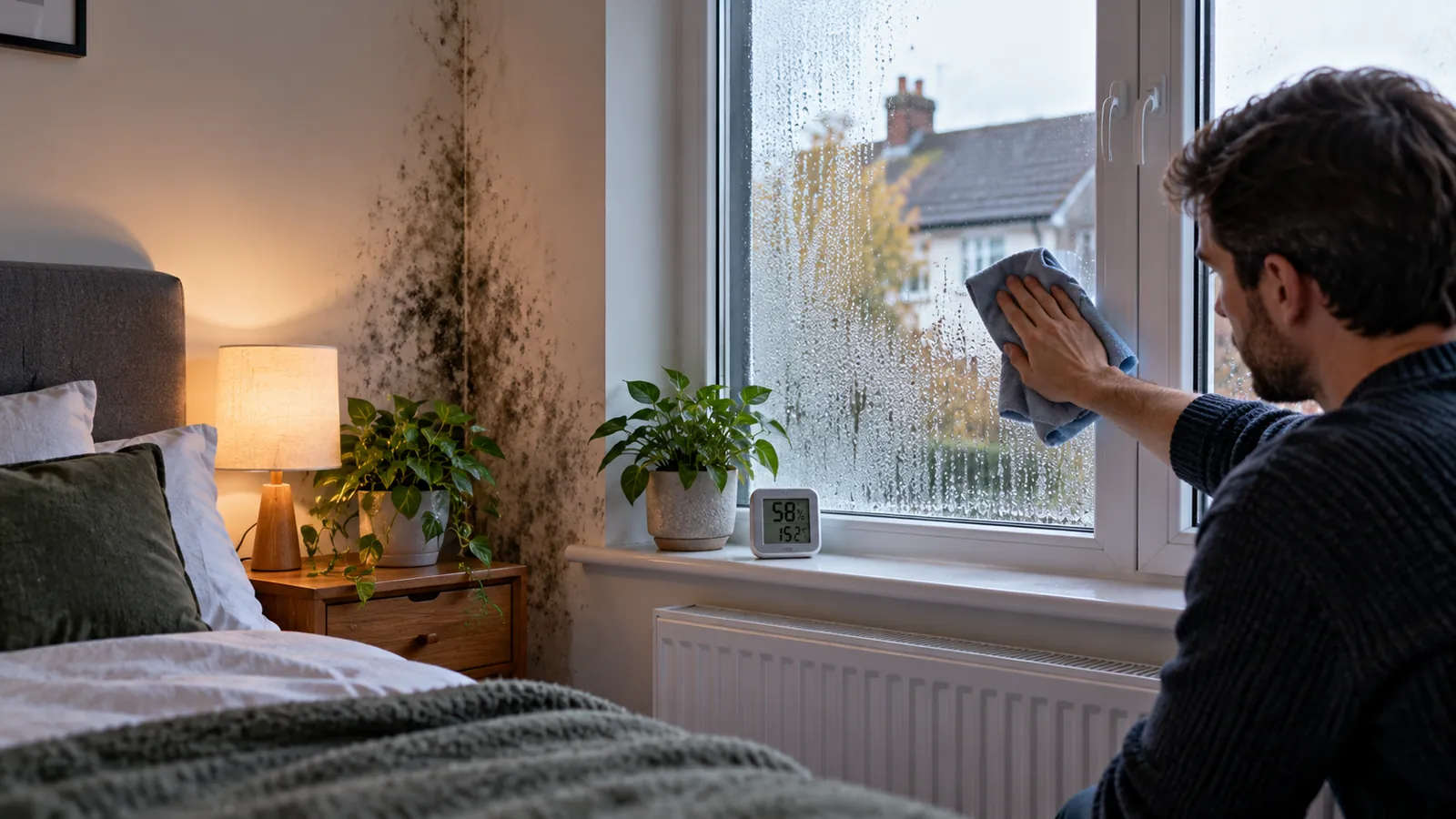
Water on bedroom windows, a musty wardrobe and black spots in cold corners are common winter problems in UK homes. You may not need new windows or an expensive renovation to improve the situation. But the right fix depends on whether the moisture is condensation, a leak, or water entering through the building fabric. Treating every damp patch as “poor ventilation” can leave a serious defect unrepaired.
This guide explains a practical low-cost investigation, daily changes that genuinely reduce moisture, when a dehumidifier makes sense, how to clean small areas safely, and what tenants in England can ask their landlord to do. The aim is to tackle the source of water, not simply hide the stain.
Start here: identify what kind of damp you have
| What you notice | Possible cause | First action |
|---|---|---|
| Water droplets on the inside of windows in the morning | Condensation on cold glass | Wipe dry; check ventilation and room temperature |
| Black spots behind a wardrobe on an outside wall | Condensation at a cold, poorly ventilated surface | Move furniture slightly; check for cold bridging and leaks |
| Brown stain growing after rain | Roof, gutter, window or wall leak | Photograph it; report or repair the source |
| Damp tide mark near floor with damaged skirting | Possible rising damp, plumbing leak or other moisture path | Request a qualified diagnosis; do not guess |
| Water trapped between double-glazing panes | Failed sealed glazing unit | Ask a glazing specialist about repair or replacement |
| Musty smell but no visible marks | Concealed moisture or poor air movement | Inspect behind furniture, under sinks and around pipes |
A quick observation is not a definitive survey. Multiple causes can coexist: a leaking gutter can make a wall colder, and everyday indoor moisture can then condense on it. If a stain grows after rain or water appears near electrical fittings, prioritise a building inspection rather than a household “hack”.
Why condensation forms on windows and walls
Warm indoor air can hold more water vapour than cold air. When humid air meets cold glass, an uninsulated corner or a thermal bridge, the surface may be cool enough for water to condense. Cooking, showers, laundry and breathing continually add moisture. Energy Saving Trust notes that a household can generate substantial moisture over a week, so even an otherwise well-kept home needs an effective way for it to escape.
A poorly heated room has colder surfaces, increasing condensation risk. But leaving heating on continuously is not a universal cure and may be expensive. A sensible combination of appropriate heating, moisture control and working ventilation is more useful than turning the thermostat up without addressing the cause.
A seven-day low-cost action plan
- Day 1: photograph affected areas and note whether droplets occur after sleep, showers, cooking or rainfall. Check under sinks, around windows and beneath roof leaks.
- Day 2: check that bathroom and kitchen extractors actually work and vent outdoors. Clean accessible grilles according to the manual; do not interfere with wiring.
- Day 3: keep existing trickle vents unobstructed and use short periods of safe window ventilation when cooking or bathing.
- Day 4: dry window condensation with a cloth and remove the water from the room rather than leaving a soaked towel on the radiator.
- Day 5: move large furniture slightly away from cold external walls, especially wardrobes, to allow air movement.
- Day 6: cover pans, use lids, close the kitchen door where appropriate and avoid drying washing on radiators.
- Day 7: compare photographs and moisture patterns. If damp persists, spreads or follows rainfall, investigate structural causes.
1. Ventilate effectively without throwing away all your heat
Use the extractor fan while showering or cooking, and let it continue after the activity; Energy Saving Trust suggests at least 15 minutes after showers and cooking where applicable. Open windows briefly when safe if mechanical extraction is absent, but consider security, outdoor air pollution, severe weather and the needs of vulnerable occupants. Follow any ventilation system manufacturer guidance.
Trickle vents are designed to provide background airflow; blocking them to stop a draught may worsen moisture build-up. If you have mechanical ventilation with heat recovery, do not routinely switch it off. If the fan is broken or vents are absent, the solution may require a landlord or professional to repair the system rather than asking residents to live with permanently open windows.
2. Reduce moisture where it is produced
- Put lids on pans and use a cooker hood that extracts outside when available. Recirculating hoods may filter odours without removing much water vapour.
- Use the bathroom extractor during and after showers; wipe wet tiles and shower screens into the drain.
- Dry laundry outdoors when practical. If drying indoors, use a suitable ventilated space or a dehumidifier rather than hanging wet clothes throughout the home.
- Fix dripping pipes, leaking shower seals and overflowing gutters promptly; household ventilation cannot compensate for an active leak.
- Do not use unflued gas or paraffin heaters as a “cheap” drying solution: combustion adds moisture and can create serious indoor air hazards.
3. Use a hygrometer to spot patterns, not to diagnose the building
An inexpensive digital hygrometer can show whether humidity repeatedly climbs during cooking, laundry or overnight occupancy. A rough practical aim of around 40–60% relative humidity is often used for comfort and moisture management, but readings depend on temperature and instrument accuracy; a single number cannot diagnose damp or prove that mould will not grow. Even moderate indoor humidity can cause condensation on a very cold surface.
| Observation | Interpretation | What to do |
|---|---|---|
| Humidity spikes after a shower | Moisture source and extraction may be mismatched | Check fan operation and post-shower run time |
| Humidity stays high during indoor laundry | Water from clothes remains in the room | Change drying method or use suitable dehumidification |
| Humidity appears normal but one wall is mouldy | Cold bridging, leak or local air stagnation possible | Check surface temperature, furniture gap and building defects |
| Condensation only on very cold mornings | Surface temperature may be key | Improve balanced heating and ventilation; monitor |
| Readings vary between rooms | Different moisture loads and temperatures | Measure in the affected room over several days |
4. Keep cold surfaces warmer without wasting money
Check that radiators are functioning, thermostatic valves are not stuck and furniture is not blocking heat distribution. Insulated curtains can reduce heat loss at night, but keep fabric away from damp glazing and allow windows to dry. Draught-proofing can help comfort, yet do not seal up required ventilation or cover trickle vents.
If one corner stays cold despite reasonable heating, ask whether insulation is missing or there is a thermal bridge. A landlord or qualified retrofit assessor can investigate. Adding insulation or replacing windows without planning ventilation can trap more moisture; Energy Saving Trust and government guidance both emphasise considering these systems together.
5. Does a dehumidifier actually help?
A dehumidifier removes moisture from indoor air and may be useful for laundry drying or rooms with persistent high humidity. It does not repair a leaking roof, replace fresh-air ventilation or fix a defective extractor. Match capacity to the room, follow electrical safety instructions, empty the tank hygienically and clean filters as specified.
To estimate running cost, multiply power in kilowatts by operating hours and your tariff. For example, a 250-watt unit running six hours uses 0.25 × 6 = 1.5 kWh. At an illustrative tariff of £0.25/kWh, that is about £0.38 for the session, before any standby usage. This is a worked example, not a claim about current tariff prices or every model.
| Option | Useful when | Limitation |
|---|---|---|
| Short, safe ventilation bursts | Moisture after showering or cooking | Less effective if ventilation paths are inadequate |
| Working extractor fan | Bathroom and kitchen moisture | Must extract properly and be maintained |
| Dehumidifier | Laundry drying or persistent excess moisture | Electricity cost; no fresh-air supply |
| More appropriate heating | Very cold rooms and surfaces | Will not repair a leak or blocked vent |
| Professional damp investigation | Recurring patches, rain-linked stains, damaged plaster | Requires diagnosis and possible repair |
6. Remove small mould patches carefully — and know when not to DIY
First identify and address the source of moisture. Photograph the patch before cleaning, particularly in rented accommodation. For a small superficial area, follow relevant product instructions, wear appropriate protection and ventilate the space. Avoid dry brushing or scraping, which can disperse spores. Never mix cleaning chemicals, especially bleach with ammonia or acids. Keep children and vulnerable people away from the work area.
Do not simply paint over mould or rely on fragrance sprays. Extensive, recurring or concealed mould, water-damaged porous materials, or exposure affecting someone with asthma or impaired immunity calls for professional assessment. UK government guidance recognises that larger mould occurrences may require specialist removal. If someone develops breathing difficulties or other significant symptoms, seek appropriate medical advice.
7. What to do if condensation is between double-glazed panes
Moisture inside the sealed gap between panes is different from droplets you can wipe off the room-facing glass. It often indicates failure of the sealed glazing unit. Opening a window or buying a dehumidifier will not remove moisture trapped within that sealed space. Ask a qualified glazier whether the insulated glass unit can be replaced without changing the entire frame.
8. Renting in England: landlord duties and a practical reporting template
Tenants should report persistent damp promptly, ideally in writing with dated photographs and details of where it occurs. Landlords are responsible for dealing with relevant disrepair, such as leaking gutters, faulty heating and inadequate ventilation, and must take damp and mould seriously. Do not assume the occupant caused the problem merely because they cook, wash or breathe indoors. Rules and enforcement routes vary across the UK nations; the government guidance linked below specifically applies to England.
- Send the landlord or managing agent clear photographs, location, dates, any rain correlation and whether children or people with respiratory conditions are affected.
- Request inspection of likely defects, ventilation and heating rather than only surface repainting.
- Keep copies of messages and a short log of any worsening conditions or repair visits.
- If the problem is not addressed, seek advice from your local council housing or environmental health team and a recognised tenant advice service.
- For serious health concerns, prioritise safe accommodation and medical advice; do not wait for the next routine maintenance appointment.
Suggested message: “I am reporting persistent damp and mould at [location], first noticed on [date]. Photos are attached. Please arrange an inspection to identify the cause, including ventilation, heating and possible water ingress, and confirm the proposed repair timetable in writing.”
Mistakes that make condensation worse
- Blocking trickle vents or turning off extractor fans permanently to save energy.
- Drying large loads of washing on radiators with no ventilation.
- Moving a wardrobe tight against a cold exterior wall after cleaning the mould.
- Assuming a dehumidifier can solve a roof leak or failed damp-proofing.
- Covering a damp patch with wallpaper or anti-mould paint without fixing the cause.
- Assuming every damp mark is caused by tenant behaviour.
When to call a professional immediately
Arrange urgent help for water entering near electrical installations, a burst pipe, a saturated ceiling, rapidly spreading damp after storms or unsafe structural damage. Seek a qualified damp or building specialist when the cause is unclear, patches repeatedly return after treatment, or the damage is extensive. If a gas appliance is suspected of causing indoor air problems, use a suitably registered professional and follow gas-safety advice.
A practical maintenance routine for the next month
Each morning, check the worst window and dry any standing water. Each week, inspect bathroom and kitchen fan operation, look behind furniture and check for new stains. After heavy rain, inspect known problem areas and gutters from a safe vantage point — never climb onto a roof without appropriate professional equipment. Keep a simple photo log so improvements and worsening defects are easy to demonstrate.
The most economical sequence is usually diagnose → control indoor moisture → restore effective ventilation → keep surfaces reasonably warm → repair defects. If the cause is a building fault, lifestyle changes alone will not make the home healthy.
Official guidance and further reading
Energy Saving Trust — How to get rid of damp — official or independent UK guidance.
Energy Saving Trust — How to improve home ventilation — official or independent UK guidance.
UK Government — Health risks of damp and mould in the home — official or independent UK guidance.
UK Government — Existing home ventilation guide — official or independent UK guidance.
UK Government — How to rent a safe home — official or independent UK guidance.
Bottom line: You can often reduce everyday condensation with better extraction, safer moisture control, small changes to laundry habits and sensible heating. Persistent mould, rain-linked staining and structural defects need investigation and repair, not blame or cosmetic cover-ups.
You may also like
 Technology & How-To
NHS App Prescription Not Showing? Check GP Approval, Pharmacy Status and Tracking
Find out why a prescription or medicine is missing from the NHS App in England. Separate repeat requests,…
 Technology & How-To
Google Wallet Not Working After Switching Phones? Fix Card Setup and Tap to Pay
Google Wallet transferred but tap to pay fails? Separate card verification, bank approval, NFC, screen lock and device…
 Technology & How-To
iCloud Family Sharing Not Working? Why You Still See 5GB and How to Fix It
Still seeing 5GB after joining an iCloud family plan? Check the account, invitation, sharing settings, personal plan and…