
Scientists Discover an Organism With a Genetic Code That Breaks the Rules
A freshwater protist appears to repurpose two genetic stop signals. Learn what scientists found, why it matters, and what remains unknown.
Contents
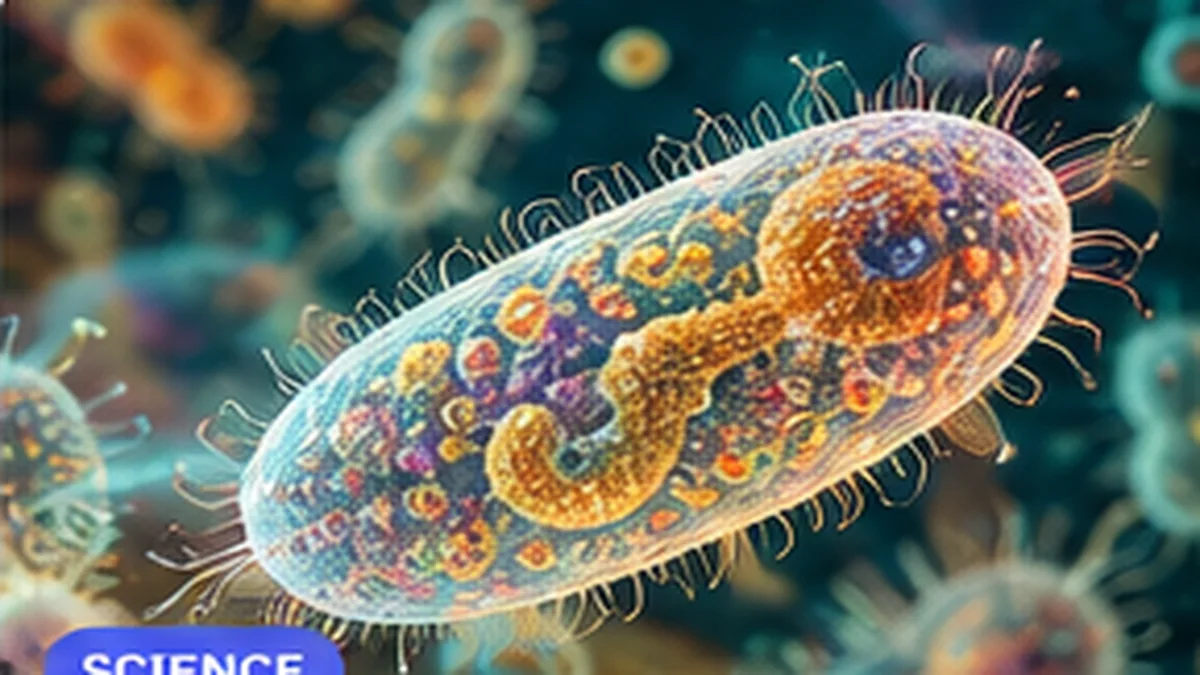
A freshwater protist appears to repurpose two genetic stop signals. Learn what scientists found, why it matters, and what remains unknown.
What was discovered?
Researchers studying a previously unknown freshwater protist collected from a pond at Oxford University encountered an unusual genetic code. In this organism, two signals normally used to tell cellular machinery to stop translating a gene instead specify different amino acids. The finding was reported by the Earlham Institute on October 8, 2026.
Why is that surprising?
DNA stores instructions in sequences that cells interpret as three-letter codons. Most codons identify an amino acid; a small set usually tells the translation machinery to stop. The standard code is widespread but not literally universal. Some organisms and organelles already use alternative codes. What stands out here is the distinctive reassignment of two stop signals to different amino acids, challenging expectations about how such changes evolve.
How did scientists find it?
The discovery emerged while testing a DNA-sequencing approach, not from a search for organisms with exotic genetics. Interpreting the sequence using the conventional code produced an unexpected pattern; researchers investigated the organism’s alternative translation rules. This illustrates why automated genome annotation can misread unusual organisms.
Does it change the definition of life?
No. The organism still relies on genetic information and cellular chemistry. The discovery broadens the known diversity of translation systems; it does not show that DNA or evolution has stopped applying.
Why does it matter?
Understanding alternative genetic codes helps researchers annotate microbial genomes, reconstruct evolutionary history, and investigate how the translation system can change while remaining functional. Any biotechnology applications are speculative at this stage.
What remains unknown?
Researchers still need to clarify how widespread this coding arrangement is, how it evolved, and whether related species share it. One discovery cannot establish that the same mechanism occurs across all protists.
FAQ
Is the genetic code universal?
It is highly conserved, but known exceptions exist, especially in certain microorganisms and organelles.
Was this organism engineered?
The report describes a naturally collected freshwater protist, not a genetically engineered organism.
Could humans use this code?
Human cells normally use their own translation machinery; the discovery does not demonstrate a direct medical application.
Sources and further reading
You may also like
 Science
Can Tardigrades Really Survive in Space? What Experiments Actually Show
Yes, some tardigrades survived real exposure to space. The FOTON-M3 experiments reveal exactly when they survived, how UV…
 Psychology
Can Mice Inherit Their Fathers’ Fear? The Odor Experiment Behind a Controversial Epigenetics Claim
A 2014 mouse experiment linked fathers’ odor–shock learning to odor sensitivity and sensory changes in descendants. Here is…
 Psychology
The Marshmallow Test Revisited: Can Waiting for a Treat Really Predict a Child’s Future?
Does the marshmallow test predict success? Compare original research with the 2013 trust experiment, 2018 replication, 2020 reanalysis…