
Liminal Space Photography: How to Create Eerie Backrooms-Style Photos and Why They Feel Unsettling
Learn how to shoot eerie liminal space photos with your phone or camera, edit Backrooms-style scenes, and understand why empty places feel strange.
Contents
- What Is Liminal Space Photography?
- Why Do These Pictures Feel Unsettling?
- How to Shoot Liminal Space Photos With a Phone
- 1. Choose an ordinary, accessible location
- 2. Remove visual distractions
- 3. Use symmetry—then break it slightly
- 4. Keep vertical lines straight
- 5. Preserve highlights and shadows
- 6. Take a small series, not one photo
- Camera Settings for a Backrooms-Style Look
- Editing Without Making the Scene Look Fake
- Five Photo Ideas You Can Try Safely
- Common Mistakes That Weaken the Effect
- Liminal Photography vs. Urban Exploration
- Why the Trend Matters Beyond Halloween
- Sources and Further Reading
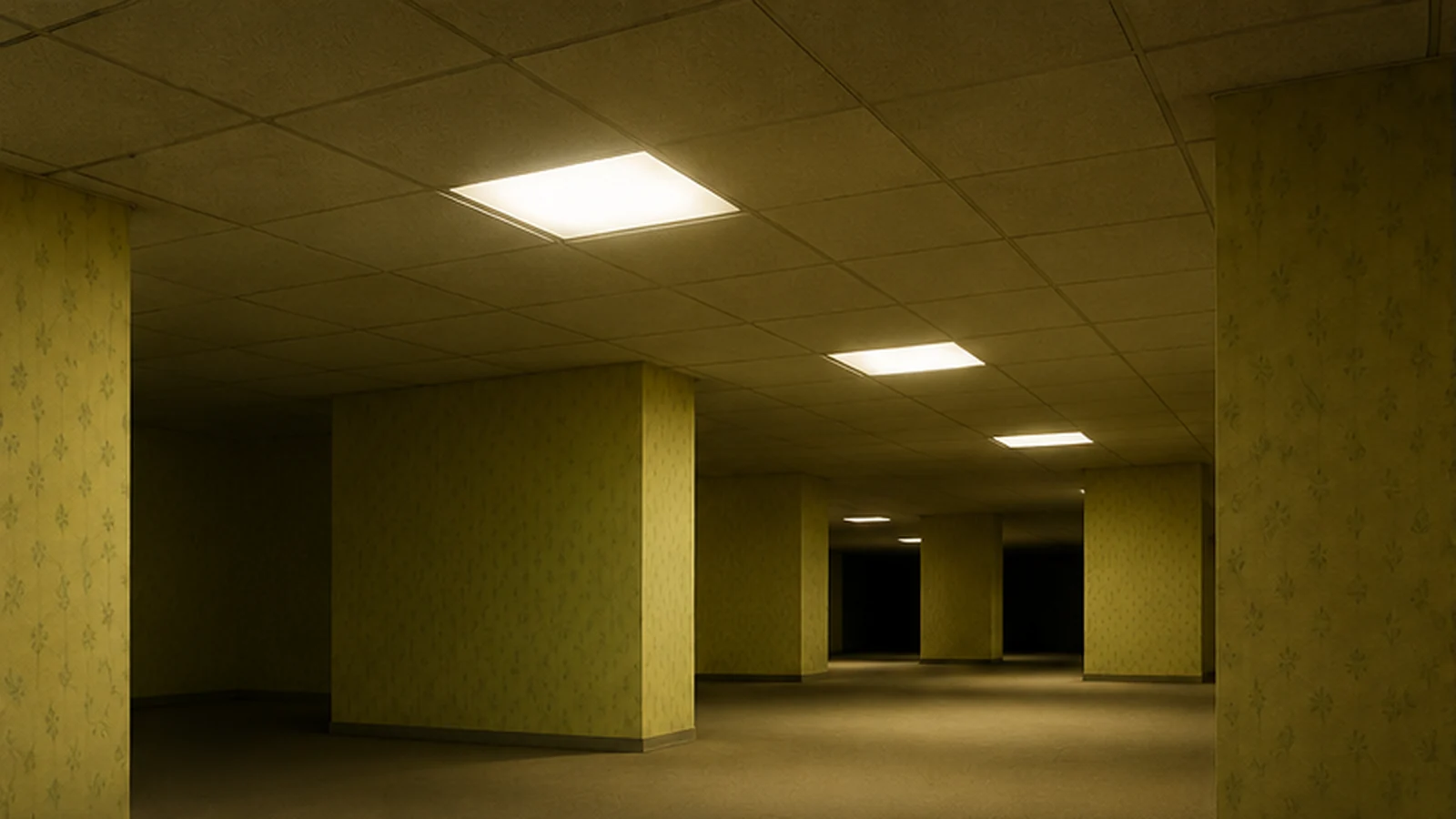
A hallway with no people. A swimming pool lit after closing. A hotel corridor that seems to continue forever. These ordinary places can feel strangely unfamiliar when photographed at the wrong—or right—moment. That is the appeal of liminal space photography: making a familiar environment feel suspended between uses, destinations, or moments in time.
Interest is timely. In an October 14, 2026 report, Google Canada said searches for “liminal space” had reached an all-time high in Canada and “liminal photography” had become a breakout search. Those statements describe Canadian search interest, not worldwide search volume or guaranteed traffic.
What Is Liminal Space Photography?
“Liminal” refers to a threshold or transitional state. In photography, the label is often applied to places that look as though something has just happened or is about to happen: empty schools, stairwells, waiting rooms, shopping centers, and parking garages. The visual style overlaps with internet aesthetics such as the Backrooms, but a photograph need not imitate a horror film to qualify.
There is no single official definition or camera setting. A convincing image usually combines an everyday location with one or more disorienting cues: an absence of expected people, repeated geometry, unusual lighting, or a composition that withholds context.
Why Do These Pictures Feel Unsettling?
The strongest explanation is not that an empty corridor is inherently frightening. Viewers bring expectations about how a place normally looks and functions. A bright school hallway with no students, for example, violates an everyday expectation without showing any explicit danger.
Several ideas help interpret the effect, but they should not be confused with proof of one universal psychological mechanism:
- Expectation mismatch: The setting is recognizable, yet a key social or temporal cue is missing.
- Ambiguity: The image may conceal where a passage leads, when it was taken, or why the building is empty.
- Repetition and scale: Long rows of identical doors or ceiling panels can make distance difficult to judge.
- Personal association: Some viewers experience nostalgia, others discomfort, and others no strong reaction at all.
Researchers have examined how built environments and visual cues relate to impressions of eeriness. Such findings can inform an interpretation of liminal photography, but they do not establish that all viewers react identically or that a particular image diagnoses anxiety.
How to Shoot Liminal Space Photos With a Phone
1. Choose an ordinary, accessible location
Start with a public walkway, an empty office lobby where photography is permitted, a quiet station concourse, or your own home. Seek permission on private property. Never enter abandoned or restricted buildings, and avoid photographing identifiable strangers without appropriate consent.
2. Remove visual distractions
Look for clean lines and empty space. A centered door, distant exit sign, or solitary chair can act as the focal point. Move a few steps left or right to keep unwanted signs, bins, and vehicles out of frame; do not physically alter public spaces.
3. Use symmetry—then break it slightly
Try a straight-on frame of a corridor with the vanishing point near the center. Take a second image with the focal point slightly off-center. Compare which creates more tension without becoming confusing.
4. Keep vertical lines straight
Enable the phone's grid. Hold the camera level and avoid tilting it upward too far. If your editor offers perspective correction, use it lightly; aggressive correction can stretch edges and make the image look artificial.
5. Preserve highlights and shadows
Tap the brightest important area and reduce exposure slightly if fluorescent lights or windows are blown out. Photograph in the default camera mode first. Night mode can brighten the scene dramatically, so compare it with a standard shot before choosing.
6. Take a small series, not one photo
Make three frames: a wide establishing view, a tighter composition, and a detail. The wide frame often communicates the uncanny geometry best, while the detail can reveal the texture that makes the space believable.
Camera Settings for a Backrooms-Style Look
| Situation | Starting approach | Watch out for |
|---|---|---|
| Bright fluorescent corridor | Auto exposure, low ISO, straight framing | Blown ceiling lights |
| Dim interior with a tripod | Low ISO and a longer shutter speed | Motion blur from passersby |
| Handheld low light | Stabilize against a wall, take several frames | Heavy noise reduction |
| Repeating rooms or doorways | Moderate wide angle | Extreme ultrawide distortion |
If your camera has manual controls, a low ISO generally helps retain cleaner textures. A tripod allows slower shutter speeds in dim rooms. These are starting principles, not mandatory numeric settings: the correct exposure depends on your scene and equipment.
Editing Without Making the Scene Look Fake
Begin with a neutral edit, then change one element at a time. Lower highlights to recover ceiling fixtures, gently lift shadows so architectural details remain visible, and adjust white balance to emphasize existing fluorescent green or warm tungsten light. Moderate contrast can define repeating lines. Excessive sharpening, added fog, and strong color casts may turn a believable liminal image into obvious digital horror art.
For a controlled comparison, export two versions from the same original: one natural and one stylized. Ask a few viewers which feels stranger and why. This is an informal creative exercise, not a scientific experiment or evidence of a universal psychological response.
Five Photo Ideas You Can Try Safely
- A hallway after closing: Photograph an authorized empty corridor from one end, using repeating lights as leading lines.
- An indoor stairwell: Frame a landing so the next flight is visible but the destination is hidden.
- A quiet parking structure: Use painted arrows and columns to create depth without including license plates.
- A waiting area: Compose a row of chairs with one empty gap or a clock in the distance.
- A familiar room at an unusual hour: Photograph your kitchen or living room before sunrise with only one practical light on.
Common Mistakes That Weaken the Effect
An image can be empty without feeling liminal. If the composition has no visual direction, viewers may simply see a vacant room. Too many filters can remove the familiar quality that makes the scene interesting. A location filled with horror props often reads as a staged haunted house rather than an ordinary space that feels subtly wrong.
Also avoid using the Backrooms label as though it describes a real physical phenomenon. It is an internet-fiction and aesthetic reference, not evidence that these spaces exist outside ordinary architecture.
Liminal Photography vs. Urban Exploration
The two are not synonymous. Liminal photography is an aesthetic and compositional approach; urban exploration involves visiting built environments, sometimes abandoned ones. You can make excellent liminal photographs in safe, lawful, everyday locations. Access permission and physical safety matter more than capturing an especially eerie shot.
Why the Trend Matters Beyond Halloween
Halloween and horror media may intensify attention in October, but the underlying creative technique is usable year-round. Architectural photographers can learn from its control of geometry, phone photographers can practice exposure in difficult interiors, and visual storytellers can use absence and ambiguity without resorting to explicit frightening imagery.
The most effective liminal photograph does not need a monster, a fictional backstory, or elaborate editing. It needs a recognizable place—and one carefully chosen reason for that place to feel unfamiliar.
Sources and Further Reading
- Google Canada, Here's what Canadians are searching for this Halloween (October 14, 2026): https://blog.google/intl/en-ca/products/explore-get-answers/halloween26/
- Google, Check out this year's buzziest Halloween trends (October 14, 2026): https://blog.google/products-and-platforms/products/search/frightgeist-halloween-trends-2026/
You may also like
 Technology & How-To
NHS App Prescription Not Showing? Check GP Approval, Pharmacy Status and Tracking
Find out why a prescription or medicine is missing from the NHS App in England. Separate repeat requests,…
 Technology & How-To
Google Wallet Not Working After Switching Phones? Fix Card Setup and Tap to Pay
Google Wallet transferred but tap to pay fails? Separate card verification, bank approval, NFC, screen lock and device…
 Technology & How-To
iCloud Family Sharing Not Working? Why You Still See 5GB and How to Fix It
Still seeing 5GB after joining an iCloud family plan? Check the account, invitation, sharing settings, personal plan and…