
Scientists Discover a Hidden “Cleanup System” Inside the Eye
Researchers have identified a previously unknown drainage pathway at the back of the eye in mice. The POLO pathway could reshape research into glaucoma and macular degeneration.
Contents
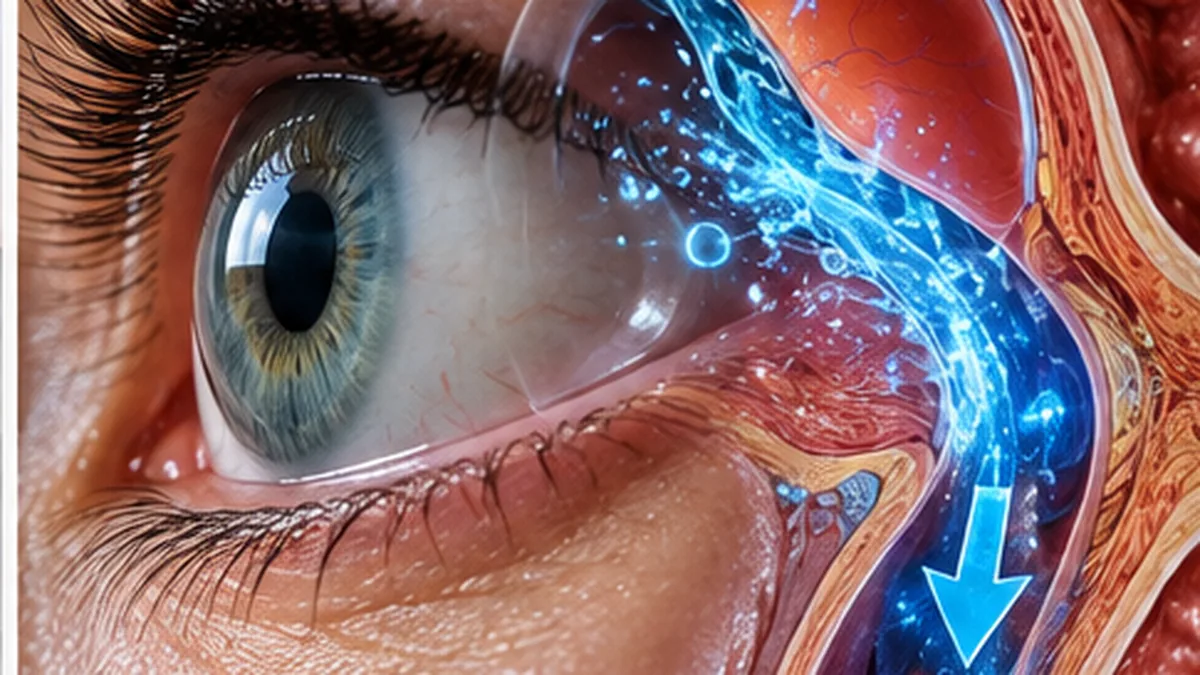
Last reviewed: October 11, 2026. Scientists from the University of British Columbia and the University of Toronto have identified a previously unrecognized drainage route at the back of the eye. The pathway, called the posterior ocular lymphatic outflow (POLO) pathway, appears to carry fluid and waste from the eye toward the body’s lymphatic system.
The finding is exciting because the retina is extremely metabolically active and constantly produces material that must be cleared. But there is an important limitation: the key experiments were performed in mice. The discovery is a research breakthrough, not a new treatment that patients can receive today.
What is the POLO pathway?
The researchers identified small lymphatic vessels in the choroid, a vascular layer located beneath the retina. Using MRI, near-infrared fluorescence and microscopy, the team tracked tracer molecules placed at the back of the eye and watched them move into surrounding orbital tissue and then to nearby lymph nodes.
That provided evidence of a functional route connecting the back of the eye with the broader lymphatic system — something that had not been clearly mapped before.
Why did scientists think this was unusual?
For more than a century, the eye was generally considered to have little or no conventional lymphatic drainage compared with most other organs. Earlier work had already challenged that assumption by identifying a lymphatic-related pathway at the front of the eye. The new study extends the picture to the posterior eye, where many serious vision-loss diseases begin.
Why could this matter for glaucoma and macular degeneration?
Glaucoma, age-related macular degeneration and several retinal disorders are associated with disrupted fluid balance, inflammation or the accumulation of metabolic material. If the POLO pathway contributes to clearing that material, researchers may eventually be able to study whether strengthening, protecting or targeting the pathway affects disease.
That is a future research direction, not evidence that activating lymphatic drainage currently prevents blindness. Human anatomy, disease mechanisms and treatment safety still need extensive study.
How did the researchers trace the pathway?
- Fluorescent tracer molecules were introduced into a thin space at the back of the eye.
- MRI and near-infrared imaging were used to follow fluid movement in real time.
- Microscopy helped identify lymphatic vessels in the choroid.
- The tracer moved through orbital tissues and reached nearby lymph nodes within minutes in the animal experiments.
Could the discovery improve drug delivery?
Possibly. The research team says a better understanding of fluid movement at the back of the eye could eventually help scientists rethink how drugs are delivered to retinal tissues, how inflammation is cleared and how pressure or fluid dynamics contribute to disease. Those applications remain experimental.
What should patients take from this study?
The study changes the scientific map of the eye more than it changes current clinical care. People with glaucoma, macular degeneration or other retinal conditions should continue using established treatments and follow-up plans recommended by their eye-care professionals.
FAQ
Was the pathway discovered in humans? The key functional mapping reported by the research team was demonstrated in mice; further work is needed to define its role in humans. Does this cure glaucoma? No. It identifies a possible biological pathway that may become a future therapeutic target. Where was the work published? The study was published in Translational Vision Science & Technology.
Sources
Sources: University of British Columbia — Researchers discover the eye’s hidden cleanup system; ScienceDaily — The eye has a hidden cleanup system.
You may also like
 Science
 The $1.8 Billion AI Biology Project: Can Virtual Cells Transform Medicine?
Inside the $1.8 billion Virtual Biology Initiative: funding, partners, virtual cell AI, drug discovery potential, data access and…
 Science
 Can Human Cells Remember Things Outside the Brain? What Studies Really Show
Can cells outside the brain remember? Explore NYU research on cellular memory, spaced stimulation, ERK and CREB, and…
 Science
 What Are Mirror Life Organisms and Why Are Scientists Concerned?
Mirror life is hypothetical, but its potential risks have prompted UN warnings. Explore molecular chirality, real research, safety…