
Heat Pump Not Heating Properly? 12 Problems You Can Check Before Calling an Engineer
Heat pump running but your home is cold? Check 12 common causes safely, from thermostats and defrost cycles to airflow and heating curves, before calling an engineer.
Contents
- First: decide whether this is an emergency
- 12 problems you can check before calling an engineer
- 1. The thermostat is set incorrectly
- 2. The system has not had time to warm the building
- 3. The weather-compensation or heating curve is too low
- 4. Radiator valves or room zones are restricting flow
- 5. An air filter is clogged
- 6. Furniture, snow or leaves block airflow
- 7. The outdoor unit is in a defrost cycle
- 8. System water pressure is low (air-to-water)
- 9. Air is trapped in radiators or water circuits
- 10. The hot-water schedule is taking priority
- 11. Backup or auxiliary heat is not operating as intended
- 12. A fault code, poor commissioning or undersized system is the real problem
- How to tell normal winter operation from a genuine fault
- A 20-minute diagnostic checklist
- Why a heat pump can run all day without wasting electricity
- UK versus US: which advice applies to your installation?
- When to book an engineer immediately
- What to tell the installer so the first visit is productive
- Official guidance and further reading
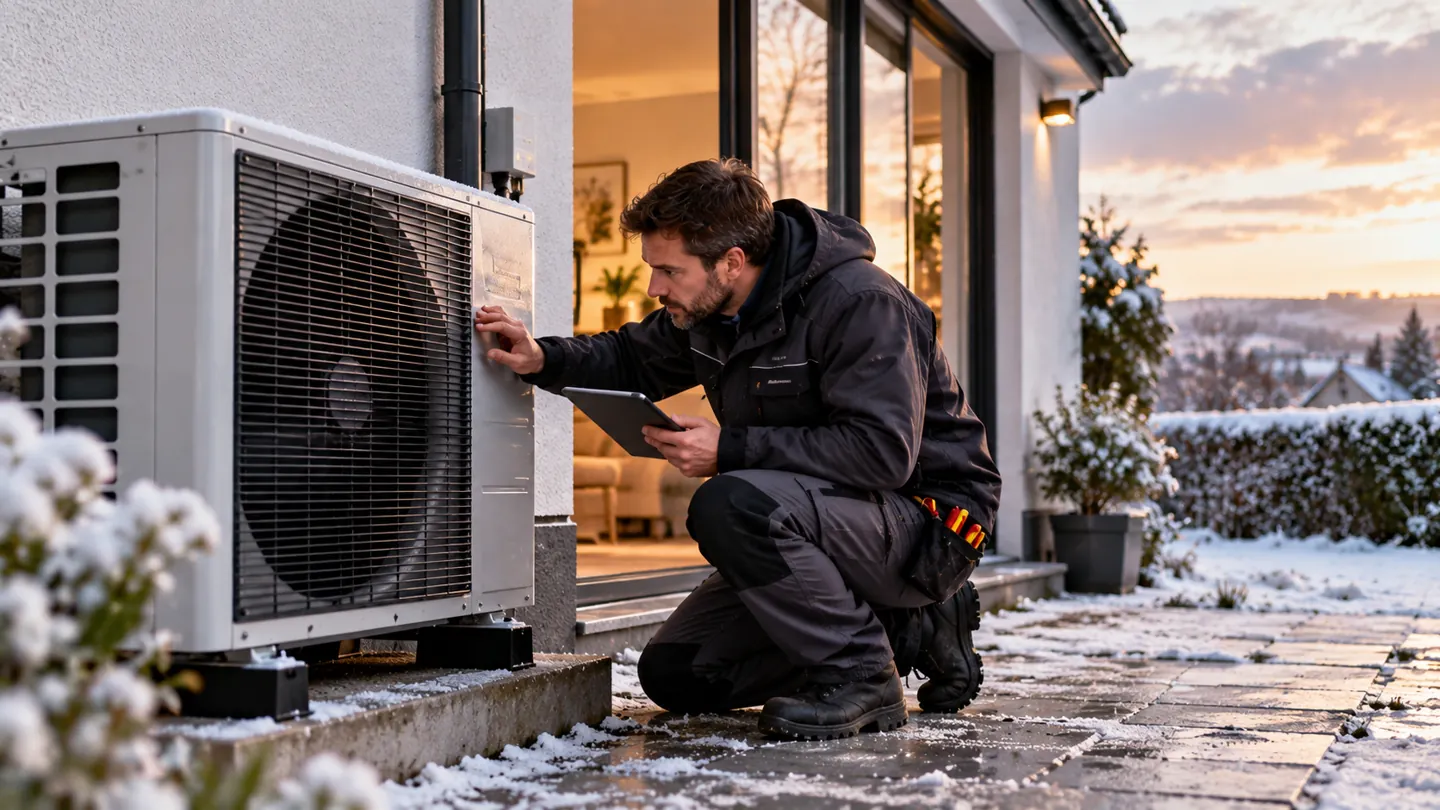
A heat pump that runs for hours is not necessarily broken. Unlike a gas boiler or conventional furnace, an efficient heat pump may deliver steady, lower-temperature heat for long periods. The warning sign is a home that stays uncomfortably cold, a persistent error code, unusual noise, or rapidly increasing electricity use. This guide covers twelve safe checks for air-source heat pumps, including UK air-to-water systems and US ducted or ductless air-to-air units.
Start by identifying your system: air-to-water heat pumps warm water for radiators or underfloor heating; air-to-air models warm indoor air through ducts or wall-mounted units. Some checks apply to both, but pressure gauges and radiator controls do not apply to a typical US mini-split.
First: decide whether this is an emergency
If you smell burning, see smoke or sparks, suspect damaged wiring, or hear severe grinding, switch the system off if safe and contact a qualified professional. Do not remove electrical covers, bypass safety switches, open refrigerant lines, or repeatedly reset a tripping breaker. If your home is dangerously cold, use a safe alternative heating arrangement while arranging urgent help.
| Symptom | Likely interpretation | First safe action |
|---|---|---|
| Runs continuously, rooms comfortable | May be normal modulation | Check room temperature and energy use |
| Runs continuously, rooms cold | Capacity, settings or distribution issue | Follow checks 1–12 |
| Steam or brief pause outside | Often normal defrost | Observe for recovery |
| Outdoor unit encased in thick ice | Possible airflow or defrost fault | Call installer |
| Repeated breaker trip or burning smell | Potential electrical hazard | Stop use and seek urgent service |
12 problems you can check before calling an engineer
1. The thermostat is set incorrectly
Confirm the system is in HEAT mode, not COOL, FAN or AUTO where auto-changeover may select the wrong mode. Set a realistic target, for example 19–21°C (66–70°F), and allow time to respond. Check whether a schedule, holiday mode or remote room sensor is overriding the display.
What to do next: Avoid raising the setpoint dramatically to “make it heat faster”: that may trigger expensive backup heat on some systems.
2. The system has not had time to warm the building
A heat pump often works best with a stable indoor target. After a deep overnight setback, a cold masonry home or underfloor slab can take hours to recover. Compare indoor temperature at the start and after a few hours, rather than judging by radiator temperature alone.
What to do next: If the room temperature is slowly increasing, the system may be working; if it never rises despite sustained operation, continue troubleshooting.
3. The weather-compensation or heating curve is too low
For air-to-water systems, a weather-compensation curve sets the water temperature according to outdoor conditions. A curve set too low may leave radiators lukewarm and rooms cold. Check the user guide and any installer-approved adjustment procedure; change only one small setting at a time and record the original value.
What to do next: Increasing flow temperature can reduce efficiency. If the correct setting is unclear, ask the installer to balance comfort and efficiency.
4. Radiator valves or room zones are restricting flow
Check whether thermostatic radiator valves are closed, underfloor zones are calling for heat, or a room thermostat is blocking the heating demand. Open the valves in cold rooms according to the system design. A heat pump requires adequate water circulation and may suffer if too many zones are closed.
What to do next: Do not force stuck valves or alter bypass arrangements; those require a heating professional.
5. An air filter is clogged
On ducted air-source heat pumps and many mini-splits, a dirty indoor filter reduces airflow and heating output. Turn the system off using normal controls, inspect accessible filters and clean or replace them as specified in the manufacturer instructions. Ensure filters are completely dry before reinstalling if washing is permitted.
What to do next: Air-to-water heat pumps generally do not have the same indoor air filter; use the checks relevant to your model.
6. Furniture, snow or leaves block airflow
Inspect the outdoor unit from a safe distance. Clear loose leaves, bins, overgrown plants and snow around the cabinet while keeping the manufacturer-required clearance. Indoors, avoid blocking supply and return grilles with furniture or curtains.
What to do next: Never insert hands or tools through the fan grille, pressure-wash the coil, or chip ice off with a sharp object.
7. The outdoor unit is in a defrost cycle
In cold damp weather, frost can form on the outdoor coil. The heat pump may briefly reverse operation to melt it; steam, dripping water and a temporary reduction in indoor heat can be normal. A healthy system should return to heating afterward.
What to do next: A solid ice block that persists, repeated defrost without recovery, or a fan striking ice warrants service.
8. System water pressure is low (air-to-water)
If the manufacturer provides a user-visible pressure gauge, compare the reading with the specified normal range in your own manual. Some sealed systems need repressurising by an approved method; others should be serviced rather than topped up by the homeowner. Frequent pressure loss can signal a leak.
What to do next: Do not guess a universal pressure target or operate unfamiliar filling loops. Persistent pressure loss needs an engineer.
9. Air is trapped in radiators or water circuits
Cold radiator tops, gurgling or uneven heating can indicate trapped air in hydronic systems. Check whether the manual permits homeowner radiator bleeding and how to maintain pressure afterward. Heat-pump circuits can have specialist air separators and commissioning requirements.
What to do next: Do not bleed components or change system pressure unless the manufacturer or installer specifically permits it.
10. The hot-water schedule is taking priority
Many UK air-to-water systems temporarily divert output to the domestic hot-water cylinder. A long or mistimed hot-water cycle can make space heating appear to stop. Check the controller for a hot-water symbol, scheduled cylinder heating and immersion-heater settings.
What to do next: Do not disable anti-legionella or hygiene cycles. Ask the installer to adjust schedules if they conflict with comfort.
11. Backup or auxiliary heat is not operating as intended
In some US systems, auxiliary electric heat supports the heat pump in extreme cold or during recovery. If the home is cold and AUX never activates when expected, a control or heater issue is possible; if AUX is on continuously, electricity costs can rise sharply. Check only user-facing settings and alerts.
What to do next: Do not open panels or attempt to test heating elements, relays or wiring yourself.
12. A fault code, poor commissioning or undersized system is the real problem
Write down any error code and look it up in the exact model manual. Persistent low performance may stem from refrigerant issues, faulty sensors, pump or fan faults, inadequate emitter sizing, poorly balanced radiators, or heat loss higher than the original design allowed. These require measurements and professional diagnosis.
What to do next: A properly qualified technician should check temperatures, flow, electrical readings and manufacturer diagnostics rather than simply increasing the thermostat.
How to tell normal winter operation from a genuine fault
| What you notice | Often normal | Needs attention |
|---|---|---|
| Outdoor fan pauses | During defrost | Repeated shutdown and error codes |
| Radiators feel lukewarm | Low-temperature designed system | Rooms cannot reach target |
| Unit runs most of the day | Variable-speed modulation | Persistent cold rooms and rising costs |
| Water under outdoor unit | Condensate or defrost melt | Leak near indoor electrical parts |
| Backup heat comes on | Some very cold conditions | Runs constantly without clear reason |
A 20-minute diagnostic checklist
- Record indoor and outdoor temperatures and your desired setpoint.
- Check HEAT mode, schedules, holiday settings and active error messages.
- Inspect accessible filters and indoor vents where relevant.
- Look for snow, leaves or objects blocking the outdoor unit.
- Observe whether a short defrost cycle ends and normal heating resumes.
- For hydronic systems, check user-visible pressure and zone valves without changing unfamiliar controls.
- Take photos of the model label and controller error codes for the installer.
Why a heat pump can run all day without wasting electricity
A heat pump moves heat rather than producing all of it from electrical resistance. Its coefficient of performance (COP) is heat delivered divided by electricity consumed under the stated conditions. For example, delivering 9 kWh of heat with 3 kWh of electricity corresponds to a COP of 3. Real COP varies with outdoor temperature, flow temperature, defrost, equipment design and installation quality; this is an illustration, not a guarantee.
A lower water-flow temperature can improve efficiency, but only if radiators or underfloor heating are large enough to keep the rooms warm. Frequent large thermostat setbacks, unnecessary high flow temperatures, and continuous electric resistance backup can increase running costs. Measure comfort and meter use over comparable weather conditions rather than drawing conclusions from one hour.
UK versus US: which advice applies to your installation?
| Feature | Typical UK air-to-water heat pump | Typical US air-to-air heat pump |
|---|---|---|
| Heat delivery | Radiators or underfloor heating | Air ducts or wall-mounted heads |
| Relevant check | Heating curve and system pressure | Filters, vents and auxiliary heat |
| Domestic hot water | Often integrated with cylinder | Usually separate system |
| Professional to contact | Heat-pump-trained heating engineer | Licensed HVAC technician |
When to book an engineer immediately
Arrange prompt professional help if the heat pump cannot maintain safe indoor temperatures, repeatedly trips electrical protection, displays recurring faults, has a persistent thick ice buildup, produces unusual metallic noise, or shows a water leak. If a vulnerable person depends on reliable heat, treat a loss of heating as urgent. For refrigerant leaks or electrical faults, do not attempt DIY repairs.
What to tell the installer so the first visit is productive
- Make and exact model of indoor and outdoor units; approximate installation date.
- Whether the problem affects space heating, hot water or both.
- Current outdoor temperature, thermostat target and measured indoor temperature.
- Any displayed error code and when it first appeared.
- Recent maintenance, power cuts, changes to schedules or radiator valves.
- Whether the unit defrosts normally, and photos of any unusual ice.
Official guidance and further reading
For independent background on heat-pump operation, read the US Department of Energy air-source heat-pump guide. For UK household guidance, consult the Energy Saving Trust air-source heat-pump overview. For safe maintenance, use the exact model-specific manual from the manufacturer and the commissioning instructions provided by your installer. In the UK, MCS provides information on certified installations and contractors.
The most useful distinction is not “Is the heat pump running?” but “Is it maintaining comfort efficiently, without persistent errors or unsafe symptoms?”
Bottom line: Start with mode, schedules, airflow, outdoor obstructions and defrost. On air-to-water systems, check user-accessible zone settings and the heating curve; on air-to-air systems, inspect filters and vents. If rooms remain cold or a fault persists, record the evidence and call a qualified engineer rather than attempting electrical or refrigerant repairs.
You may also like
 Technology & How-To
NHS App Prescription Not Showing? Check GP Approval, Pharmacy Status and Tracking
Find out why a prescription or medicine is missing from the NHS App in England. Separate repeat requests,…
 Technology & How-To
Google Wallet Not Working After Switching Phones? Fix Card Setup and Tap to Pay
Google Wallet transferred but tap to pay fails? Separate card verification, bank approval, NFC, screen lock and device…
 Technology & How-To
iCloud Family Sharing Not Working? Why You Still See 5GB and How to Fix It
Still seeing 5GB after joining an iCloud family plan? Check the account, invitation, sharing settings, personal plan and…