
Gemini 4 Carbon: What’s New and Who Can Access It?
What Google announced about Carbon, how to verify access, and a practical token-cost example before you pay.
Contents
Gemini 4 Carbon has been announced, but that does not mean you can select it in your Gemini account. Google’s October 28 announcement prioritizes cyber defenders and a phased rollout. No general consumer launch date was stated. This guide separates the announcement from access you can actually verify.
Availability checked on October 30, 2026. We have not tested Carbon or obtained early access.
What is new about Carbon?
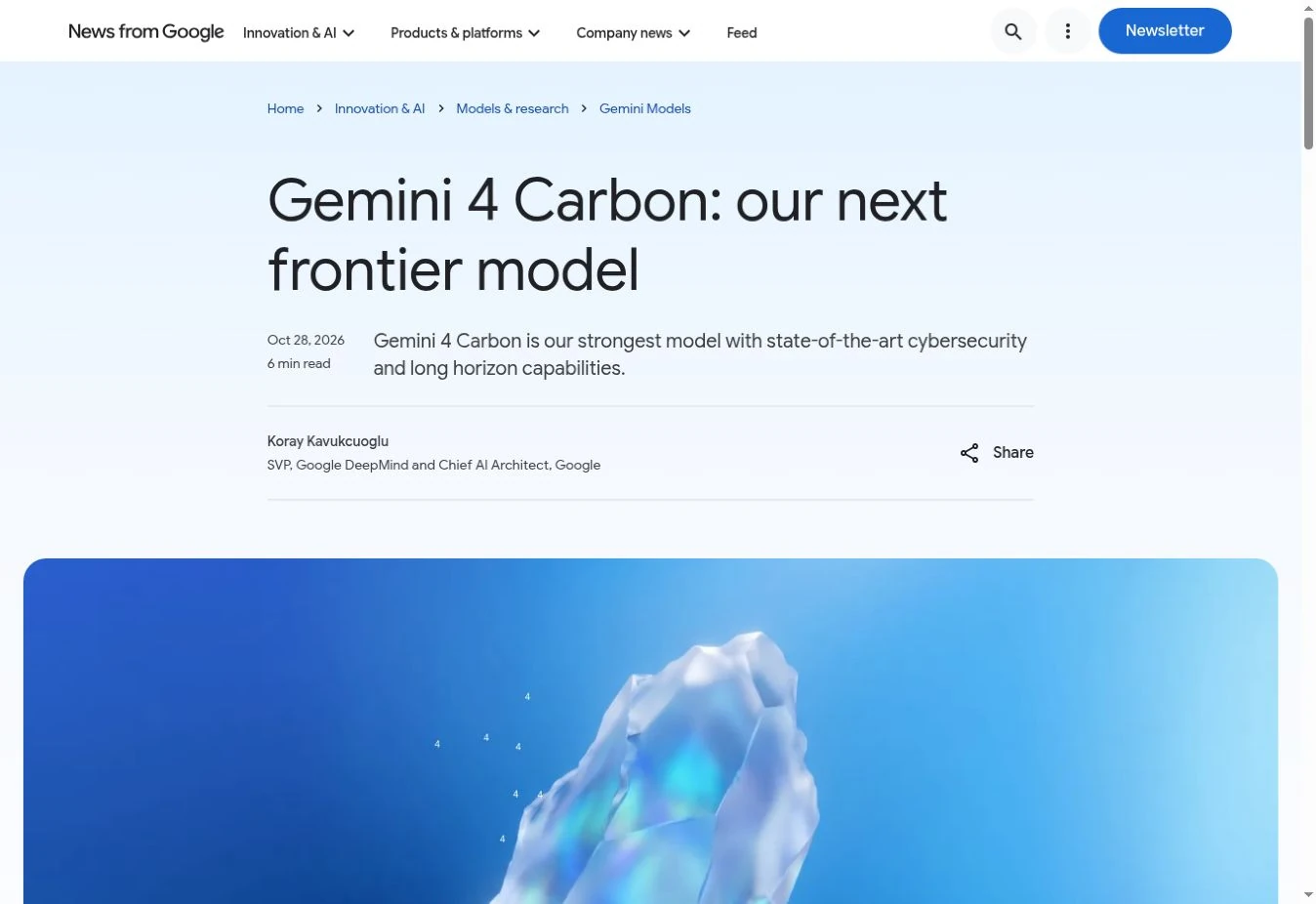
Google’s announcement emphasizes cybersecurity and sustained engineering work. Its introductory API rates are $2 per million input tokens and $10 per million output tokens. These are usage rates, not a monthly Gemini subscription.
For a reader choosing a tool, the useful question is whether it can complete a particular job reliably at an acceptable total cost. A launch headline cannot answer that. Keep the model’s exact name, the product carrying it, and the account entitled to use it separate when evaluating any offer.
Carbon and Argon: which can you use?
Google’s October 13 Argon announcement describes developer access through AI Studio and its API, plus eligible Pro and Ultra access in the Gemini app. That announcement concerns Argon. It does not establish the same entitlement for Carbon.
Our Gemini 4 Argon guide covers the earlier model in detail. Use this article for the separate question of Carbon’s rollout.
A practical example: a screenshot showing Argon in someone’s model menu is evidence about that account and Argon. It does not demonstrate that Carbon is included, or that a different account in another country will have the same options.
Who should check the Fairwind Program?
The official Fairwind page describes vetted institutional access, prioritizing governments and critical infrastructure. Organizations request consideration through their Cloud account team. The page prohibits partners from reselling access. An application is not approval; its descriptions of Argon should not be read as proof that an applicant has Carbon.
If you represent an organization, prepare a clear account of the defensive task, who needs access, and how results will be reviewed. Ask the account team which model and product the proposed access actually covers. An individual looking for a chat upgrade should first check the ordinary product documentation rather than treating an institutional program as a consumer waiting list.
How to verify an access claim
- Open the original announcement. Check whether an update describes availability, a preview, or a future plan.
- Identify the product. An app subscription, a developer project and an organization’s controlled environment are different purchase and access decisions.
- Look for the exact model. Verify the model name in your account or current official documentation. Do not construct a model ID by replacing “argon” with “carbon.”
- Read the billing terms. Check what will be charged and which limits apply before enabling a workload.
- Keep evidence of what you tested. Record the date, account type, exact model, task and result. A reseller’s badge alone is insufficient evidence.
A worked cost estimate before you commit
Here is an illustrative calculation using the introductory rates above, with no cache discount: a job with 120,000 input tokens and 15,000 billed output tokens costs $0.24 for input plus $0.15 for output, totaling $0.39 in those two token charges. This is arithmetic, not a measured Carbon run or a price quote.
Repeating the same job ten times would make those charges $3.90. A task that requires retries can therefore be more expensive than a longer task that succeeds on its first attempt. Any separate tools, storage, taxes or other applicable charges would need their own calculation.
For budgeting, keep a simple record of estimated tokens per attempt, attempts per completed task, and time spent checking the result. Compare the resulting cost per successful task. Do not assume that a current Argon promotion deadline or consumer allowance automatically applies to Carbon; verify the terms for the model you will actually use.
A useful comparison needs your own task
Before switching tools, prepare three representative jobs: a routine task with a known answer, a difficult task with a verifiable outcome, and a task where the correct response includes acknowledging missing information. Give each candidate the same files, instructions and output requirements.
Record factual mistakes, changes you had to undo, completion time and the full bill. For code, run appropriate checks and inspect the changes. For research, open the cited evidence. Keep any claimed benchmark improvement separate from what your own test demonstrates.
For now, an ordinary user can continue with an available model and revisit the official rollout information. A developer can prepare evaluation cases without committing a production integration to an unverified endpoint. A security organization can ask about institutional eligibility while retaining human review of proposed fixes.
Sources and image credit
- Google: Carbon announcement, October 28, 2026.
- Google: Argon availability announcement, October 13, 2026.
- Google DeepMind: Fairwind eligibility and managed-access terms.
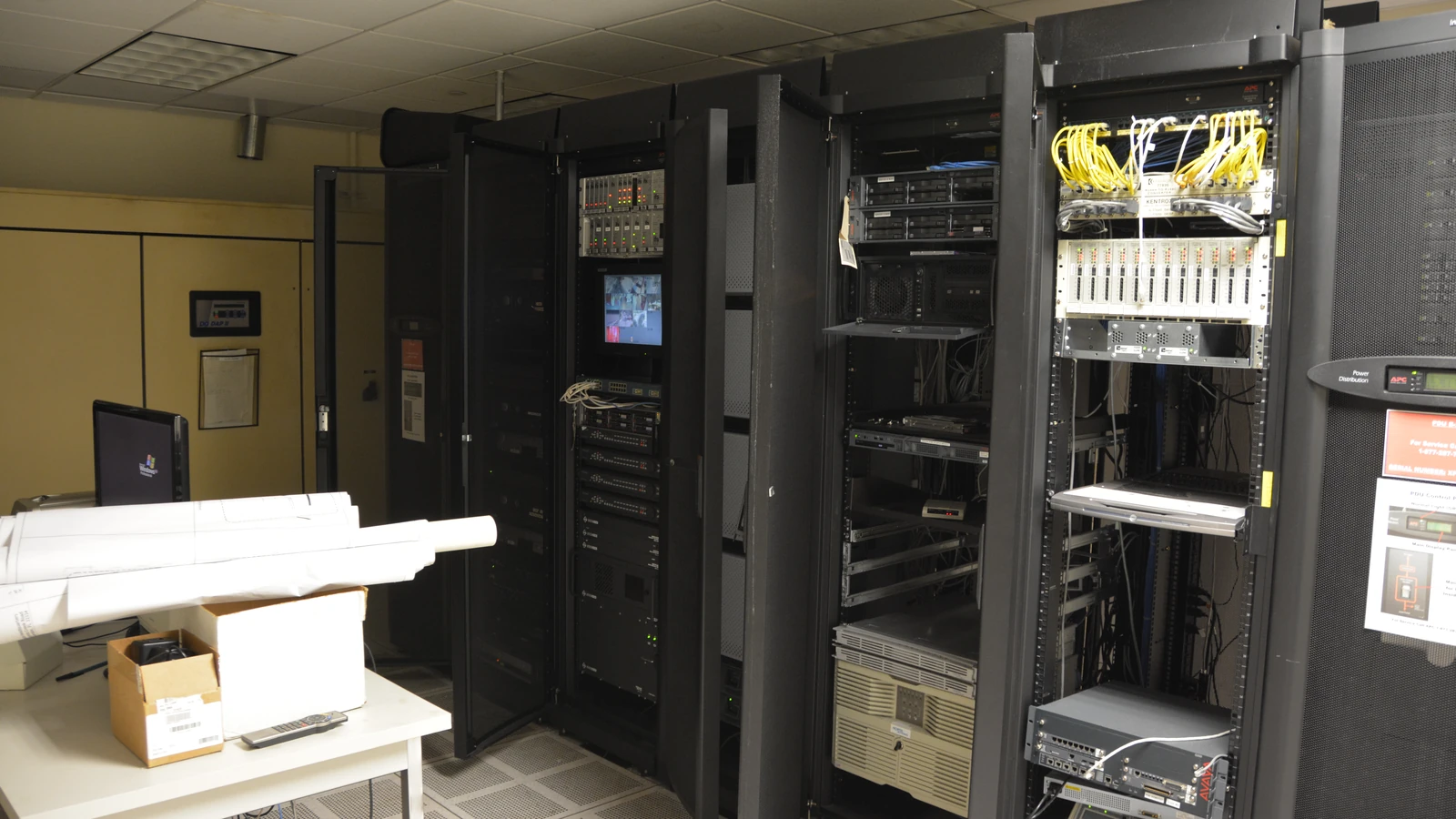
- Featured photograph: Carl Lender, Server Room, CC BY 2.0. License. Cropped to 16:9 and converted to WebP. It is a contextual server-room photograph, not a Google facility or Carbon hardware.
You may also like
 Technology & How-To
Is Tesla Discontinuing the Cybertruck? What We Know
Tesla plans a Cybertruck production wind-down in Texas around mid-2027. See what is confirmed, what remains unknown, and…
 Technology & How-To
Are AI Toys Safe for Kids? Privacy Risks and Parent Checks
Are AI toys safe for kids? Explore the evidence, privacy risks, age advice and practical parent checks for…
 Technology & How-To
iPhone Trust This Computer Not Showing? Windows and Mac Fixes
Restore the iPhone computer-trust prompt with checks for unlocking, Apple Devices or Finder, USB data cables and targeted…