
How to Freeze Your Credit for Free—and Temporarily Unfreeze It
Freeze your US credit reports for free at Equifax, Experian and TransUnion, then schedule a temporary lift when a lender needs access.
Contents

In the United States, you can freeze your credit for free at Equifax, Experian and TransUnion. Contact each bureau separately: freezing one report does not freeze the other two. When you need a lender to check your report, you can temporarily lift the freeze for free. You do not need a paid monitoring subscription to use a security freeze.
A freeze restricts access to your credit report for new credit applications, making it harder for someone to open accounts in your name. It does not lower your credit score or stop you using an existing credit card. Here is the direct route, with public-page screenshots checked on 3 November 2026.
1. Start with the three official freeze pages
Use these dedicated pages rather than a paid protection offer. The button names below were visible on the public websites when checked:
| Bureau | Official starting point | What to choose |
|---|---|---|
| Equifax | Equifax security freeze | Place a Security Freeze; Manage A Freeze for an existing freeze. |
| Experian | Experian credit freeze | Create a free account, or Sign in if you already have one. |
| TransUnion | TransUnion credit freeze | Add Freeze, or Unfreeze to manage an existing freeze through the Service Center. |
Follow each bureau’s identity-verification instructions. Have your name, address, date of birth and Social Security number available; the exact documents required depend on the bureau and request method. Enter personal information only through the official service you opened yourself.
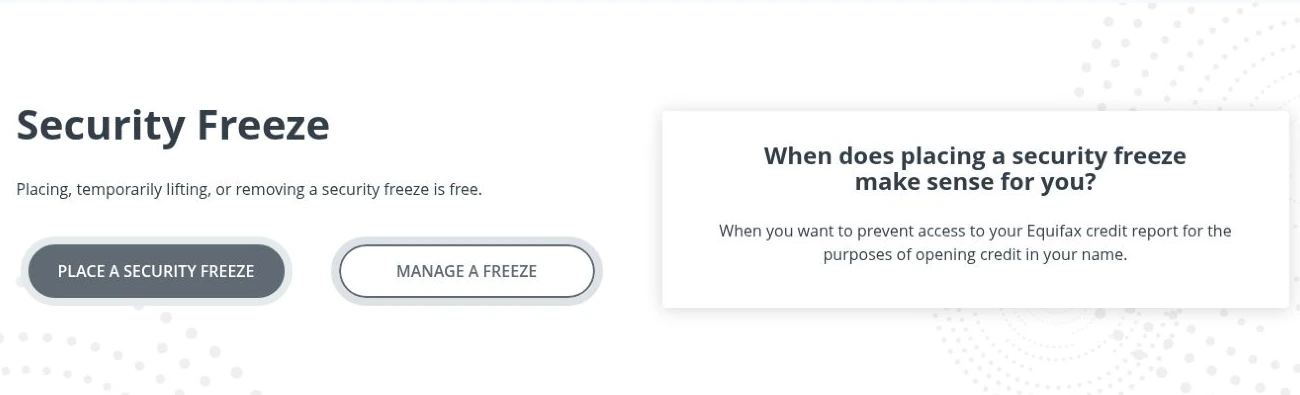
After signing in or creating the required free account, request the security freeze and check its status. Save the confirmation privately. Creating an account alone does not mean your report has been frozen. Repeat the process with the other two bureaus.
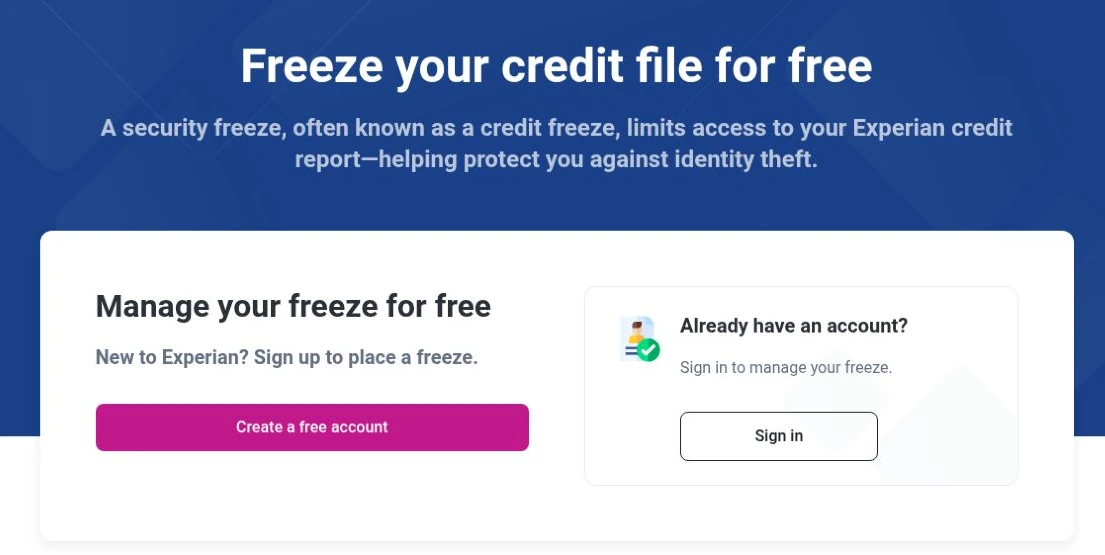
A simple completion check helps: “Equifax—confirmed; Experian—confirmed; TransUnion—confirmed.” Record the date beside each one. If one request is still pending, treat it as pending rather than assuming the other confirmations cover it.
2. Choose a temporary lift when you apply for credit
Ask the lender which bureau or bureaus it needs to check and when. The FTC recommends lifting the freeze only at the bureau needed, then restoring it once access is no longer required. If the lender needs multiple reports, manage each relevant freeze separately.
- Sign in through the relevant bureau’s official freeze page.
- Choose a temporary lift or scheduled thaw if you want access for a limited period; set the start and end dates.
- Check the confirmation and effective dates before the lender requests your report.
- After the window ends, check that the freeze is back in place. If you removed it permanently, request a new freeze when appropriate.
TransUnion’s public instructions call the option Temporarily Lift Freeze. Its current scheduling limit is 15 days ahead; for a later date, return closer to the time. Experian also offers a scheduled thaw with a defined period. Use the options actually shown in your account.
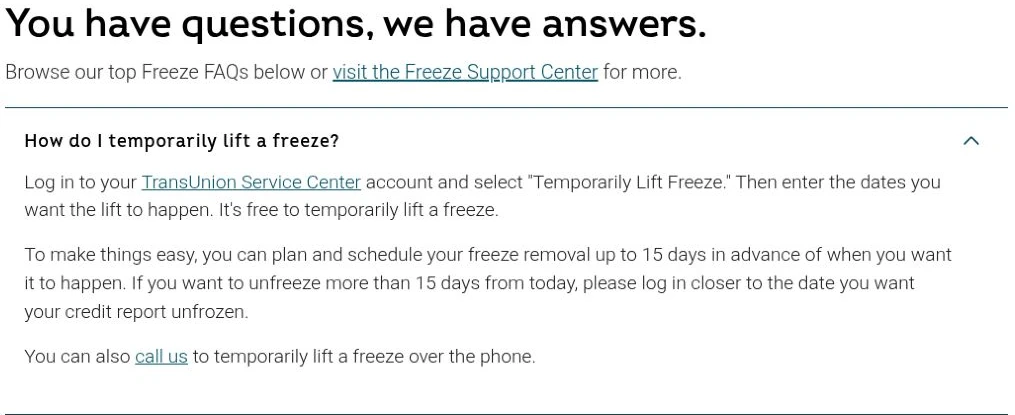
Example: you plan to apply for an auto loan next week. Ask which reports the lender will use and the expected check date. Schedule the relevant lifts to cover that period, confirm access is available, and recheck the freeze afterward. A thaw permits access; it does not guarantee approval.
How quickly should a freeze or lift take effect?
The USAGov timing guide distinguishes the request types:
- Online or phone freeze: within one business day.
- Online or phone lift: within one hour.
- Mailed request: within three business days after the bureau receives it, for placing or lifting a freeze.
Some online changes happen sooner. Experian describes real-time changes, and TransUnion says changes typically take effect almost immediately. Still, check the status before a credit check. Mailing time is additional; do not rely on a posted request for an application you need processed today.
Credit freeze, credit lock and fraud alert are different
A security freeze is the free option protected by federal law. A credit lock is a separate product that may be bundled with paid services. You do not have to buy that product to get a freeze, as the CFPB explains.
A fraud alert asks creditors to take identity-verification steps; it does not block access in the same way. For an initial fraud alert, contacting one nationwide bureau triggers notification to the other two. That sharing rule does not apply to security freezes.
If the request fails—or fraud has already happened
If online identity verification fails, use the phone or mail route on the bureau’s official page. Follow its document requirements; a sign-in error does not establish whether your report is frozen. Ask the bureau to confirm the status rather than purchasing an upgrade to solve the problem.
A freeze does not remove an account already reported or prevent fraudulent charges on existing accounts. Keep checking statements. If an unfamiliar account appears, follow the recovery steps at IdentityTheft.gov and contact the creditor through a verified channel. For inaccurate entries, see our guide to disputing credit report errors for free.
Sources and screenshot notes
CFPB security-freeze rights; USAGov processing times; FTC freezes and fraud alerts; FTC credit protection; Equifax; Experian; TransUnion FAQs. Screenshots show public pages only. No account was created, personal details submitted, or freeze placed or lifted during this review. The featured image is illustrative.
You may also like
 Services & Guides
V5C Log Book Not Arrived? What to Check Before Applying Again
Still waiting for your V5C? Check the correct DVLA waiting period, your address and green slip before applying…
 Services & Guides
Royal Mail Missed Delivery? Redelivery and Collection Explained
Missed a Royal Mail delivery? Book a redelivery, find the right reference, prepare collection ID and check the…
 Services & Guides
Universal Credit Identity Verification Failed? Documents and Next Steps
Cannot verify your identity for Universal Credit online? Check the next official step, online versus jobcentre evidence, missing…