
Ebola Outbreak 2026: UK Risk and Vaccine Trials
What the 2026 Bundibugyo Ebola outbreak means for UK risk, how the virus spreads, and why new vaccine trials do not yet prove protection.
Contents
- What happened in the UK?
- What is happening in the wider outbreak?
- Why an existing Ebola vaccine is not a universal answer
- What changed in the vaccine research on 4 November?
- How does Ebola spread?
- Symptoms: exposure history matters
- What should travellers check?
- How to judge the next update
- Is there a proven Bundibugyo vaccine now?
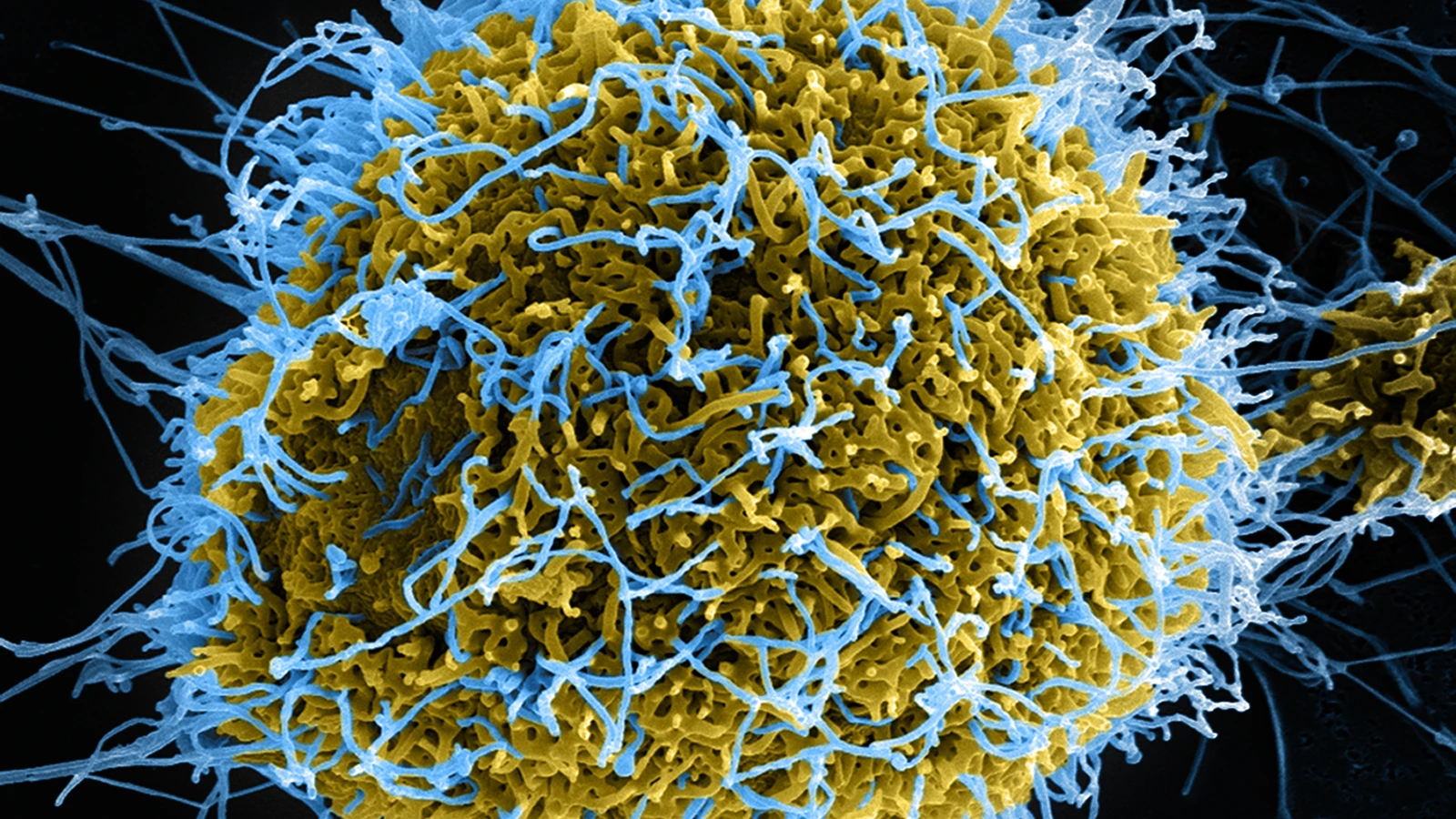
The 2026 Ebola outbreak is caused by Bundibugyo virus, a different virus from the one targeted by the established Ervebo vaccine. Researchers are testing vaccine options, but a recommendation to enter a clinical trial is not evidence that a candidate already protects people.
For UK readers, there is a separate development: a doctor infected while working in the Democratic Republic of the Congo has been brought to London for specialist care. UK authorities say the risk to the wider public remains low.
Checked 6 November 2026. Outbreak figures below retain their own reporting dates; they are not presented as a live count.
What happened in the UK?
On 5 November, the Department of Health and Social Care confirmed that a UK medical doctor who tested positive while working on the DRC response had returned on a medical evacuation flight. The patient is being treated in the Royal Free Hospital’s high-level isolation unit in London.
The department said established infection-control procedures applied to the evacuation and care. UKHSA assessed the risk to the wider public as low. A patient arriving for controlled treatment is therefore a different event from infection spreading through the local community; the announcement does not establish such transmission.
The Royal Free’s own statement confirms admission to a specialist unit staffed by trained clinical and laboratory teams. Neither statement provides a basis for speculating about the patient’s identity or individual prognosis.
What is happening in the wider outbreak?
The DRC remains the centre of the outbreak. The WHO daily epidemiological table, checked for this article, reported 10,668 confirmed cases and 5,198 confirmed deaths in the DRC, with data dated 3 November 2026. These are reported confirmed counts, subject to retrospective revision—not a tally of every infection that may have occurred.
Different countries have different reporting cut-offs. Adding a new media report to an older international total can double-count a patient, particularly when someone diagnosed in one country is evacuated to another for treatment. Use the source’s definitions and dates before comparing totals.
The UKHSA week-44 monitoring report, updated 5 November, describes the largest recorded Bundibugyo outbreak. It also distinguishes Kenya’s linked cluster from wider community transmission. The seriousness of the outbreak in affected areas and the low assessed risk to the UK public can both be true: exposure and local transmission conditions differ.
Why an existing Ebola vaccine is not a universal answer
“Ebola” covers diseases caused by several related viruses. WHO identifies Ebola virus, Sudan virus and Bundibugyo virus as causes of large outbreaks. Its Ebola fact sheet explains that approved vaccines and specific treatments are available for Ebola virus, while options for the other viruses remain under development.
Ebola virus is also commonly described as Zaire ebolavirus in vaccine discussions. Bundibugyo is not simply another name for that same virus. Evidence that a product protects against one cannot automatically be treated as proof of protection against another.
| Term in a headline | What it establishes | What it does not establish |
|---|---|---|
| An approved Ebola vaccine exists | A product has an authorised use against its specified target | Proven protection against every virus that causes Ebola disease |
| A candidate is recommended for a trial | Experts consider further clinical evaluation justified | A positive efficacy result or permission for general public use |
| A vaccine is being tested during an outbreak | Researchers are collecting evidence in the outbreak setting | That vaccination has already stopped transmission |
The useful question is therefore: which virus, which product and which evidence? Those three details are more informative than a headline saying only that an “Ebola vaccine” exists.
What changed in the vaccine research on 4 November?
WHO announced that expert groups recommended adding two candidates to the ongoing Tumaini trial in the DRC: ChAdOx1, developed by Oxford with the Serum Institute of India, and Moderna’s mRNA-1469. They would enter following national approvals; the announcement does not confirm that both had already begun being administered.
Tumaini uses ring vaccination, enrolling contacts of people with confirmed Bundibugyo disease. Ervebo is already being evaluated in the trial for protection against Bundibugyo, despite its established evidence against Ebola virus. That distinction is precisely what the research must resolve.
WHO said vaccine-trial results were expected in early 2027. This is an anticipated research timetable, not a promised approval date. Treatment studies are also underway; neither their existence nor a candidate’s inclusion establishes a successful outcome.
How does Ebola spread?
According to CDC transmission guidance, infection can occur when broken skin or the eyes, nose or mouth contact infected blood or other body fluids. Contaminated bedding, clothing, needles and medical equipment can also be involved. Handling infected animals creates another route of exposure.
Ebola does not spread in the same way as flu or COVID-19. Being near someone is not, by itself, how infection occurs. This explains why controlled medical evacuation and specialist isolation are assessed differently from unprotected care of a sick person.
There is an important qualification after recovery: the virus can persist in certain body sites, and transmission through semen can occur. Public-health follow-up for survivors addresses that risk; it is not evidence of ordinary casual-contact spread.
Symptoms: exposure history matters
The CDC’s disease overview gives an incubation period of 2–21 days. Early illness may include fever, aches and fatigue, followed by symptoms such as vomiting or diarrhoea. A symptom list alone cannot diagnose Ebola: these symptoms overlap with many other illnesses.
For someone who becomes unwell, the relevant information includes where they travelled, when they returned and whether they had contact with a sick person or potentially infectious fluids. Do not wait for dramatic bleeding before seeking advice after a plausible exposure.
In the UK, the NHS advises calling 111 if you have Ebola symptoms after relevant travel or contact. It advises staying at home and avoiding close contact, including sharing towels or bedding, until told what to do. Explain the travel and exposure history when you call. People who develop symptoms while travelling should seek medical advice quickly.
What should travellers check?
The NHS recommends checking the risk for the actual destination and seeking travel-clinic advice, ideally four to six weeks ahead, though last-minute advice remains useful. Its page links to TravelHealthPro country information.
A country name alone may be too broad for an itinerary assessment. Give the adviser your destinations, dates and planned activities, especially any healthcare or humanitarian work. Do not assume an existing Ebola vaccination settles the question for this outbreak; ask which virus the advice concerns.
How to judge the next update
- Check the event. Is the report about a newly diagnosed case, a medical evacuation, a linked cluster or sustained community transmission?
- Check the date. Separate the publication date from the date covered by case counts.
- Check the research stage. A recommendation, regulatory permission to run a trial, trial enrolment and an efficacy result are separate milestones.
- Check the location. A severe outbreak in an affected area does not automatically describe the risk where you live.
For another example of distinguishing a confirmed finding from wider claims, see our report on the first documented human Shamonda virus infection. It concerns a different virus and should not be used as Ebola guidance.
Is there a proven Bundibugyo vaccine now?
The sources checked for this article describe ongoing evaluation, not an established protective vaccine for Bundibugyo available for general use. Future recommendations should be judged against published results and current regulator and public-health guidance.
Image: Historical colourised scanning electron micrograph by NIAID, via Wikimedia Commons, CC BY 2.0. Blue Ebola virus particles bud from a yellow-green cell. Cropped and converted to WebP. This 2014 laboratory image is a reference illustration, not an image of the current Bundibugyo outbreak or its patients.
You may also like
 HEALTH
Birth Control and Weight Gain: What Genetics and Research Really Show
Do implants, pills or injections cause weight gain? Understand the 2020 ESR1 genetics study, newer evidence, differences between…
 HEALTH
Why Are Native Kidneys Usually Left in Place During a Kidney Transplant?
Kidney transplant surgery usually leaves the recipient’s two original kidneys in place. Learn where the donor kidney goes,…
 HEALTH
Plant-Based Milk vs Dairy: What the New UK Study Found
What the UK dairy-replacement study found, what it cannot prove, and how to check plant-based milk labels for…