
Plant-Based Milk vs Dairy: What the New UK Study Found
What the UK dairy-replacement study found, what it cannot prove, and how to check plant-based milk labels for iodine, calcium, B12, B2 and protein.
Contents
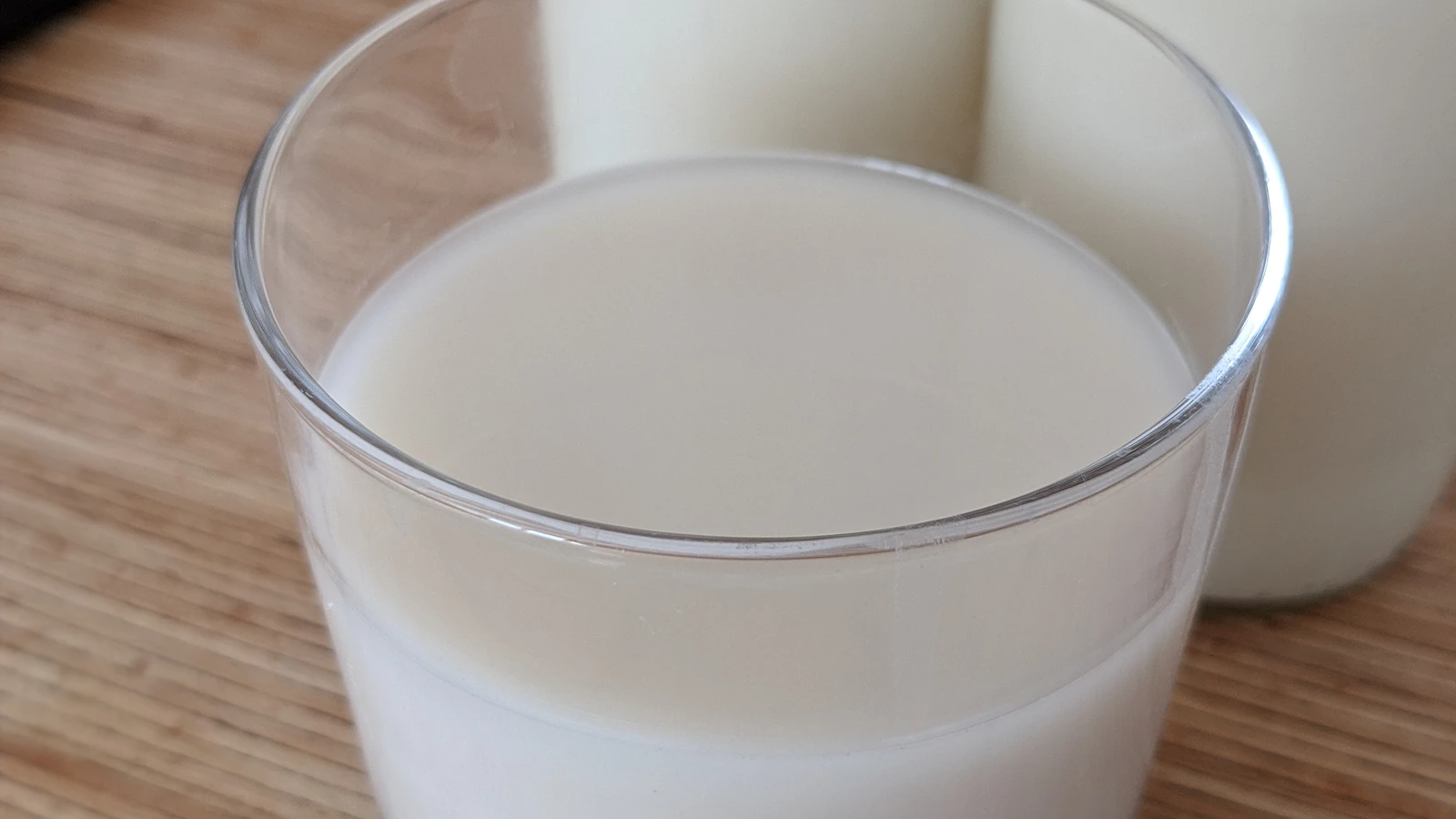
A plant-based drink can be a useful alternative to dairy, but its nutrients depend on the product—not simply whether it is made from oats, almonds or soya. UK research highlighted on 4 November 2026 found that replacing dairy with the available mix of plant-based alternatives could reduce intakes of iodine, calcium, riboflavin and vitamin B12. It modelled food substitutions; it did not show that everyone who drinks oat milk develops a deficiency.
The practical response is to check what replaces the nutrients in your diet. “Fortified with calcium” does not necessarily mean fortified with iodine, B2 or B12. Here is how to interpret the study and compare products without treating a headline as a dietary prescription.
What the UK study actually tested
Researchers from the University of Surrey and Queen’s University Belfast used National Diet and Nutrition Survey data from more than 3,500 people. They modelled partial and complete replacement of dairy products with commercially available plant-based alternatives, substituting equal weights of foods.
The analysis covered milk, yoghurt and cheese, not just a splash of oat milk in coffee. It examined four micronutrients—iodine, calcium, riboflavin (vitamin B2) and vitamin B12—and tested whether additional fortification could reduce the predicted shortfalls. The University of Surrey’s announcement describes the research, published in The Lancet Planetary Health.
The models indicated falling intakes when dairy was replaced under the market fortification conditions examined, with iodine a particular concern. Scenarios involving more extensive fortification improved the results. The finding is therefore about which nutrients the replacement foods supply, rather than a blanket verdict against plant-based eating.
A predicted intake shortfall is not a diagnosis
There are three limits to keep in mind:
- The researchers simulated substitutions. They did not randomly assign everyone to drink oat milk and then measure who developed a disease.
- A population estimate does not diagnose an individual. Your intake also depends on the rest of your food, the quantities consumed and any appropriate supplements.
- UK product assumptions are not universal. Fortification differs between markets, brands and formulations. The findings do not establish that a carton sold elsewhere has the same composition.
The distinction matters even within the UK. The model used a range of available alternatives, including products with differing fortification. It should not be interpreted as proof that every fortified drink produces the same nutritional result as an unfortified one. Queen’s University Belfast explains the substitution approach.
Why iodine deserves a separate label check
Iodine helps the body make thyroid hormones. Dairy products are one source, alongside foods such as eggs and sea fish. The NHS iodine guide notes that some soya and oat drinks contain added iodine and advises checking the label.
Look for iodine specifically. A calcium claim on the front of the carton answers a different question. If iodine is not declared, do not assume the drink supplies a dependable amount; check the manufacturer’s information if you need clarification.
This is especially relevant when removing several familiar nutrient sources at once. The NHS advises people considering an iodine supplement to seek professional advice. Adding a high-dose supplement simply because of a news report is not an appropriate substitute for assessing the diet.
How to compare two plant-based drinks
Start with the nutrition panel and ingredient list. Compare the same amount—usually per 100 ml on UK labels—rather than two different serving sizes. Then check the amount you actually drink.
| Check | What to look for | What not to assume |
|---|---|---|
| Calcium | Whether it is added and the declared amount | All dairy-free drinks contain similar calcium |
| Iodine | An explicit declaration or confirmation of fortification | Added calcium also means added iodine |
| Vitamin B12 | Whether it is included in the fortification | A vegan label guarantees B12 |
| Riboflavin / B2 | The nutrient under either name | Every vitamin-fortified product contains the same vitamins |
| Protein and energy | Grams of protein and calories for the same volume | Similar colour or texture means similar nutrition |
Protein and energy are useful additional checks; they are not the four micronutrients assessed in this study. UK SACN/COT guidance notes that soya drinks are closer to cows’ milk in protein quantity and quality than typical almond or oat drinks. This does not make every soya product identical. Read the actual panel. UK assessment and recommendations.
Convert the label to your own serving
For illustration, suppose a drink declares 120 mg of calcium per 100 ml. A 250 ml glass provides 120 × 2.5 = 300 mg. This is a calculation example, not a tested product or a recommended serving.
Two cartons can both provide that calcium amount while differing in iodine, B12 or protein. Matching one nutrient does not establish that the products are equivalent overall. If another nutrient is not listed, leave it unconfirmed rather than filling in a value from a different brand.
Calories are another separate measure. Our guide to daily calorie needs explains energy estimates; a calorie total alone does not assess micronutrient adequacy.
Does the study mean you should return to cows’ milk?
Not automatically. The NHS dairy-and-alternatives guide says unsweetened, calcium-fortified plant-based alternatives can fit within a healthy diet. SACN/COT also considers fortified, unsweetened almond, oat and soya drinks acceptable alternatives within its age-specific guidance.
The useful question is what your chosen foods contribute to your whole diet. If you replace milk, yoghurt and cheese, check all three replacements rather than inspecting only the drink. If you have a prescribed diet or a milk allergy, do not change it on the strength of a headline.
Lactose intolerance and milk-protein allergy are different. Lactose-free dairy products can be suitable for lactose intolerance, but removing lactose does not make a dairy product free from milk protein. Suspected allergy or intolerance needs appropriate clinical advice.
Ordinary oat, almond and other plant-based drinks are not substitutes for breast milk or infant formula for babies under one. For young children, use the NHS guidance and seek advice before making a substantial dietary restriction.
Original sources and image credit
- University of Surrey: research announcement, 4 November 2026.
- Queen’s University Belfast: study explanation, 4 November 2026.
- Original study, DOI: 10.1016/j.lanplh.2026.101515: The impact of replacing dairy products with plant-based dairy alternatives on iodine and other micronutrients: a modelling study and evaluation of policy options to support population intake.
- SACN/COT assessment of plant-based drinks.
- NHS: dairy and alternatives and iodine.
Featured photograph: Shisma, “Oat milk glass”, CC BY 4.0. Cropped, resized and converted to WebP. The photograph illustrates oat milk; it does not identify a product tested in the study or establish its nutrient content. Sources checked on 5 November 2026.
You may also like
 HEALTH
Ebola Outbreak 2026: UK Risk and Vaccine Trials
What the 2026 Bundibugyo Ebola outbreak means for UK risk, how the virus spreads, and why new vaccine…
 HEALTH
Birth Control and Weight Gain: What Genetics and Research Really Show
Do implants, pills or injections cause weight gain? Understand the 2020 ESR1 genetics study, newer evidence, differences between…
 HEALTH
Why Are Native Kidneys Usually Left in Place During a Kidney Transplant?
Kidney transplant surgery usually leaves the recipient’s two original kidneys in place. Learn where the donor kidney goes,…