
Can a Brain Injury Change Your Personality? The Neuroscience Behind Remarkable Cases
Explore the science of personality changes after brain injury, the real Phineas Gage story, symptoms, recovery and rehabilitation.
Contents
- Can a brain injury really change personality?
- The remarkable case of Phineas Gage
- What the historical evidence does—and does not—show
- Which brain networks influence behavior?
- Changes families may notice
- Why the same injury affects people differently
- What does research say about frequency?
- Personality change versus treatable symptoms
- Can the brain recover?
- How rehabilitation can help
- What relatives and caregivers can do
- When to seek urgent help
- What we can learn from Phineas Gage
- Scientific and official sources
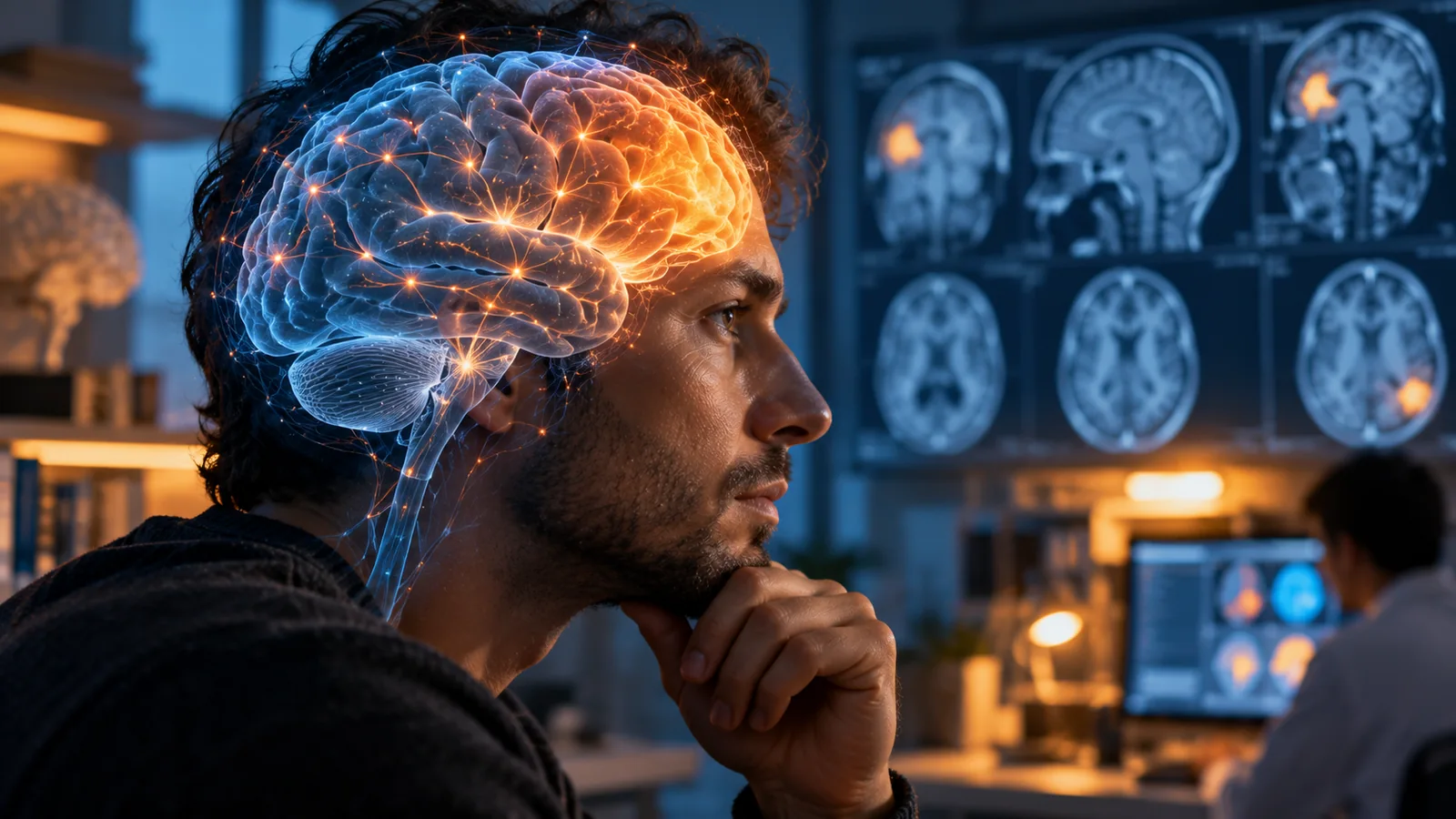
In 1848, railroad foreman Phineas Gage survived an iron rod passing through his skull. His survival was extraordinary. Reports that his behavior changed helped shape modern neuroscience—but the popular story often goes further than the historical evidence supports. Today, researchers know that a brain injury can affect emotional control, judgment, motivation and social behavior, although no two recoveries are alike.
Can a brain injury really change personality?
Yes. Traumatic brain injury (TBI), stroke and other acquired brain injuries can change how a person reacts, plans, relates to others or manages emotions. These changes may be temporary, persistent or mixed. Not every change is a permanent alteration of personality: pain, sleep disruption, depression, medications, fatigue and stress can also shape behavior after an injury.
The remarkable case of Phineas Gage
On September 13, 1848, an explosion during railroad construction in Vermont drove a tamping iron through Gage’s head. He survived and retained important abilities, including speech. His physician John Martyn Harlow later described difficulties with restraint, planning and social conduct. Gage subsequently worked in other roles, including driving coaches in Chile, before dying in 1860.
What the historical evidence does—and does not—show
The incident is documented, but claims that Gage became uniformly violent, permanently incapable of work or an entirely different person are not established by the surviving records. Historian Malcolm Macmillan showed that textbooks and retellings frequently embellish the case. His later employment also suggests a more complex course than a simple story of irreversible decline.
A dramatic case can reveal a scientific question without proving every detail of a popular explanation.
Which brain networks influence behavior?
- Prefrontal networks: planning, inhibition, judgment and adapting behavior to social situations.
- Frontal–limbic connections: help regulate emotion and responses to threat or reward.
- Attention and memory networks: influence whether someone can follow conversations, remember commitments or evaluate consequences.
- Distributed brain networks: personality and behavior arise from interacting systems, not a single “personality center.”
Changes families may notice
- Irritability, anger or unusually intense emotional reactions.
- Impulsive decisions, reduced social filtering or difficulty reading cues.
- Apathy, low initiative or reduced motivation.
- Anxiety, sadness, withdrawal or loss of confidence.
- Poor concentration, forgetfulness and fatigue that can resemble indifference.
- Sleep disturbance that amplifies other difficulties.
These experiences do not prove that a particular brain region was damaged. They require clinical evaluation, especially when symptoms are new or worsening.
Why the same injury affects people differently
Outcome depends on injury severity and location, diffuse network disruption, prior health, age, sleep, access to rehabilitation and the person’s social environment. Even mild concussion can produce emotional symptoms, while some people with more serious injuries make meaningful functional gains. A brain scan alone cannot predict a complete psychological outcome.
What does research say about frequency?
A 2026 systematic review assembled 101 studies and reported substantial variation in how researchers defined personality change. Its pooled estimates differed depending on whether investigators counted a narrowly defined secondary personality disorder or broader behavioral and emotional changes. The authors specifically warned that the broad estimate was sensitive to study bias. These pooled figures should not be presented as an individual patient’s probability.
Personality change versus treatable symptoms
- Emotional dysregulation: unusually rapid shifts in frustration, crying or anger.
- Executive dysfunction: difficulty planning, switching tasks or controlling impulses.
- Depression or anxiety: may follow the injury and deserve assessment in their own right.
- Sleep and fatigue problems: can make emotional control and attention much harder.
Can the brain recover?
Recovery is possible, but the trajectory varies. Early improvements may reflect resolution of acute injury effects, while longer-term progress can come from rehabilitation, learning strategies and changes in everyday support. Some difficulties persist. Neuroplasticity describes the brain’s ability to adapt; it is not a promise that all damage can be reversed.
How rehabilitation can help
- Medical assessment to identify neurological, psychiatric, sleep and medication-related contributors.
- Neuropsychological assessment when thinking, judgment or behavior disrupt daily life.
- Occupational therapy and structured routines to reduce cognitive load.
- Psychological support, coping strategies and treatment for depression or anxiety where appropriate.
- Family education, communication plans and practical accommodations at home or work.
What relatives and caregivers can do
Describe specific changes rather than labeling the person as “not themselves.” Track when symptoms occur, look for triggers such as poor sleep, keep instructions clear, and discuss concerning changes with the care team. A calm, predictable environment can help, but families also need support and boundaries.
When to seek urgent help
After a head injury, seek emergency care for worsening severe headache, repeated vomiting, seizures, increasing confusion, unusual behavior with declining alertness, weakness, unequal pupils or difficulty waking the person. New suicidal thoughts, severe agitation or threats of harm also require urgent professional assistance. Do not rely on an online article to rule out a serious injury.
What we can learn from Phineas Gage
Gage’s case opened a conversation about the relationship between brain circuits and everyday behavior. Modern research shows that changes in judgment, mood and social interaction can be real consequences of brain injury—but simple one-region explanations and dramatic claims about an individual’s identity are rarely adequate. Careful assessment, evidence-based support and respect for the person remain essential.
Scientific and official sources
CDC: Potential Effects of Moderate or Severe TBI
CDC: Recovery after Concussion
Macmillan: Restoring Phineas Gage
You may also like
 Science & Discoveries
First Fully Marine Amphibian? The 237-Million-Year-Old Gerrothorax Discovery
Two remarkably complete Chinese fossils suggest an armored early amphibian spent its life in the sea. Here is…
 Science & Nature
Four-Winged Norellraptor: Did Dinosaur Flight Evolve More Than Once?
A new feathered dinosaur from China suggests flight-related anatomy evolved along more than one route, but the fossil…
 Science & Nature
Why Are Butterflies So Hard to Catch? Their Wing Optical Illusion Explained
A 2026 Nature study explains how butterfly wing patterns and flight alter motion cues and can misdirect attempts…