
Why Do You Wake Up Tired After 8 Hours of Sleep? Science-Backed Causes and Fixes
Eight hours in bed but still exhausted? Learn about sleep apnea, circadian rhythms, fragmented sleep, medical causes, and when to seek help.
Contents
- Eight hours in bed is not necessarily eight hours asleep
- First distinguish sleepiness from fatigue
- 1. Sleep apnea: repeated breathing disruptions
- 2. Your body clock is out of sync
- 3. Sleep fragmentation that you do not remember
- 4. Insomnia can involve poor sleep even when bedtime is long
- 5. Restless legs and periodic limb movements
- 6. Medicines, caffeine and alcohol can alter your sleep
- 7. Medical and mental health conditions
- 8. Less common causes of severe daytime sleepiness
- A practical two-week plan to find the pattern
- Sleep diary: what to record
- What helps most: realistic changes with evidence behind them
- When to see a doctor — and when it is urgent
- How a clinician may investigate unrefreshing sleep
- What about sleep trackers and smartwatches?
- The bottom line
- Authoritative sources and further reading
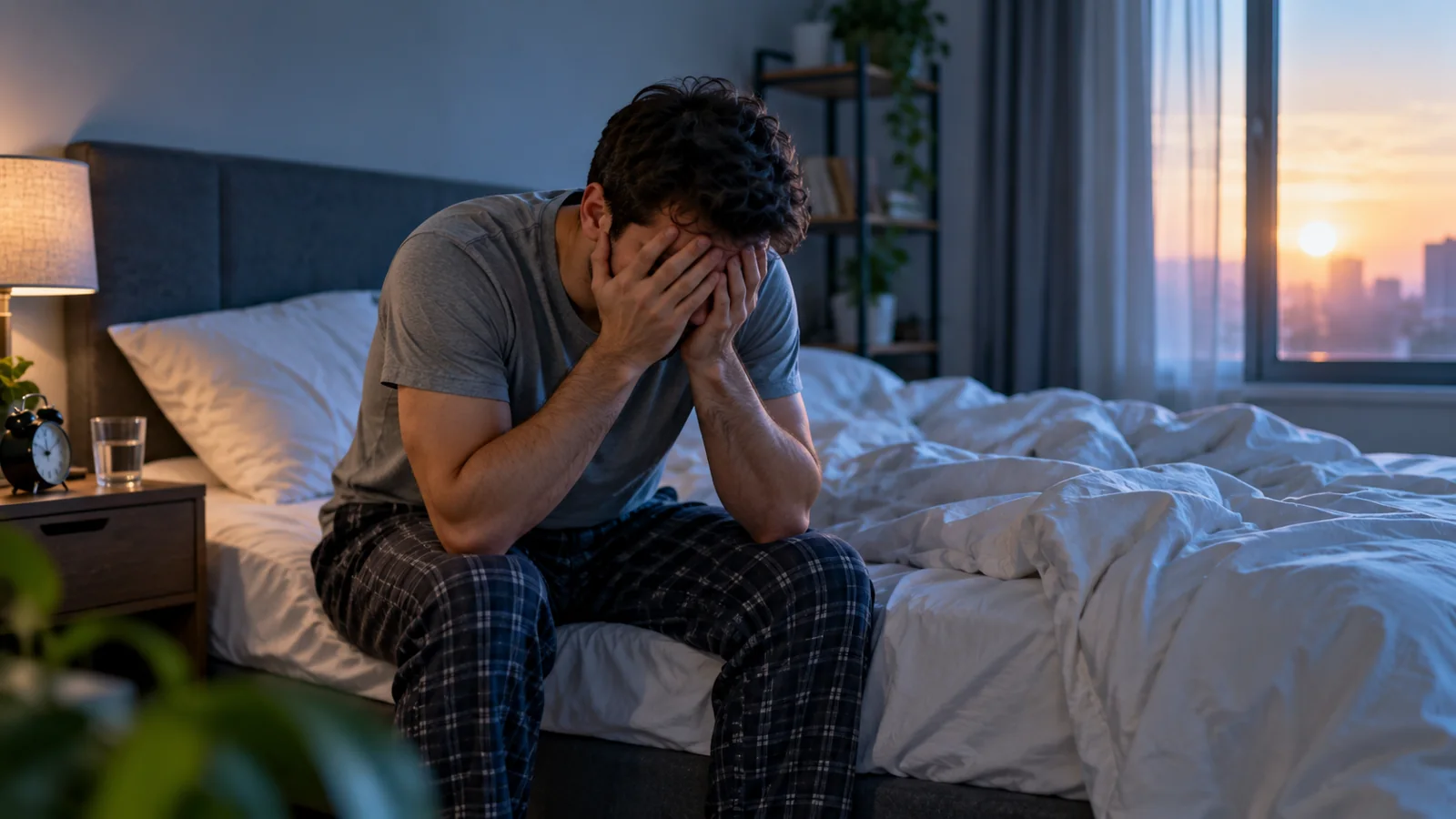
You went to bed on time, stayed there for eight hours, and still woke up exhausted. Eight hours in bed does not guarantee eight hours of restorative sleep. Sleep can be fragmented, poorly timed, or disrupted by a medical condition. The useful question is not only how long you slept, but what happened during those hours and how you function during the day.
This evidence-based guide explains the difference between sleepiness and fatigue, common causes of unrefreshing sleep, a practical two-week investigation, and warning signs that deserve professional assessment. It is educational, not a diagnosis.
Eight hours in bed is not necessarily eight hours asleep
Time in bed includes minutes spent falling asleep, waking briefly, or lying awake before your alarm. For example, spending eight hours in bed while awake for 45 minutes leaves about seven hours and fifteen minutes of actual sleep. Consumer watches can estimate patterns, but they cannot reliably diagnose sleep stages or sleep apnea.
Adults generally need at least seven hours of sleep, and many need seven to nine; individual needs vary. Sleep quality, continuity and timing matter alongside duration. A 2026 US National Center for Health Statistics report found that 30.5% of adults surveyed in 2024 averaged fewer than seven hours per day. That statistic describes population sleep duration, not the cause of one person’s fatigue.
First distinguish sleepiness from fatigue
| What you feel | What it can suggest | Practical clue |
|---|---|---|
| Sleepiness | Strong tendency to doze off | Nodding off while reading, watching television or driving |
| Fatigue | Low energy or exhaustion without necessarily falling asleep | Feeling drained after ordinary tasks |
| Brain fog | Difficulty focusing, remembering or reacting | Slower thinking even when you remain awake |
| Sleep inertia | Temporary grogginess immediately after waking | Improves as you become fully alert; persistent severe symptoms merit review |
These experiences overlap. A clinician may ask about both because daytime sleepiness often points toward insufficient or disturbed sleep, whereas fatigue also raises questions about physical illness, mood, medication effects and other factors.
1. Sleep apnea: repeated breathing disruptions
Obstructive sleep apnea occurs when the upper airway repeatedly narrows or closes during sleep. Some people experience oxygen changes and brief arousals without remembering them. Clues include loud snoring, witnessed pauses in breathing, gasping, morning headaches, dry mouth and frequent nighttime urination. You can have sleep apnea without knowing you snore, especially if you sleep alone. Symptoms vary by person.
Untreated sleep apnea is not something to fix with extra caffeine. If symptoms suggest it, ask a clinician whether a home sleep apnea test or an in-lab sleep study is appropriate. A negative home test does not always settle the question when suspicion remains high. Treatment depends on diagnosis and may include positive airway pressure and other clinician-directed options.
2. Your body clock is out of sync
The circadian system coordinates alertness and sleep with the day-night cycle. Someone who naturally falls asleep late but must wake early may feel unrefreshed despite a seemingly reasonable bedtime. Shift work, changing weekend schedules, travel and late-night light exposure can all contribute. This is not simply a matter of willpower: circadian timing is biological and varies across people.
Try a stable wake time, daylight exposure soon after waking and dimmer light before bed. Avoid trying to force an extreme bedtime shift overnight. Persistent difficulty sleeping at socially required times can warrant assessment for a circadian rhythm disorder.
3. Sleep fragmentation that you do not remember
Noise, temperature, pain, reflux, nasal obstruction, allergies, frequent urination, alcohol and some medicines can interrupt sleep. Not every awakening becomes a lasting memory. A bedroom that is too warm or an irregular schedule may produce poorer rest even when a sleep tracker reports a reassuring total.
Look for patterns rather than guessing: do symptoms worsen after alcohol, late meals, a congested night or a noisy environment? Addressing the trigger is usually more useful than buying a supplement marketed as a universal sleep cure.
4. Insomnia can involve poor sleep even when bedtime is long
Insomnia may involve difficulty falling asleep, staying asleep or returning to sleep after early awakening, with daytime impairment. Staying in bed longer to compensate can sometimes make sleep feel more frustrating. For persistent insomnia, cognitive behavioral therapy for insomnia (CBT-I) is a first-line evidence-based treatment; it differs from general sleep hygiene tips and is ideally guided by a qualified clinician.
5. Restless legs and periodic limb movements
Restless legs syndrome often creates an urge to move the legs that becomes worse during rest or in the evening and improves with movement. Periodic limb movements during sleep may repeatedly disturb sleep, sometimes without clear awareness. Do not self-prescribe iron: a clinician may evaluate symptoms and iron status when appropriate.
6. Medicines, caffeine and alcohol can alter your sleep
Caffeine can linger for hours and affects people differently. Alcohol may initially make falling asleep easier but can disrupt sleep later in the night. Some antihistamines, antidepressants, stimulants, sedatives and other medicines may change alertness or sleep architecture. Never abruptly stop prescribed medication based on a sleep article; ask the prescriber or pharmacist about timing, side effects and safer alternatives.
7. Medical and mental health conditions
Anemia, thyroid disorders, diabetes, chronic pain, infections, depression and anxiety can contribute to fatigue or disturbed sleep. Pregnancy, menopause and other hormonal transitions may also change sleep. Persistent exhaustion should not automatically be labeled a sleep disorder: a clinician can assess the full history and decide whether targeted testing is useful.
8. Less common causes of severe daytime sleepiness
Narcolepsy and idiopathic hypersomnia are less common but important possibilities when excessive daytime sleepiness persists despite adequate sleep opportunity. Symptoms such as irresistible sleep episodes, sleep paralysis or sudden muscle weakness triggered by emotion deserve specialist attention. Diagnosis requires careful evaluation; an online checklist is not enough.
A practical two-week plan to find the pattern
Rather than changing everything at once, use a short, consistent observation period. If you have dangerous sleepiness, breathing pauses or other red flags, do not delay medical care for two weeks.
- Days 1–3: Record bedtime, estimated time to fall asleep, awakenings, wake time, naps, caffeine, alcohol, medication timing and a 1–10 morning-rested rating.
- Days 4–6: Keep the wake time consistent and aim for enough time to sleep; note whether weekends differ from weekdays.
- Days 7–9: Check bedroom noise, temperature, light and nasal comfort; reduce avoidable disturbances.
- Days 10–12: Move caffeine earlier if you use it, avoid alcohol close to bedtime, and get outdoor daylight after waking.
- Days 13–14: Review patterns: is fatigue linked to short sleep, irregular timing, snoring, medication or symptoms unrelated to sleep? Bring the diary to a clinician if the problem continues.
Sleep diary: what to record
| Measure | Example entry | Why it matters |
|---|---|---|
| Bedtime / wake time | 11:15 pm / 7:15 am | Shows sleep opportunity and schedule consistency |
| Estimated time awake | 20 min to fall asleep; 25 min overnight | Distinguishes time in bed from sleep |
| Daytime sleepiness | Dozed off in afternoon meeting | Highlights safety and diagnostic concerns |
| Snoring / gasping | Partner noticed gasping twice | Supports discussion of possible sleep apnea |
| Caffeine / alcohol | Coffee at 5 pm; wine at dinner | Reveals potential disruptors |
| Other symptoms | Leg discomfort; headaches; reflux | May suggest a targeted assessment |
What helps most: realistic changes with evidence behind them
- Protect enough sleep opportunity. Most adults need at least seven hours of actual sleep; allow additional time for falling asleep and normal brief awakenings.
- Anchor the wake time. Consistency helps align your body clock, including on days off.
- Use light strategically. Morning daylight supports daytime alertness; lower intense light before bedtime.
- Keep the room comfortable. A quiet, dark, comfortably cool environment can reduce disruption.
- Move regularly. Physical activity supports health and may improve sleep; adapt timing to what works for you.
- Address symptoms, not just habits. Loud snoring with gasping, persistent insomnia or disabling sleepiness merits evaluation.
- Be skeptical of quick fixes. Melatonin, wearable sleep scores and “deep sleep boosters” cannot diagnose or treat every cause of fatigue.
When to see a doctor — and when it is urgent
Book an appointment if unrefreshing sleep lasts several weeks, repeatedly affects work or relationships, or occurs with snoring, gasping, restless legs, depressed mood or other persistent symptoms. Your clinician may review your medications, sleep diary, medical history and examination, and may recommend a sleep study or selected blood tests.
Safety warning: If you are fighting sleep while driving, stop driving and arrange a safe alternative. Seek urgent medical help for severe breathing difficulty, chest pain, fainting or new neurological symptoms. If someone observes prolonged breathing pauses or severe respiratory distress, obtain emergency assistance.
How a clinician may investigate unrefreshing sleep
Assessment starts with the pattern: sleep opportunity, shift schedule, snoring, witnessed apneas, insomnia symptoms, daytime functioning, medical history and medications. Depending on findings, a clinician may consider thyroid or blood-count tests, a home sleep apnea test, laboratory polysomnography or referral to sleep medicine. Tests are chosen for the person; there is no single “tired after eight hours” blood panel that diagnoses everyone.
What about sleep trackers and smartwatches?
Wearables can help identify approximate bedtimes, changes in regularity and long-term trends. Their sleep-stage estimates are not interchangeable with medical sleep testing. A normal wearable score cannot rule out sleep apnea, and a low score by itself does not establish a disease. Use the data as context, not as a verdict.
The bottom line
Waking tired after eight hours is common, but it should not be dismissed when it persists. Start by separating time in bed from actual sleep and examining regularity, disruptions and daytime symptoms. If there is significant sleepiness, loud snoring or breathing disturbance, seek clinical evaluation rather than repeatedly trying new sleep hacks.
Authoritative sources and further reading
You may also like
 HEALTH
What Causes Sudden Brain Fog and When Should You Be Concerned?
Understand common brain fog causes, emergency warning signs, a practical symptom log and when to seek medical care.
 HEALTH
How Accurate Are AI Depression Detection Tools? Evidence, Risks and Limitations
Research shows promising results for some AI depression screening models, but clinical validation, bias and privacy remain major…
 HEALTH
GLP-1 Weight-Loss Drugs and Nail Changes: What the 2026 Study Found
A 2026 conference study found an association between GLP-1 medicines and nail problems. See the numbers, limitations and…