
How Accurate Are AI Depression Detection Tools? Evidence, Risks and Limitations
Research shows promising results for some AI depression screening models, but clinical validation, bias and privacy remain major concerns.
Contents
- Can AI detect depression accurately?
- What do the latest reviews show?
- What do sensitivity and specificity mean?
- What signals do AI tools use?
- Why do models perform worse outside studies?
- Can ChatGPT or a chatbot diagnose depression?
- What should you check before trusting a tool?
- What if a tool says I may have depression?
- FAQ
- Is 89% sensitivity the same as 89% accuracy?
- Can a smartwatch diagnose depression?
- Are AI mental health apps private?
- Sources and further reading
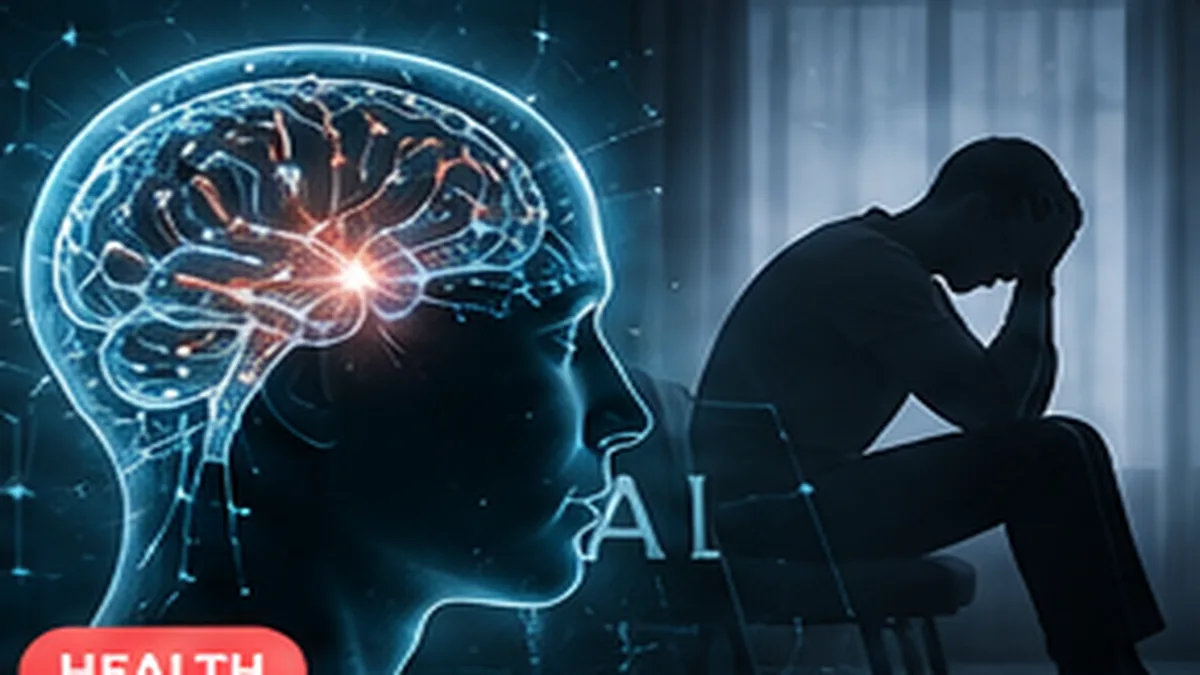
Research shows promising results for some AI depression screening models, but clinical validation, bias and privacy remain major concerns.
Can AI detect depression accurately?
Some research models can identify patterns associated with depression, but accuracy varies widely depending on the population, the data, the reference diagnosis and the study design. An AI output is not the same as a diagnosis by a qualified clinician.
What do the latest reviews show?
A 2026 systematic review and meta-analysis in JMIR Mental Health pooled results from wearable-device AI studies. For depression detection, the pooled sensitivity was 0.89 and specificity was 0.93, with an area under the curve of 0.96. The authors warned that differences between studies, retrospective datasets and limited standardization restrict generalizability. These pooled numbers must not be advertised as the accuracy of any consumer app.
A separate review of 30 studies on speech, facial expressions, text and movement reported potential for AI-assisted screening but substantial variation across studies. A 2026 review in Artificial Intelligence in Medicine likewise emphasized limited real-world clinical validation, bias and interpretability challenges.
What do sensitivity and specificity mean?
Sensitivity is the share of people with the target condition correctly flagged by a test; specificity is the share without it correctly identified as negative. Neither number alone tells you how likely a positive result is to be correct. That depends partly on how common the condition is in the population being tested.
What signals do AI tools use?
Researchers have studied speech features, written language, facial expression, activity, sleep and physiological measurements from wearables. These are indirect signals: sleep changes or low activity, for example, can occur for many reasons unrelated to depression.
Why do models perform worse outside studies?
Training datasets may not represent different ages, languages, disabilities or cultural contexts. A model may also learn device quirks or data collection conditions instead of clinically meaningful features. Performance on carefully selected research datasets does not guarantee effectiveness in everyday care.
Can ChatGPT or a chatbot diagnose depression?
No chatbot conversation should be treated as a validated diagnostic assessment. A clinician considers symptom duration, impairment, other medical conditions, medication effects, and safety concerns. Validated screening questionnaires can support assessment but do not replace it.
What should you check before trusting a tool?
Look for published independent validation, a clearly stated intended population, evidence of clinical oversight, privacy and retention policies, explanation of false positives and false negatives, and a plan for seeking professional help. Be wary of apps that promise a definitive diagnosis from a selfie, voice clip or a few messages.
What if a tool says I may have depression?
Treat it as a reason to consider a professional assessment, not a verdict. If symptoms persist or affect daily life, speak with a qualified healthcare professional. If you feel at immediate risk of harming yourself, contact local emergency services or an available crisis service right away.
FAQ
Is 89% sensitivity the same as 89% accuracy?
No. Sensitivity describes detection among people who actually have the condition; overall accuracy depends on other factors.
Can a smartwatch diagnose depression?
Research is promising, but consumer wearable outputs should not be taken as a clinical diagnosis.
Are AI mental health apps private?
Privacy protections differ by provider. Check what data are collected, stored, shared or used to train models.
Sources and further reading
You may also like
 HEALTH
What Causes Sudden Brain Fog and When Should You Be Concerned?
Understand common brain fog causes, emergency warning signs, a practical symptom log and when to seek medical care.
 HEALTH
Why Do You Wake Up Tired After 8 Hours of Sleep? Science-Backed Causes and Fixes
Eight hours in bed but still exhausted? Learn about sleep apnea, circadian rhythms, fragmented sleep, medical causes, and…
 HEALTH
GLP-1 Weight-Loss Drugs and Nail Changes: What the 2026 Study Found
A 2026 conference study found an association between GLP-1 medicines and nail problems. See the numbers, limitations and…