
Miyoko’s Butter Recall 2026: Affected Lot Codes, Best-By Dates and Refunds
Check the Miyoko’s butter recall by product, UPC, lot code and best-by date. Compare salted and unsalted notices and follow retailer refund instructions.
Contents
- Quick check: the two products have different codes
- Why the Miyoko’s butter recall is attracting attention now
- Read all four identifiers on the package
- Two salted-butter lot numbers appear in the notices
- Use the date as an identifier
- What the notices say about the reason for removal
- What to do with a matching package
- Refunds: contact the store that sold your butter
- If you transferred the butter or lost the wrapper
- Check frozen packages too
- Clean areas that contacted the product
- Symptoms that need medical advice
- Follow the notice that matches your purchase
- Original sources checked
Updated October 28, 2026. U.S. consumer guide.
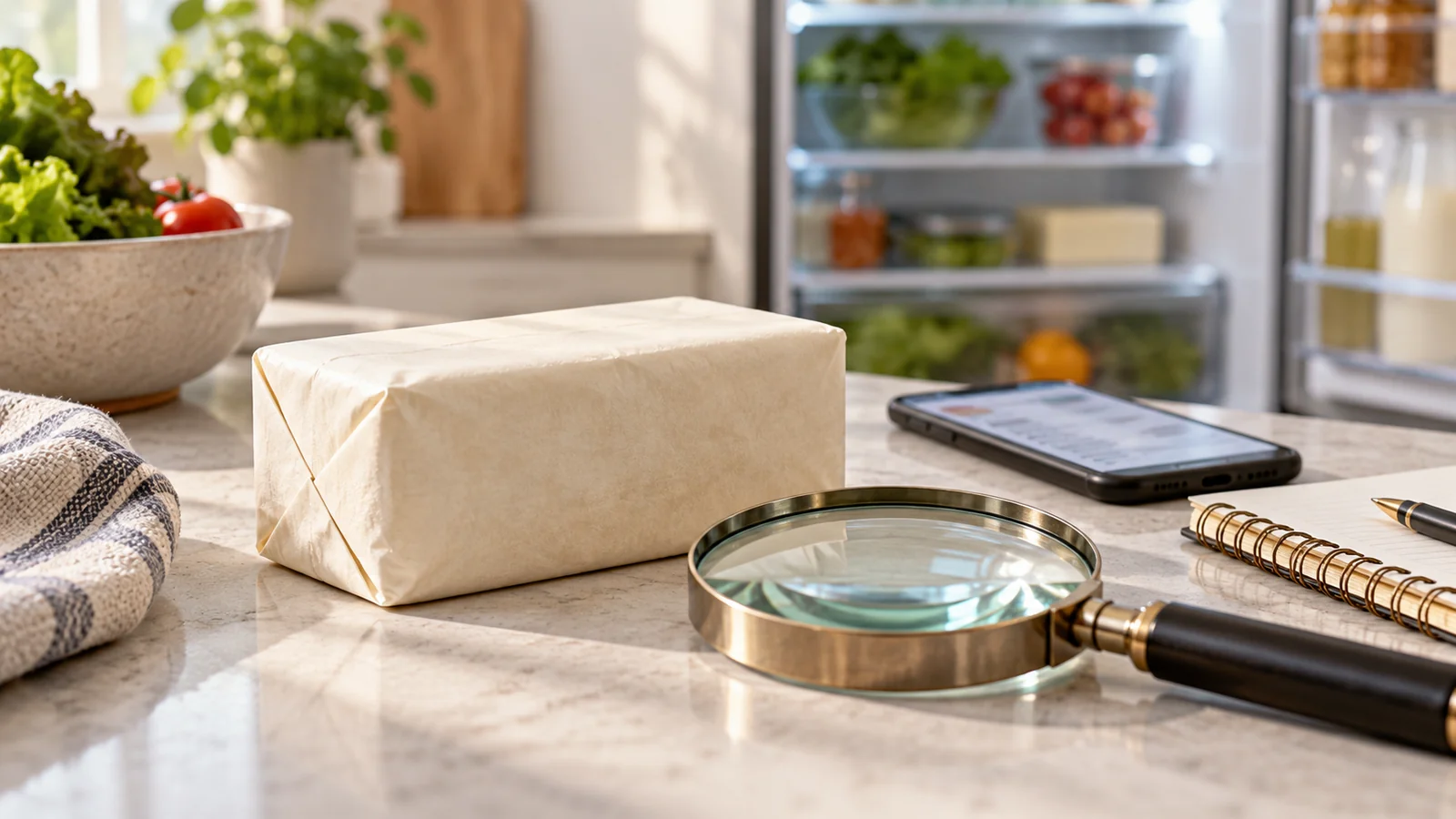
If you have Miyoko’s plant-based butter at home, check the variety, barcode, lot code and best-by date before using it. Retailer notices identify a salted butter recall and a separate withdrawal involving unsalted butter. The products have different identifying details and should be checked against their own notices.
For a matching package, stop using the butter and follow the seller’s return or disposal instructions. If the printing is unreadable or the original wrapper is missing, set the product aside and ask the retailer to help identify it. Do not taste it to decide whether it is safe.
Quick check: the two products have different codes
Start with this comparison, then open the linked notice for the product you own. Dates below are written out to avoid confusion over U.S. month/day formatting.
| Detail | Salted plant milk butter | Unsalted plant butter |
|---|---|---|
| Product described in notices | Miyoko’s Creamery European Style Salted Plant Milk Butter | Miyoko Creamery Unsalted European-Style Plant Butter |
| Package size | 8 ounces | 8 ounces |
| UPC, without spaces or hyphens | 857554005773 | 857554005995 |
| Lot code listed | 07871 in Berkeley Bowl’s October notice; 1007871 in earlier retailer notices | 1008243 |
| Best-by date | November 5, 2026 | November 27, 2026 |
| Product-specific sources | Berkeley Bowl and Sprouts | Wedge Community Co-ops |
This comparison identifies the lots in the notices reviewed for this guide. It is not a statement that every Miyoko’s product is recalled, or a guarantee about a package whose details cannot be established.
Why the Miyoko’s butter recall is attracting attention now
An October headline can concern a product first flagged weeks earlier. Wegmans’ salted butter notice is dated September 13, 2026. Sprouts published its notice the following day. Berkeley Bowl subsequently posted an October 26 entry identifying the salted product’s shorter lot code and November 5 date.
A separate October 26 notice from Wedge concerns the unsalted product. It describes a voluntary withdrawal while mold complaints are investigated. Keep that notice separate from the salted butter notices, which identify potential E. coli contamination.
The useful question for a shopper is which notice matches the package in the refrigerator or freezer. The date an article appeared does not, on its own, establish when a recall began, whether its scope expanded, or whether a new lot was added.
Read all four identifiers on the package
The brand name is only the first check. Read the complete product name, including whether it says salted or unsalted. Next, compare the UPC beneath the barcode, the printed lot code and the date. A similar-looking box or a familiar green label is not enough to identify a production lot.
The FDA’s consumer recall guidance explains that recall notifications can include package size, UPCs, lot numbers and date codes. These details serve different purposes: the UPC identifies a product line, while lot and date information narrow the affected production.
Keep the original printing intact. Photograph the barcode and the stamped code in good light, together with the front of the package. That gives the retailer a clearer identification record than a cropped photograph of a date alone. This is a practical documentation step, not a substitute for checking the notice.
Two salted-butter lot numbers appear in the notices
Berkeley Bowl’s October 26 entry lists 07871. Its earlier salted butter entry and the Wegmans notice list 1007871; Sprouts also lists the longer number. Do not assume a package is unaffected simply because the notice in front of you uses the other number.
These are identifiers reproduced from the named retailer notices. Compare your package with the seller’s information and ask for clarification if the code format differs. Do not add or remove digits yourself to force a match, and do not use the final digits alone to identify an unrelated product.
Use the date as an identifier
Wedge says the unsalted product’s date and lot code are printed on the end of the package.
A best-by date is one identification detail in a recall check. Having time left before that date does not override instructions for an affected lot. Equally, a matching date without the matching product and code does not complete the identification.
What the notices say about the reason for removal
Wegmans identifies potential E. coli as the reason for the salted butter recall. Sprouts says manufacturer testing found potential E. coli contamination and advises customers with affected products to discard them or return them for a refund. Its September 14 notice states that no illnesses had been reported as of that notice.
That last statement is date-specific. It should not be read as a current nationwide illness count or a prediction that nobody will become ill. The notices reviewed also do not provide enough information to identify a particular E. coli strain or calculate an individual consumer’s risk.
Wedge’s unsalted notice concerns mold complaints and uses the term voluntary withdrawal. Its wording does not establish that the unsalted lot has the same contamination issue as the salted product. Product names, lot codes and stated reasons should stay paired with the correct source.
What to do with a matching package
The FoodSafety.gov guide to recalled products advises consumers not to eat or open recalled food to inspect it. Harmful germs cannot reliably be detected by appearance, smell or taste.
- Stop serving or using the affected butter. Tell anyone else in the household who may use it.
- Keep the package identifiable and separate while arranging the return or disposal described in the notice.
- Follow your retailer’s instructions. If disposing of it, prevent other people and animals from accessing it.
- Wash your hands after handling it and clean surfaces or utensils that contacted the product.
Do not give affected butter to friends, donate it or feed it to pets. If you bought several packages, check each one. A shopping receipt can help locate the transaction, but it does not replace the production information printed on an individual pack.
Refunds: contact the store that sold your butter
Wegmans says customers can return the recalled salted butter to its Service Desk for a full refund. Its notice lists 1-855-934-3663 for questions, with daily hours of 8 a.m. to 7 p.m. Check the linked page for any later changes before calling.
Sprouts directs customers with affected salted butter to discard it or return it to the place of purchase for a full refund. Wedge directs purchasers covered by its unsalted notice to Wedge Lyndale or Linden Hills Customer Service for a full refund.
Those are retailer-specific instructions. Another store may handle an online order, delivery purchase or discarded package differently. Ask what it needs before travelling, especially if the product has leaked or the wrapper is damaged. Do not assume that every store has the same receipt requirements or return process.
For an online purchase, have the order confirmation available. If someone else bought the butter for your household, ask where it came from and whether they can retrieve the purchase record. Avoid making an unnecessary extra trip before the seller has confirmed the next step.
If you transferred the butter or lost the wrapper
A butter dish usually does not preserve the information needed for a lot check. A photograph of the original packaging, an unopened second pack or a receipt may help the seller investigate, but none should be used to guess an unknown code.
Keep uncertain butter out of use while you contact the retailer or manufacturer. Explain the product variety, approximate purchase date and store or order details, and say which information is missing. If the seller cannot establish the lot, ask how it recommends handling the product rather than treating an incomplete check as clearance to eat it.
The same approach applies to a gift, a shared household purchase or butter divided into smaller containers. Identification depends on reliable records, not on whether the product looks normal.
Check frozen packages too
The manufacturer’s general storage information says its products are perishable and lists salted and unsalted plant milk butter among products that can be frozen. Someone who normally buys butter ahead may therefore still have an older package after it has disappeared from a refrigerator shelf.
General storage advice is not a recall exemption. If a frozen package matches an affected lot, follow the recall instructions. Do not assume that time in the freezer, a recent thaw or an intact wrapper changes which production lot it belongs to.
Likewise, do not try to rescue recalled butter by melting it, baking with it or scraping away a suspect area. Follow the product notice’s return or disposal route. This guide provides no home treatment that makes an affected pack suitable to use.
Clean areas that contacted the product
The FDA’s food-safety guidance recommends washing and sanitizing surfaces and utensils that may have contacted contaminated food. This can include a butter dish, a knife, a counter or refrigerator shelving, depending on how the product was stored and used.
Remove food from the area before cleaning. Wash the relevant items and surfaces, follow suitable sanitizing instructions, and wash your hands afterward. Use cleaning products according to their labels. Consult the official guidance rather than improvising a cleaning mixture.
For a package that leaked, tell the retailer before attempting a return. The refund process should not require spreading product onto a shopping bag, vehicle seat or service counter. Keep the package contained while obtaining instructions.
Symptoms that need medical advice
E. coli symptoms vary by the type of infection. The CDC’s symptom guidance includes watery or bloody diarrhea, severe stomach cramps, vomiting and sometimes a low fever. Having eaten a recalled product does not establish a diagnosis, and an absence of immediate symptoms does not resolve a product recall.
CDC advises contacting a doctor for diarrhea or vomiting lasting more than two days, blood in stool or urine, fever above 102°F, or signs of dehydration. Little or no urination, dark urine, dizziness and a very dry mouth are among dehydration signs. Seek urgent care for serious symptoms; do not wait for a refund response.
Keep the product details and purchase information available for your clinician. The CDC’s broader food-safety guidance identifies young children, older adults, pregnant people and people with weakened immune systems as groups more likely to become seriously ill from foodborne germs.
These are general health precautions, not evidence that a particular illness was caused by this butter. A healthcare professional can assess symptoms and decide what investigation or treatment is appropriate.
Follow the notice that matches your purchase
Recall information can change. Before using a package you previously set aside, reopen the retailer’s notice and compare the full identification details again. A headline about one variety is not a reliable update for another variety.
The FDA’s recall information and the FoodSafety.gov recalls page are additional places to look for official updates. For a refund or an unreadable code, the retailer that handled the transaction is the practical starting point.
Keep the package information, the notice and the seller’s instructions together until the return or disposal is complete. That record is more useful than relying on an undated screenshot or a remembered headline.
Original sources checked
- Berkeley Bowl — product recall notices, including the October 26, 2026 salted butter entry.
- Wegmans — salted European Style Plant Milk Butter, September 13, 2026.
- Sprouts Farmers Market — product recalls, including the September 14, 2026 butter notice.
- Wedge Community Co-ops — unsalted butter withdrawal, October 26, 2026.
- Miyoko’s Creamery — storage and product support information.
- FDA — consumer recall guidance and cleaning guidance.
- FoodSafety.gov — handling a recalled product.
- CDC — E. coli symptoms and food-safety basics.
You may also like
 Health & Safety
Bomberry Recall: Affected Products, Dates and Refunds
Check the Bomberry 150g recall, affected flavours and best-before dates. Follow retailer-return or manufacturer email refund instructions in…
 Health & Safety
What Are Peptides? Approved Medicines vs Online Products
Understand peptides, approved medicines and unapproved online products. Check Australian registration, safety warnings and questions to ask your…
 Health & Safety
Kayem Foods Recall 2026: Check Hot Dogs, Bacon, UPC Codes and What to Do
Kayem Foods recalled 1.58 million pounds of ready-to-eat meats. Check the USDA UPC list, establishment numbers, affected products…