
Can Jehovah’s Witnesses Accept Blood Transfusions?
Can Jehovah’s Witnesses accept blood transfusions? Understand current choices on blood components, whole-blood restrictions and patient consent.
Contents
- What changed in the blood transfusion policy?
- Whole blood, components and fractions: what is the difference?
- Why do Jehovah’s Witnesses still refuse whole blood?
- Does individual choice mean a transfusion is medically appropriate?
- Questions to discuss before a planned procedure
- Consent depends on the patient and the jurisdiction
- Where can patients and clinicians check the current position?
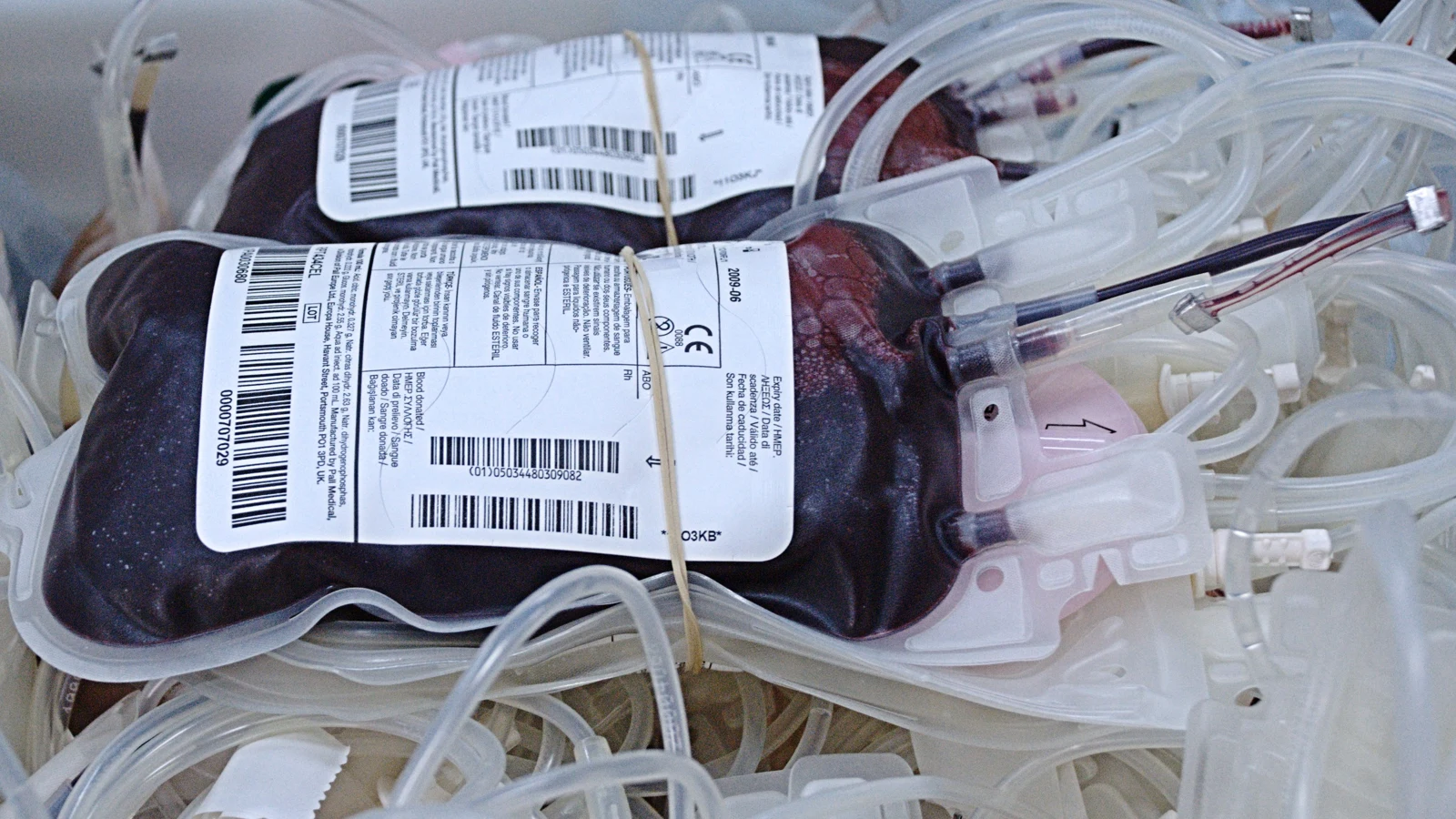
Some blood transfusions are now a matter of personal choice for Jehovah’s Witnesses. Under the guidance announced on 18 September 2026, each member decides whether to accept red blood cells, white blood cells, plasma or platelets from a donor. The religious prohibition on transfusion of whole blood remains unchanged, according to the organisation’s official announcement.
That distinction matters whenever a headline, a hospital form or a family conversation uses the broad word “blood”. It does not identify the exact treatment being offered, and it does not establish what an individual patient accepts.
Guidance checked on 7 November 2026. This explainer describes the current religious position and general medical information; treatment and consent decisions require the patient’s own clinical team.
What changed in the blood transfusion policy?
AABB, the Association for the Advancement of Blood & Biotherapies, confirmed the September change on 21 September 2026. Acceptance of the four main donor-blood components became a decision of personal conscience. Donation specifically to provide components or fractions for someone else also became an individual decision.
This followed a separate change in March 2026 concerning collection, storage and transfusion of a person’s own blood. Decisions about blood fractions were already treated as individual matters. These are distinct categories, so a statement about one should not be applied automatically to the others.
A search result published before these changes may accurately describe the rules at its publication date while giving an outdated answer to a present-day question. Check both its date and the product it discusses.
Whole blood, components and fractions: what is the difference?
Blood contains cells suspended in a liquid called plasma. NHS Blood and Transplant explains that a donation can be separated into components so that different patients receive the parts they need. Whole blood and a transfusion of a separated component are therefore different products.
Red cells carry oxygen through haemoglobin. Platelets help blood clot, while plasma contains substances including antibodies and clotting proteins. White cells help fight infection; white-cell transfusions are used much less commonly. Blood fractions are products derived from components, rather than another name for an entire component.
| Product or procedure | What it means | Current religious position |
|---|---|---|
| Whole-blood transfusion | Transfusion of blood without separating it into the four main components | Religious prohibition remains |
| Red-cell transfusion | Separated oxygen-carrying cells | Individual decision |
| Platelet transfusion | Separated cells involved in clotting | Individual decision |
| Plasma transfusion | Transfusion of the liquid component | Individual decision |
| White-cell transfusion | Transfusion of selected infection-fighting cells | Individual decision |
| Blood fractions | Products derived from a blood component | Individual decision; identify the exact product |
| Use of the patient’s own blood | Collection, storage or return of a patient’s blood | Individual decision; discuss the specific procedure |
The policy information in this table follows the organisation’s current medical information page. It describes the scope of religious choice, not a recommendation that any particular product is medically suitable.
Why do Jehovah’s Witnesses still refuse whole blood?
Jehovah’s Witnesses explain their position through their interpretation of biblical instructions to abstain from blood, including Acts 15:20. Their September announcement maintained that religious position on whole blood while extending personal choice to the main components.
It is consequently inaccurate to say either that every blood transfusion is forbidden or that every Witness now accepts every blood product. Individual conscience remains central to the decisions covered by the revised guidance.
The organisation also states that its members seek medical care rather than practising faith healing. A religious restriction on a particular treatment should not be mistaken for rejection of medicine as a whole.
Does individual choice mean a transfusion is medically appropriate?
No. Religious acceptability and clinical need answer different questions. The first concerns what a patient is willing to receive; the second concerns what treatment is justified in that person’s circumstances.
The NHS explanation of blood transfusion describes uses including severe blood loss, too few healthy red cells and conditions affecting blood production. Different components serve different purposes: red cells can treat anaemia, while plasma and platelets may address clotting problems. They are not interchangeable treatments.
Transfusions are generally very safe, but the clinical discussion still needs to cover benefits, risks and reasonable alternatives. Whether another approach is possible depends on the condition and urgency. “Bloodless” care is not a promise that every situation can be managed safely without transfusion.
For background on two commonly confused blood tests, see our guide to ferritin, haemoglobin and low-iron symptoms. A ferritin result alone does not resolve the separate question of whether a transfusion is needed.
Questions to discuss before a planned procedure
An early, specific conversation is more useful than a general note saying “Jehovah’s Witness”. Gloucestershire Hospitals’ adult refusal-of-blood information advises patients to raise their preferences before planned admission and discuss the consequences and available alternatives with staff.
- What exact product or procedure might be used? Ask the team to distinguish whole blood, each component, fractions and use of your own blood.
- Why might it be needed in my case? Ask about the expected benefit, relevant risks and what could happen if it is declined.
- Which alternatives are realistic? Ask what is available for this procedure and whether urgency limits the options.
- Where will my choices be recorded? Review the treatment plan and any consent or advance-decision documents with the team.
- Does existing paperwork still express my wishes? If your views have changed, ask how to document that accurately under local requirements.
This checklist is a conversation aid, not an advance-decision form. A change in religious guidance should prompt a fresh discussion where relevant; it should not be treated as permission to disregard an individual’s recorded wishes.
Consent depends on the patient and the jurisdiction
NHS consent guidance identifies three requirements: a decision must be voluntary, informed and made by someone with capacity. Information should include the proposed treatment, its risks and benefits, alternatives and the consequences of declining it.
In that UK guidance, a capable adult’s voluntary, informed refusal must be respected even if the consequences could be fatal. Family preferences or assumptions about a religious group do not replace the person’s decision.
This is not a universal statement of law for every country. Emergencies, children and people who lack decision-making capacity can involve different clinical and legal processes. Those situations require the treating team to apply the rules relevant to the patient’s location and circumstances.
Where can patients and clinicians check the current position?
Use the organisation’s medical page for its current religious guidance, and independent health-service information for clinical explanations. The two sources have different roles. Neither a news headline nor this article establishes an individual patient’s consent.
Jehovah’s Witnesses’ medical information page advises clinicians to consult patients directly and document their choices. It also describes Hospital Liaison Committees as a source of assistance when requested. Such assistance supports the discussion; it does not substitute for the patient’s own decision or the clinician’s assessment.
Image credit: Antonio / montuno, “Donated blood”, 22 January 2008, CC BY-SA 2.0. Cropped and converted to WebP; the adapted image remains under the same licence. General medical illustration, not evidence of any individual’s beliefs or treatment choice.
You may also like
 Health & Wellness
Rhabdomyolysis After Exercise: Warning Signs and What to Do
Rhabdomyolysis can follow intense exercise. Learn the warning signs, how it differs from normal muscle soreness, what CK…
 Health & Wellness
Ferritin Face: Can Low Iron Cause Dark Circles, Pale Skin or Hair Loss? The Evidence and Blood Tests Explained
What is ferritin face? Learn what low iron can and cannot change, why dark circles are unreliable, how…
 Health & Wellness
Why Does Your Nose Get Blocked When You Lie Down? Causes and Safe Fixes
Learn why your nose becomes blocked at bedtime, how to distinguish allergies from sinus and structural causes, and…