
Why Do We Feel Nostalgic for a Time We Never Lived? The Psychology of Anemoia
Why do we miss decades we never experienced? Explore anemoia and historical nostalgia, the role of family stories and retro media, and what psychological research can—and cannot—tell us.
Contents
- What is the difference between personal and historical nostalgia?
- What is anemoia, and is it a psychological diagnosis?
- How can someone else’s past begin to feel familiar?
- Family stories can pass on an emotion without passing on a memory
- Old music and objects can help us explore who we are
- Digital media let us assemble a version of the past we find appealing
- What did the U.S. survey actually find?
- Was the past better—or are we seeing only part of the picture?
- Does nostalgia have scientifically supported psychological benefits?
- How can you make your interest in the past useful today?
- Frequently asked questions
- Does nostalgia for an era I never lived through mean I have false memories?
- Is this feeling limited to a particular age group?
- Could this simply be an interest in history?
- Sources and image credits
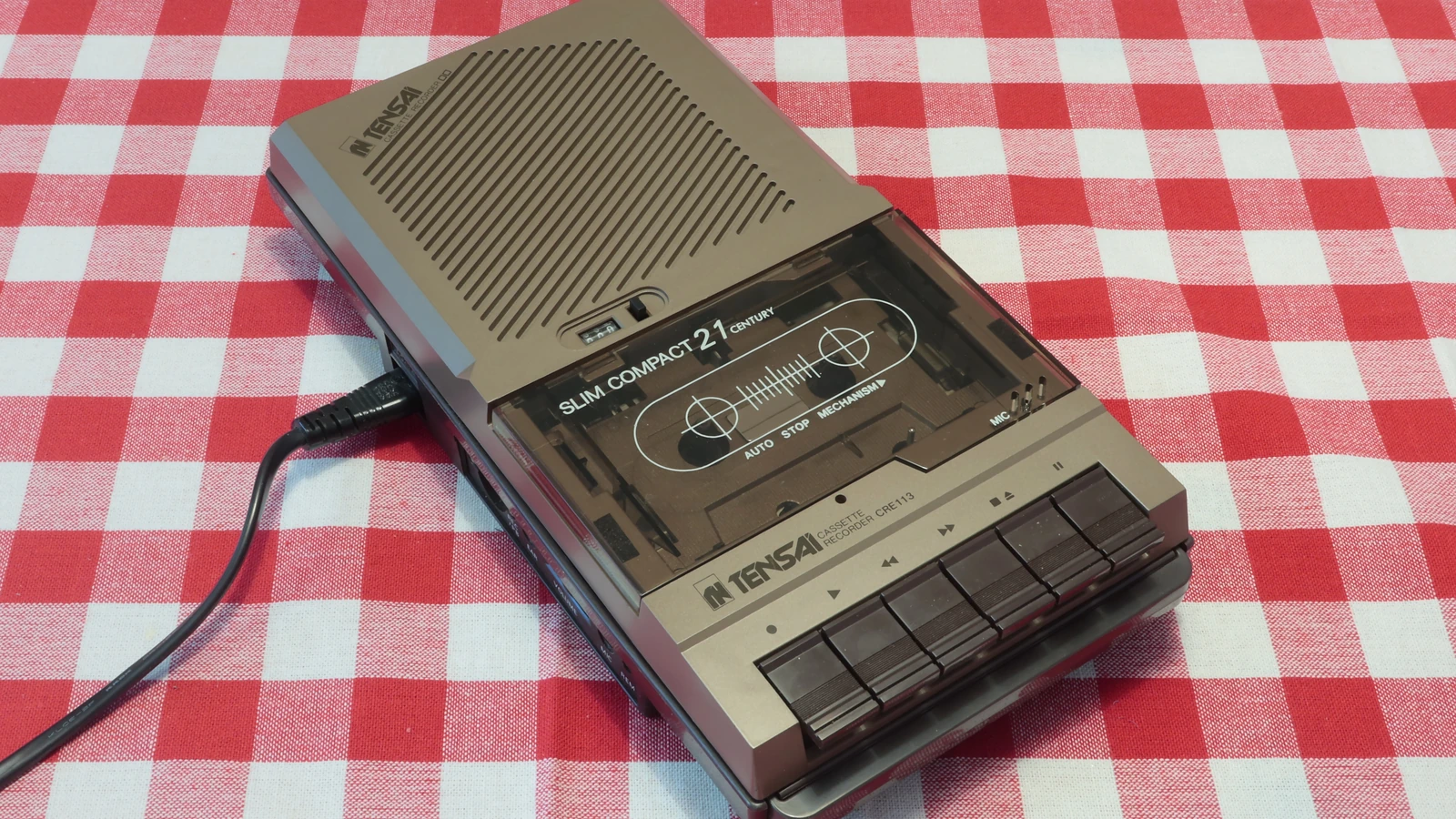
You can feel nostalgic for a period before you were born because emotional connections to the past can develop through family stories, photographs, films and music—even without a memory of living through that time. Researchers call this historical nostalgia. You might be drawn to an imagined way of life, a sense of belonging or an activity you would like to try today. But that feeling does not prove the era was better in every respect.
The American Psychological Association revisited the topic on November 1, 2026, reporting on younger people’s interest in decades they never experienced. The key is to distinguish what controlled research has demonstrated, what opinion surveys describe and what remains a plausible explanation for an individual’s experience.
What is the difference between personal and historical nostalgia?
Personal nostalgia concerns experiences from your own life: a school trip, a family gathering or a song associated with your first job. Historical nostalgia looks toward an era that predates your lifetime. The feelings can overlap. A recording made before you were born may still be part of your childhood memories if a family member played it often.
Consider someone born in 2001 who listens to a radio recording from the 1960s. If the attraction comes from an imagined picture of life in that decade, that is closer to historical nostalgia. If the recording also brings back memories of listening with a grandparent in 2010, personal nostalgia is involved too. The age of an object alone does not determine the type of nostalgia it evokes.
What is anemoia, and is it a psychological diagnosis?
Anemoia is a word used to describe nostalgia for a time you have never experienced. It is a literary coinage created by John Koenig for The Dictionary of Obscure Sorrows. It is not a medical condition or a formal mental-health diagnosis. Historical nostalgia, by contrast, is the research term used for the phenomenon discussed here.
How can someone else’s past begin to feel familiar?
Family stories can pass on an emotion without passing on a memory
You might know a house demolished before your birth only from your mother’s descriptions. Later, finding photographs of it may make you feel surprisingly attached to the place. That does not mean you acquired a firsthand memory of the house; the connection grew from a story, an image and your relationship with the person who told it.
A 2018 study in the journal Memory tested how nostalgia could be transmitted across generations through written accounts. Younger readers who encountered nostalgic stories written by older adults reported more nostalgia than those who read ordinary accounts, alongside stronger social connection, self-continuity and meaning in life. The results support the possibility of emotional transmission; they do not mean readers lived through the events or that the effects necessarily last.
Old music and objects can help us explore who we are
An interest in film cameras or vintage furniture might be an aesthetic preference or an opportunity to learn and connect with fellow enthusiasts. Not every appreciation of an old object is nostalgia: someone may love the sound of an instrument or its craftsmanship without wishing to live in the period when it was made.
A study involving 600 analog-photography users in southeastern China illustrates this complexity. Using surveys and interviews, researchers examined links between film photography, identity, well-being and social connection. The study appeared online in December 2025 in Scientific Reports volume 16 (2026). It does not establish that buying a vintage camera improves mental health, nor that its findings apply to everyone.
Digital media let us assemble a version of the past we find appealing
One feed can show an old recording, an interview with a musician and photographs of interiors from the same decade. Such material can create an attachment without direct experience of that time. But a compelling aesthetic is not a complete historical record: lighting, clothing and music are selected elements, not measures of safety, equality or living standards.
The same caution applies to modern images designed to look old. Our Arabic-language guide to the 1980s AI photo trend shows how that style is created. The resulting image may evoke the past, but it is not an archival photograph or evidence that the person depicted lived through the decade.
What did the U.S. survey actually find?
The Harris Poll conducted a survey for the Human Flourishing Lab on March 25–27, 2025, with 2,085 U.S. adults. According to the original report published in May 2025, 68% said they felt nostalgic about eras preceding their lifetime, while 69% reported being drawn to media, styles, hobbies or traditions from those periods.
These percentages reflect respondents’ agreement with survey statements. They are not clinical treatment outcomes or direct measurements of brain activity. Nor should they be applied automatically to people in other countries. Historical nostalgia is also not exclusive to Generation Z: the report found strong interest among other generations as well.
The distinction is especially important when interpreting a statement such as “I find nostalgia helpful when I feel anxious.” That is someone’s assessment of their experience. On its own, it does not show that nostalgia directly reduced anxiety or rule out the effects of relationships, hobbies and other circumstances.
Was the past better—or are we seeing only part of the picture?

An archival photograph preserves a real scene, but it also leaves questions outside the frame: Who could afford to live there? What were working and housing conditions like? Which services were available? We can appreciate what is visible without declaring an entire era superior before examining broader historical evidence.
When looking at an old picture, try writing one sentence about what you can actually observe and another about what you have inferred. “Few cars are visible in this photograph” is a limited observation; “everyone lived without stress” is an unsupported conclusion. Separating the two makes it easier to appreciate an archive without asking it to prove more than it shows.
Does nostalgia have scientifically supported psychological benefits?
A 2026 meta-analysis brought together results from many experiments on nostalgia and found evidence of psychological benefits on average, with outcomes varying by person and activity. Methods used to account for selection bias produced a modest downward adjustment in the estimated effects. This is stronger evidence than a personal anecdote, but it does not mean every form of nostalgia is equally or reliably beneficial.
Crucially, recalling a meaningful autobiographical memory in a laboratory study is different from scrolling through images of a bygone era for hours. Extending findings from the first activity to the second requires research designed for that question. Historical nostalgia should therefore not be presented as an established treatment for anxiety or depression.
How can you make your interest in the past useful today?
These prompts can help you explore what attracts you to an earlier era, without treating the exercise as a psychological test or assuming everyone shares the same motivations. Start with one specific feature you value, then choose something small you can try now:
| What appeals to you? | A question to help you reflect | Something you can try today |
|---|---|---|
| Handwritten letters | Do I enjoy slower writing or keeping a personal keepsake? | Write a short letter to someone you know |
| Listening sessions from another era | Do I miss undivided attention or sharing music with others? | Listen to a complete album with a friend |
| Old photographs of a neighborhood | Am I interested in the architecture or the story of the place? | Trace the photograph’s source and research one building in it |
| Family stories | Do I want to understand the people or document the events? | Record a relative’s account with permission, distinguishing testimony from verified facts |
You do not need to buy antiques to try these activities. Your response may change from day to day. Notice whether an activity leaves you more inclined to connect with others and take action, or whether it intensifies harsh comparisons with the present. If preoccupation with the past causes persistent distress or interferes with daily life, speaking with a qualified professional is more appropriate than self-diagnosing with a popular term.
Frequently asked questions
Does nostalgia for an era I never lived through mean I have false memories?
Not necessarily. Saying “I love imagining life in that period” is different from believing you personally remember an event that happened then. Our article on how false memories form explains errors of recollection and confusion about where information came from. Those are separate issues from feeling emotionally drawn to an earlier era.
Is this feeling limited to a particular age group?
No. The available evidence does not support portraying it as exclusive to teenagers, young adults or people over 40. Motivations and degrees of interest can differ across generations and individuals; examples from social media cannot establish how an entire age group feels.
Could this simply be an interest in history?
Yes. You might read about a period and collect photographs out of curiosity without feeling any longing for it. Not every hobby needs a psychological label. It is more useful to distinguish historical curiosity, appreciation of older designs and nostalgia—three experiences that can overlap but do not have to.
Sources and image credits
- American Psychological Association, “Why Gen Z is nostalgic for a past they never lived,” November 1, 2026 — an evidence-based feature, not a new experiment.
- Human Flourishing Lab and The Harris Poll, Historical Nostalgia in Modern America, May 2025 — original survey and methodology.
- Wildschut, Sedikides and Robertson, Memory (2018), “Sociality and intergenerational transfer of older adults’ nostalgia”.
- Weingarten and colleagues, Journal of Experimental Social Psychology (2026), “Principles of nostalgia: Meta-analytic tests”.
- Zhu, Scientific Reports, volume 16, article 2826: analog photography in southeastern China — published online December 28, 2025.
- Simon & Schuster, John Koenig’s The Dictionary of Obscure Sorrows — origin of the literary term “anemoia.”
- Cassette-recorder photo: Kecko, June 24, 2026, CC BY 4.0 — cropped to 16:9, resized and converted to WebP under the license.
- Cairo street photo: Matson Collection, Library of Congress, catalogued as 1900 — public domain, no known publication restrictions; one half of the stereo image was cropped, resized and converted to WebP.
Sources and claims reviewed November 7, 2026. The examples and suggested activities are illustrative, not a psychological assessment or a treatment program.
You may also like
 Psychology
The Illusory Truth Effect: Why Repeated Claims Seem More Believable
Why does a repeated statement start to feel true? Explore the illusory truth effect, what 182 studies reveal,…
 Psychology
What Happens When Actions Have No Consequences? Psychology Explained
Does a lack of punishment cause misconduct? Explore research on rule-following, accountability, behavior reinforcement and practical nonviolent boundaries.
 Animals
Are Dogs as Smart as Two-Year-Olds? What Research Shows
Are dogs really as intelligent as two-year-old toddlers? Learn what recent canine cognition studies reveal about words, memory,…