
Why Do I Feel Dizzy When I Stand Up? Causes and Warning Signs
Learn why you feel dizzy when standing up, how orthostatic hypotension works, what to do safely, and which symptoms need urgent care.
Contents
- What happens to blood pressure when you stand?
- Lightheadedness versus vertigo: why the distinction matters
- Common reasons you feel dizzy after standing
- What to do immediately when dizziness starts
- How to check for a possible postural blood-pressure drop
- Why it may happen in the morning, after meals, or in hot weather
- When dizziness is an emergency
- Preventing repeat episodes safely
- The bottom line
- Medical references and further reading
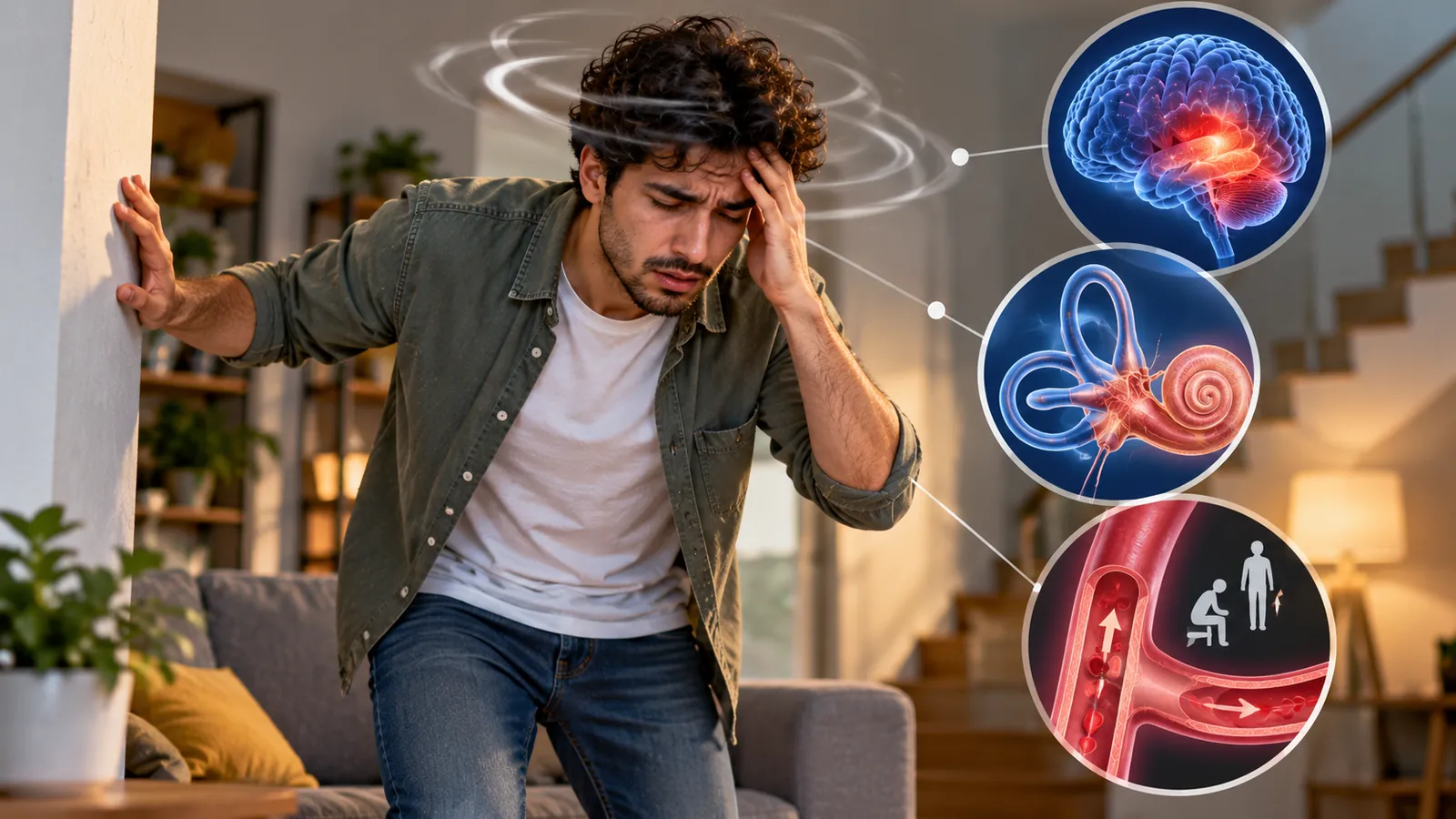
Feeling lightheaded immediately after standing is common, but recurring episodes deserve attention. One possible cause is orthostatic (postural) hypotension: a drop in blood pressure after moving upright. Not every dizzy spell is low blood pressure, however. This guide explains the mechanism, practical precautions, and warning signs without treating a symptom as a diagnosis.
What happens to blood pressure when you stand?
Gravity shifts blood toward the legs and abdomen when you rise from sitting or lying down. Less blood briefly returns to the heart. Normally, pressure sensors called baroreceptors trigger a faster heart rate and tighter blood vessels to preserve blood flow to the brain. If this response is delayed or insufficient, you may feel faint, weak, or briefly see dark spots.
Clinicians commonly define classic orthostatic hypotension as a sustained fall in systolic blood pressure of at least 20 mm Hg or diastolic pressure of at least 10 mm Hg within three minutes of standing (or during head-up tilt testing). This is a clinical definition, not something that can be established from symptoms alone.
Lightheadedness versus vertigo: why the distinction matters
Lightheadedness feels like you might faint or black out, sometimes with dimming vision. Vertigo is an illusion of spinning or movement and often points toward an inner-ear or vestibular problem. Disequilibrium is a sense of unsteadiness. People use “dizziness” for all three, so describing the exact sensation, its duration, and what triggers it helps clinicians choose the right evaluation.
Common reasons you feel dizzy after standing
- Dehydration from inadequate fluids, vomiting, diarrhea, fever, or heavy sweating can reduce circulating blood volume.
- Medications—including some blood-pressure medicines, diuretics, antidepressants, and drugs that affect blood vessels—may contribute. Never stop prescribed medication on your own.
- Prolonged bed rest, heat exposure, alcohol, or a large meal may worsen symptoms in susceptible people.
- Blood loss or anemia can cause weakness and lightheadedness; evaluation may include a blood count when clinically appropriate.
- Diabetes-related autonomic nerve dysfunction, some neurological disorders, and heart conditions can impair the normal blood-pressure response.
- A rapid heartbeat on standing may suggest another condition such as postural orthostatic tachycardia syndrome (POTS); it is not the same as orthostatic hypotension.
What to do immediately when dizziness starts
- Sit or lie down promptly to prevent a fall; if possible, elevate your legs.
- Do not drive, climb stairs, or operate machinery while you feel faint.
- Once recovered, stand slowly and use a stable support.
- Drink water if you may be dehydrated and have no medical fluid restriction; ask a clinician before increasing salt or fluids if you have heart or kidney disease.
- Seek assessment if episodes recur, worsen, cause falls, or occur alongside palpitations.
How to check for a possible postural blood-pressure drop
A clinician may measure blood pressure and pulse after five minutes lying down, then again after standing for one and three minutes. If you already have a reliable home cuff and can stand safely with another person nearby, record readings, time, symptoms, and relevant medicines for your appointment. Home readings cannot replace medical assessment; do not deliberately provoke fainting or test alone if you have collapsed before.
A single normal reading does not exclude a problem, because symptoms may fluctuate. Depending on the history, a professional may check a blood count, glucose, electrolytes, ECG, or consider additional heart or autonomic testing. Testing is tailored to the individual.
Why it may happen in the morning, after meals, or in hot weather
Some people notice worse symptoms on first getting out of bed because of overnight fluid balance and the rapid change from lying flat to standing. Heat causes blood vessels to dilate, and prolonged standing allows blood to pool in the legs. Postprandial hypotension—a pressure drop after eating—can occur especially in older adults or people with autonomic dysfunction. Recording the timing helps identify a pattern.
When dizziness is an emergency
Seek emergency medical help if dizziness accompanies chest pain, severe shortness of breath, fainting with injury, a new irregular or very rapid heartbeat, severe sudden headache, or signs of stroke such as facial droop, one-sided weakness, trouble speaking, or new trouble walking. Significant bleeding, black stools, or persistent confusion also require urgent evaluation. Do not assume these symptoms are harmless “low pressure.”
Preventing repeat episodes safely
- Rise in stages: sit on the edge of the bed, pause, then stand while holding support.
- Maintain adequate hydration unless your doctor has restricted fluids.
- Avoid prolonged standing in very hot environments and take breaks when needed.
- Discuss medication timing and possible side effects with your prescriber; do not change doses yourself.
- Ask a clinician whether compression garments, physical counter-pressure maneuvers, or other treatments suit your specific diagnosis.
- Keep a short symptom diary noting position, timing, food, hydration, pulse, and any falls.
The bottom line
A brief dizzy spell after standing can reflect a temporary failure to maintain blood flow to the brain, but inner-ear problems, heart rhythm disorders, anemia, and other causes can feel similar. Frequent, prolonged, or severe episodes should be evaluated rather than self-diagnosed.
Medical references and further reading
You may also like
 Health & Science
 Why Do Some People Age Faster Than Others? Biological Age Explained
Chronological age and biological aging are different ideas. Genes, environment and habits influence health, but no single test…