
Scientists Found an Archaeon With a Record-Tiny Genome — Is This Near the Minimum Needed for Life?
Candidatus Sukunaarchaeum mirabile has just 189 protein-coding genes and the smallest known archaeal genome, offering new clues about how little genetic machinery a cell can keep.
Contents
- What exactly is Sukunaarchaeum?
- Why the genome is so shocking
- It kept the machinery for information — but lost much of the machinery for living independently
- Is it really the smallest genome ever found?
- Why does it depend on another organism?
- A quarter of the genome is devoted to mysterious membrane proteins
- Scientists have not actually seen it yet
- Could this be close to the minimum genetic recipe for a cell?
- How does it compare with mitochondria and chloroplasts?
- Does this make it virus-like?
- What does this tell us about the definition of life?
- Where was Sukunaarchaeum found?
- Why finding relatives matters
- Could this help synthetic biology?
- Why this matters for astrobiology
- The biggest unanswered question: what is the host?
- What researchers want to do next
- Why 189 genes is not the same as 189 essential genes
- A natural experiment in biological simplification
- Frequently asked questions
- What is Candidatus Sukunaarchaeum mirabile?
- How small is its genome?
- Is it the smallest organism ever?
- Can it make its own energy?
- Is it a virus?
- Has its host been found?
- The bottom line
- Sources
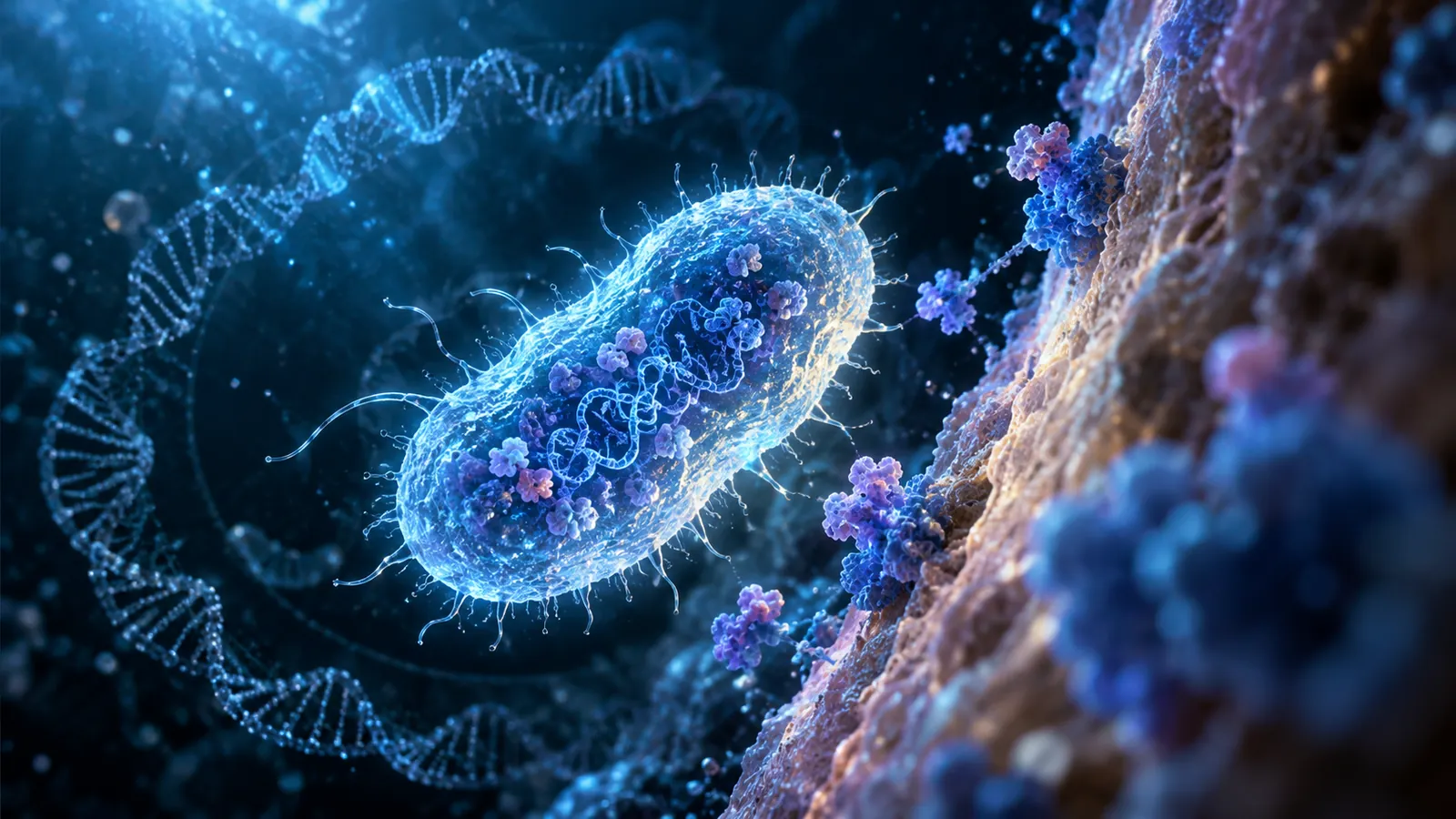
Last reviewed: October 10, 2026. Scientists have identified an extraordinary archaeon with a genome so small that it is forcing researchers to revisit a deceptively simple question: how little genetic information does a cell actually need to remain alive?
The microorganism, provisionally named Candidatus Sukunaarchaeum mirabile, carries a circular genome of only about 238,000 base pairs and just 189 protein-coding genes. That makes it the smallest archaeal genome yet analyzed, less than half the size of the previous record holder.
The peer-reviewed study was published in Current Biology on October 9, 2026. The organism is especially unusual because it appears to have discarded almost all of the genes needed to make its own nutrients and energy, while retaining much of the core machinery used to copy DNA and turn genetic information into proteins.
What exactly is Sukunaarchaeum?
Sukunaarchaeum belongs to the archaea, one of the major domains of cellular life. Archaea are single-celled organisms that can look superficially similar to bacteria, but they are genetically and biochemically distinct.
The new organism is so different from known archaea that genetic analyses suggest it may belong to a previously unrecognized deep branch of the archaeal family tree.
Researchers discovered its genome while analyzing individual marine microorganisms. They found a tiny circular DNA sequence that did not match known organisms. Further analysis showed that it carried the molecular signatures of an archaeon.
Why the genome is so shocking
A genome is the complete set of genetic instructions carried by an organism. Even very simple cells usually need genes for basic tasks such as copying DNA, building proteins, producing energy, maintaining membranes and acquiring nutrients.
Sukunaarchaeum appears to have taken extreme genome reduction much further than most known archaea.
Its genome contains only 189 protein-coding genes. For comparison, humans have roughly 20,000 protein-coding genes, while even many small free-living microbes carry hundreds or thousands.
The key point is not just the small number. It is which genes remain.
It kept the machinery for information — but lost much of the machinery for living independently
- DNA replication
- Transcription of DNA into RNA
- Translation of RNA into proteins
- Basic maintenance of genetic information
- Core ribosomal and protein-production functions
But it has lost almost all recognizable genes for generating energy and making nutrients. That strongly suggests it depends on another organism for many of the raw materials and energy resources required to survive.
In other words, it seems to preserve the machinery that says, “copy me and read my instructions,” while outsourcing much of the chemistry needed to support that process.
Is it really the smallest genome ever found?
This needs a little scientific precision. The new organism has the smallest known genome among archaea. Some viruses, organelles and extremely dependent biological systems have smaller genomes, but those are not directly comparable to an archaeal cell.
The University of Nottingham described it as having the smallest genome yet found in an organism that may still retain the ability to replicate and express its own genetic information.
So the most interesting record is not simply “smallest DNA sequence.” It is how small a cellular genetic system can become while apparently keeping its own replication and protein-expression core.
Why does it depend on another organism?
Genome reduction is common in parasites and symbionts. If an organism lives inside or next to a host that reliably provides certain nutrients, it can gradually lose genes that perform those functions.
Over millions of years, unused genes can disappear. Sukunaarchaeum appears to represent an extreme version of this process.
Researchers have not yet directly observed the organism itself or identified its host, so its exact lifestyle remains uncertain. But the genome strongly suggests a highly dependent relationship.
A quarter of the genome is devoted to mysterious membrane proteins
One of the strangest findings is that roughly a quarter of the genome encodes unusually large membrane proteins whose functions are not yet understood.
Similar oversized membrane proteins occur in some parasitic archaea and may play roles in interacting with host cells. For a genome this tiny, dedicating such a large fraction of its coding capacity to membrane proteins suggests that host interaction could be central to survival.
Scientists have not actually seen it yet
This is another important detail that can get lost in headlines. Researchers identified Sukunaarchaeum through its DNA. They have not yet cultured it in a laboratory, photographed a confirmed cell or identified the organism it depends on.
That is why its name begins with Candidatus, a designation commonly used for microorganisms that are genetically well characterized but have not yet been grown and fully described in culture.
Could this be close to the minimum genetic recipe for a cell?
Possibly — but scientists are not saying they have discovered a universal minimum. Different organisms can survive with different genetic toolkits depending on what their environments or hosts provide.
A free-living microbe needs genes for tasks that a parasite can outsource. That means there may not be one fixed number of genes that defines the minimum for all life.
Still, Sukunaarchaeum is valuable because it appears to preserve a remarkably compact set of genes for handling genetic information. It gives researchers a natural experiment in genome minimalism: what functions evolution refuses to give up even after almost everything else has been discarded.
How does it compare with mitochondria and chloroplasts?
Mitochondria and chloroplasts offer an extreme example of biological dependency. Both originated from bacteria that entered into long-term relationships with other cells. Over evolutionary time, they lost large parts of their genomes and transferred many genes to the host nucleus.
Today they cannot function as independent cells. Sukunaarchaeum may represent a different route of extreme dependency: it appears to retain more of its own replication and gene-expression machinery than an organelle does, despite having a remarkably small genome.
Does this make it virus-like?
In one sense, yes — but it is still very different from a virus. Viruses depend on host cells for replication and generally do not contain a complete cellular translation system. They hijack the host’s ribosomes and other machinery.
Sukunaarchaeum, by contrast, retains many of the genes involved in copying and expressing its own genetic information. That is exactly why scientists find it so interesting: it sits close to a conceptual boundary between cellular independence and extreme dependency.
What does this tell us about the definition of life?
There is no single universally accepted checklist that perfectly separates “life” from “non-life.” Biologists often consider abilities such as replication, metabolism, evolution and maintaining an organized cellular structure.
But organisms like Sukunaarchaeum complicate the picture because they may reproduce and evolve while outsourcing major metabolic functions.
Professor Thorsten Allers of the University of Nottingham noted that one key question is whether an organism can replicate itself and how autonomously it can do so. This discovery does not settle the definition of life; it makes the question more interesting.
Where was Sukunaarchaeum found?
The genome was discovered during single-cell genomic analysis of marine microorganisms. Related genetic sequences have also been found in other marine datasets, suggesting the lineage may not be exceptionally rare. It may simply have been overlooked because its genome is so unusual and difficult to classify.
That raises the possibility that other ultra-reduced archaeal lineages are still hiding in environmental sequencing databases.
Why finding relatives matters
If scientists can identify more members of the same lineage, they can compare their genomes and see which genes are consistently retained. Genes preserved across multiple ultra-reduced relatives would be strong candidates for functions that are truly essential to this way of life.
Researchers could also learn whether different members depend on the same host type or have evolved relationships with several kinds of marine microorganisms.
Could this help synthetic biology?
Potentially. Synthetic biologists have long been interested in minimal cells: organisms engineered to contain only the genes required for survival under controlled conditions.
A naturally evolved ultra-reduced genome provides a different perspective. Instead of asking which genes humans think are necessary, researchers can study which genes evolution actually kept after prolonged reduction.
That could inform future work on minimal cells, programmable biological systems and simplified models used to understand basic cellular processes.
It does not mean scientists can simply copy Sukunaarchaeum‘s 189 genes and build a working artificial cell. Its dependence on an unknown host means many essential functions may be supplied externally.
Why this matters for astrobiology
The discovery also has implications for thinking about life beyond Earth. When astrobiologists search for life, they often ask what minimum chemistry and cellular organization are required for a system to reproduce and evolve.
An organism with an extremely reduced genome reminds us that life can survive by distributing essential functions across relationships between organisms. A hypothetical extraterrestrial ecosystem might therefore contain organisms that appear incomplete when studied alone but function as part of tightly connected biological partnerships.
The biggest unanswered question: what is the host?
Until the host is identified, scientists cannot fully explain how Sukunaarchaeum survives. Its genome appears to lack the metabolic pathways needed to independently generate energy and nutrients, so something else must provide those resources.
Finding the host could reveal whether the relationship is parasitic, symbiotic or something in between. It could also explain the mysterious giant membrane proteins that occupy so much of the genome.
What researchers want to do next
The research team plans to investigate where the organism lives, what it depends on and how it interacts with other microorganisms. Likely goals include identifying intact cells, finding a host, examining the membrane proteins and determining how autonomous the organism really is.
Why 189 genes is not the same as 189 essential genes
It is tempting to say the organism has revealed the 189 genes required for life. That would be incorrect. Some of its genes may be specialized for interacting with a host, while essential metabolic functions may be provided by that host instead.
The number therefore describes this particular organism’s surviving genome, not a universal list of genes required by every living cell. The deeper lesson is that the minimum genetic requirements for life depend heavily on context.
A natural experiment in biological simplification
Sukunaarchaeum may be one of the clearest natural examples of a cell stripping itself down to a replication-centered core. That makes it valuable precisely because it was not designed by scientists. Evolution performed the experiment.
By comparing what disappeared with what remained, researchers can learn which cellular systems can be outsourced and which ones appear much harder to abandon.
For another example of researchers trying to understand biological systems at their most fundamental level, see our article on AI virtual cells and the effort to predict how living cells behave.
And if you enjoy discoveries that challenge familiar ideas about evolution, read the 165-million-year-old swimming mammal relative Megacauda.
Frequently asked questions
What is Candidatus Sukunaarchaeum mirabile?
It is a newly described archaeal lineage with an extremely reduced genome discovered through marine single-cell genomics.
How small is its genome?
Its genome is about 238,000 base pairs long and contains 189 protein-coding genes.
Is it the smallest organism ever?
Scientists have not yet directly observed the cell, so its physical size is not known. Its major record is having the smallest known archaeal genome.
Can it make its own energy?
Its genome appears to lack almost all recognizable pathways for producing its own energy and nutrients, suggesting strong dependence on another organism.
Is it a virus?
No. It is classified as an archaeal cellular organism, although its extreme dependence and reduced genome make comparisons with viruses scientifically interesting.
Has its host been found?
Not yet. Identifying the host is one of the key next steps.
The bottom line
The discovery of Candidatus Sukunaarchaeum mirabile offers a rare glimpse at how far a cellular genome can shrink while still retaining a core system for copying and expressing genetic information.
With only about 238,000 base pairs and 189 protein-coding genes, it is the smallest archaeal genome yet analyzed. It appears to have abandoned almost all independent metabolism and become deeply dependent on another organism.
That does not give science a final definition of the minimum genome for life. But it gives researchers one of the most extreme natural examples yet of life reduced to its genetic essentials.
Sometimes the best way to understand what life needs is to find an organism that has thrown almost everything else away.
Sources
University of Tsukuba — Research announcement on Sukunaarchaeum and its 238,000-base-pair genome.
You may also like
 Science & Curiosities
 A 2-Million-Year-Old Adult Homo erectus Fossil Is Rewriting an Early Human Timeline
An adult Homo erectus skull fragment from Drimolen, South Africa, strengthens evidence that the species was present there…
 Science & Curiosities
 James Webb Detects Changing Water Clouds Beyond Our Solar System for the First Time
Webb monitored the nearby brown dwarf WISE 0855 for 11 hours and directly detected water clouds changing thickness…
 Science & Curiosities
 Astronomers Detect the Most Distant Fast Radio Burst Ever Found — It Traveled More Than 10 Billion Years
Astronomers traced FRB 20240304B to a tiny galaxy seen more than 10.7 billion years ago, setting a new…