
Is Hot Food More Filling Than Cold Food? What Studies Show
Do hot meals keep you full for longer? Compare experiments on food temperature, expected satiety, gut hormones and soup—and learn what matters more.
Contents
- Is hot food more filling than cold food?
- The research: four studies, four different questions
- A direct test of hot and cold juice did not show a decisive advantage
- Why cold food may lead to buying extra snacks
- A 2024 hormone study offers a clue—not a final answer
- Soup may be filling—but that is not proof about temperature
- Three reasons a warm meal can feel more satisfying
- What matters more than temperature for staying full
- Hot versus cold: four everyday comparisons
- How to build a more satisfying meal
- Is very hot food or drink better? No—and temperature can matter for safety
- A simple observation you can make at home
- Frequently asked questions
- Does warm food slow digestion?
- Is soup always more filling than salad?
- Does cold food cause weight gain?
- Does reheating food add calories?
- Bottom line
- Original research and official sources
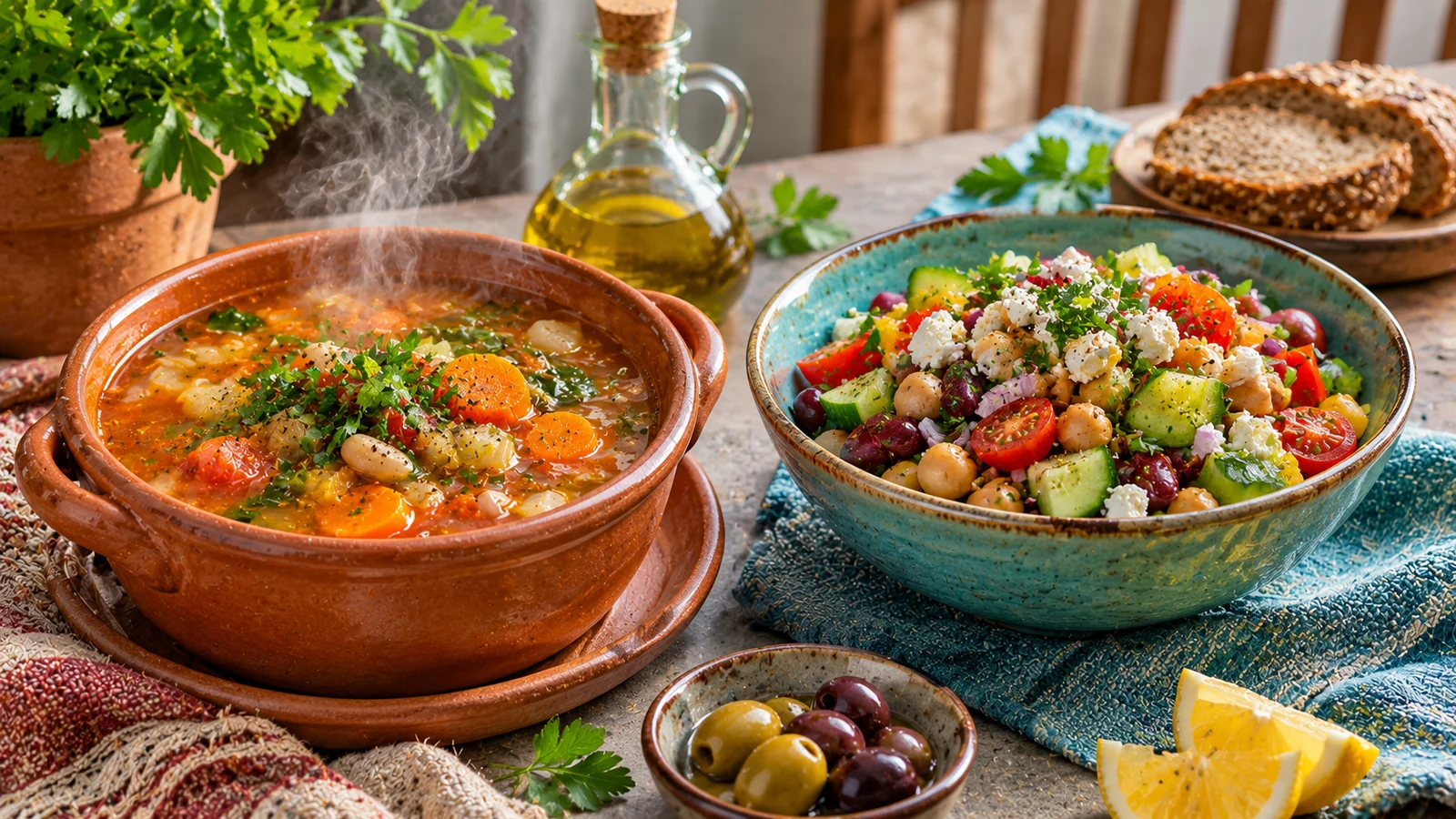
Not necessarily. A warm meal may feel more satisfying, and serving temperature can affect what people expect to fill them up. A small experiment also found changes in appetite-related gut hormones. But controlled evidence does not establish that every hot meal keeps people full longer than the same meal served cold. Food composition, portion size and eating pace still matter.
The key is to separate three different outcomes: expected satiety (how filling a food seems), reported fullness (how full someone says they feel) and actual subsequent intake (what they eat next). A result for one is not proof of the others.
Is hot food more filling than cold food?
Some hot foods release more aroma, have a different texture and encourage slower bites. Those sensory and behavioral effects may shape the eating experience. Yet temperature alone does not automatically change the protein, fiber or energy in a fixed serving. If you warm a bowl of lentils without adding ingredients, you have not manufactured extra satiety nutrients.
That distinction matters because an article about cold salad versus hot creamy soup often compares completely different recipes. A fairer test keeps the food, portion and energy content as similar as possible and alters only the serving temperature.
The research: four studies, four different questions
| Study | What it measured | Finding | Important limitation |
|---|---|---|---|
| Rolls et al., 1990 | Hot versus cold vegetable juice before a second course | No significant difference in later intake between the two temperatures | One type of drink and short-term testing |
| Baskentli et al., 2021 | Expected fullness and add-on purchases | Cold items led to more complementary purchases and lower expected satiety | Purchasing is not a direct test of prolonged physiological fullness |
| Hamid et al., 2024 | Gut hormones after different meal temperatures in 13 adults | Hot meals changed GLP-1 and CCK responses | Small sample; weak link with subjective satiety and subsequent intake |
| Flood & Rolls, 2007 | Soup starter versus no soup in 60 adults | Around 20% lower total lunch energy in the trial | Soup composition and volume, not serving heat alone |
A direct test of hot and cold juice did not show a decisive advantage
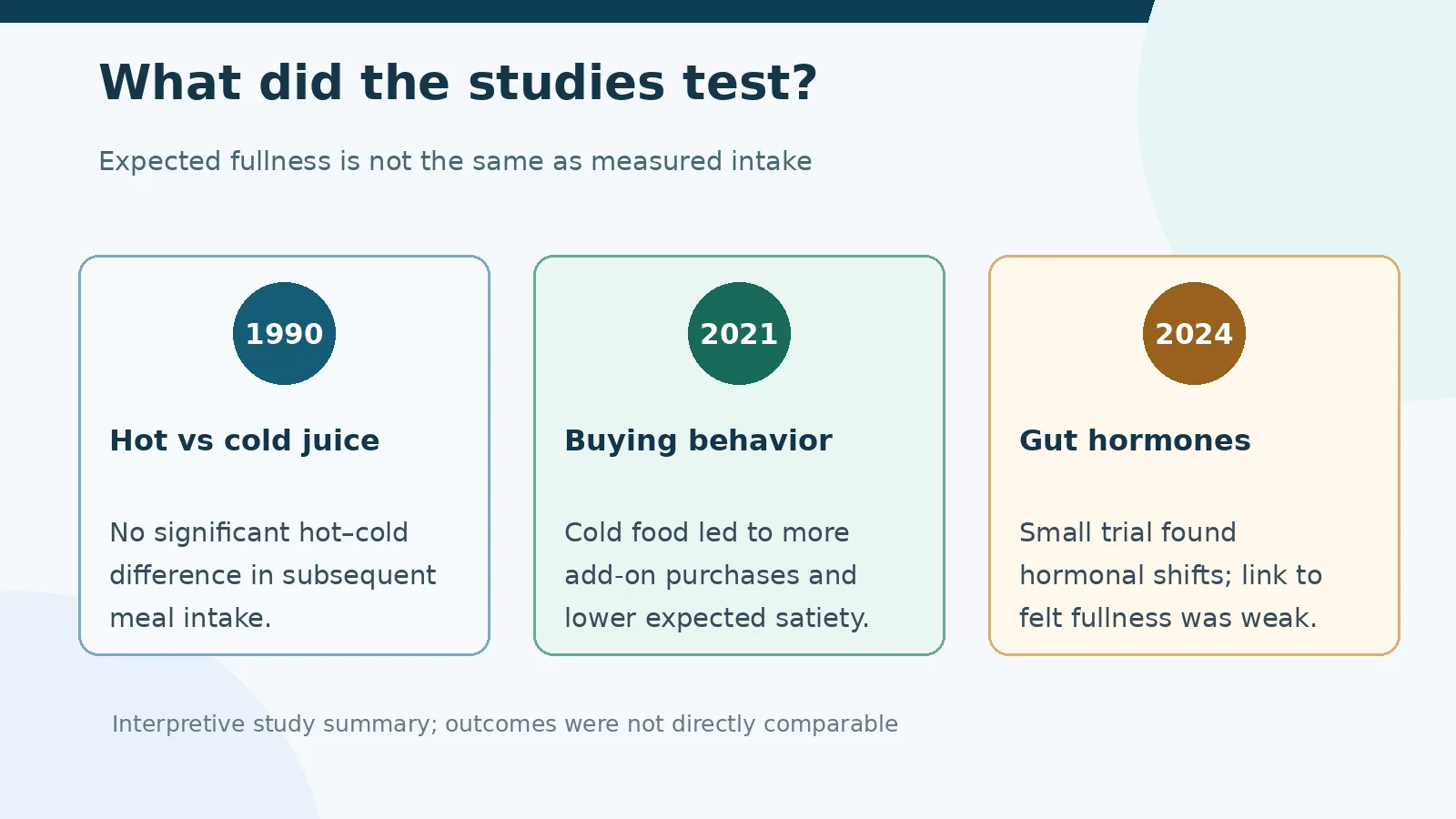
In a 1990 experiment, participants received vegetable juice served hot (60–62°C) or cold (1°C), before being offered grilled-cheese sandwiches. Researchers did not find a statistically significant hot–cold difference in subsequent food intake. The study is narrow, but it directly challenges the confident claim that serving temperature must determine how much you eat next. Read the original trial.
Why cold food may lead to buying extra snacks
The 2021 Appetite paper combined field and laboratory studies. People choosing cold foods or drinks were more likely to select add-on items, and expected the cold option to be less filling. These findings speak to consumer expectations and purchase decisions, not proof that a hot sandwich changes metabolism or suppresses hunger for a fixed number of hours. Original research.
A 2024 hormone study offers a clue—not a final answer
Thirteen healthy adults consumed higher-carbohydrate, higher-protein and higher-fat meals at different serving temperatures. Measurements of GLP-1 and CCK, hormones involved in appetite regulation, differed across conditions, with stronger responses for some hot-meal comparisons. However, the paper reported that relationships with subjective appetite and food eaten later were weak. The participants were young and of normal BMI, so the findings cannot be generalized to every population or turned into a weight-loss promise. Study details.
Soup may be filling—but that is not proof about temperature
A randomized crossover experiment involving 60 adults found that a starter of low-energy-density soup reduced total lunch energy intake by about 20% compared with no soup starter. Soup adds water and volume while supplying relatively modest energy in the tested recipes. The experiment compared soup formats and their presence at lunch; it did not isolate hot serving temperature as the cause. Original soup trial.
Three reasons a warm meal can feel more satisfying
- Sensory appeal: Heat changes aroma release, fat texture and mouthfeel. These changes can improve some foods while making others less appealing; preference is not universal.
- Eating pace: A warm dish may encourage smaller bites and more pauses. A meta-analysis of 22 studies linked slower eating with reduced intake during the meal, but did not demonstrate a consistent reduction in later hunger.
- Expectation: People may have learned to think of a cooked, warm dish as a complete meal and a chilled item as a snack. That belief can shape purchasing behavior even before digestion begins.
The eating-rate evidence concerns how quickly people eat, not whether their food is hot: 2014 systematic review and meta-analysis.
What matters more than temperature for staying full
For a practical meal choice, compare nutrient composition and quantity first. Protein, dietary fiber, water-rich foods and energy density are useful factors; personal appetite, activity and sleep also vary. Feeling full at the end of lunch and delaying the return of hunger are related but not identical outcomes.
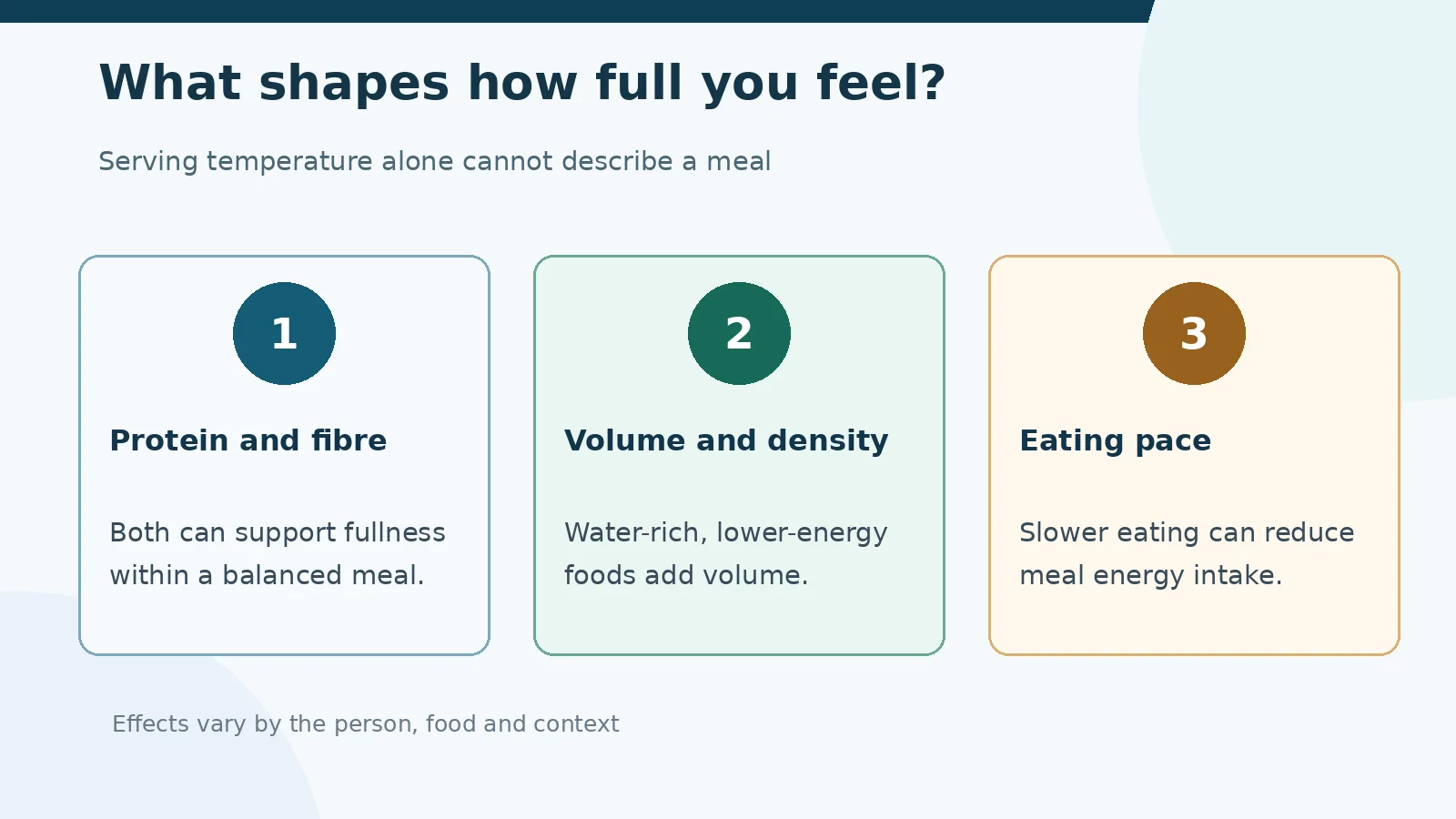
- Protein: Eggs, fish, yogurt, tofu and beans can contribute to a satisfying meal.
- Fiber: Vegetables, lentils, oats and whole grains add bulk and can support appetite regulation.
- Volume: Water-rich vegetables and broth-based dishes can increase serving volume for less energy than many dense foods.
- Additions: Oil, cream, sugar and rich sauces can change calorie content substantially, regardless of serving temperature.
Hot versus cold: four everyday comparisons
| Pair | Better question than “Which is hotter?” | What to do |
|---|---|---|
| Warm lentil soup vs chilled lentil salad | Are the lentil, oil and total portions similar? | Both can be filling; compare actual ingredients |
| Porridge vs overnight oats | How much oatmeal, milk, sugar and added protein? | Neither wins based on temperature alone |
| Warm boiled potatoes vs cold potato salad | Does one contain a heavy mayonnaise or oil dressing? | Check the recipe rather than temperature |
| Hot vegetable soup vs ice cream | Do they contain similar fiber, water, protein and calories? | This compares different foods, not the effect of heat |
How to build a more satisfying meal
- Include a reasonable protein source and some fiber-rich foods you enjoy.
- Use vegetables or other water-rich foods to add volume where appropriate.
- Choose a serving temperature you find comfortable; hotter is not inherently healthier.
- Eat at a manageable pace rather than forcing yourself to wait for scalding food to cool in your mouth.
- When using soup as a starter, consider its ingredients, portion and the rest of the meal.
Is very hot food or drink better? No—and temperature can matter for safety
“Warm enough to enjoy” should not become “as hot as possible.” The International Agency for Research on Cancer classified drinking very hot beverages (above about 65°C) as probably carcinogenic to humans, based on evidence relating to oesophageal cancer. This classification concerns beverages, and should not be indiscriminately applied to all hot foods or to a comfortable warm drink. Let scalding food and drink cool before consumption. IARC assessment.
A simple observation you can make at home
If you are curious about your own preferences, try the same recipe in similar portions on separate days, once comfortably warm and once safely chilled. Note your hunger beforehand, how satisfying the meal tastes and when you next feel hungry. This is not a controlled scientific experiment: sleep, time of day, stress and physical activity may all differ. Follow safe food-storage practices rather than leaving perishable food at room temperature.
Frequently asked questions
Does warm food slow digestion?
There is not enough evidence to claim that warmer serving temperature consistently slows digestion or extends fullness across foods and populations. Meal composition and other factors also influence digestion.
Is soup always more filling than salad?
No. A broth-based vegetable soup may provide generous volume at a lower energy density, while a salad containing beans, lean protein and fiber may also be highly satisfying. The recipe and portion matter.
Does cold food cause weight gain?
Being cold does not make food inherently fattening. Purchase studies cannot establish that cold foods cause weight gain, and dietary patterns matter much more than a single serving-temperature choice.
Does reheating food add calories?
Heating a fixed dish does not add energy by itself. But cooking can change water content and weight, and added oil, butter or sauces do contribute calories.
Bottom line
Warm meals may feel more satisfying, but there is no universal hot-food satiety rule. Research on expectations, hormones and actual eating behavior is mixed and measures different things. For lasting fullness, start with nutrients, portions and eating pace, then choose the serving temperature you enjoy safely.
Original research and official sources
- Rolls et al. (1990), hot versus cold vegetable juice — Appetite.
- Baskentli et al. (2021), serving temperature and expected satiety — Appetite.
- Hamid et al. (2024), food temperature and GLP-1/CCK — Journal of Family & Community Medicine.
- Flood & Rolls (2007), soup and total meal intake — Appetite.
- Robinson et al. (2014), eating-rate meta-analysis — AJCN.
- IARC, very hot beverage safety evaluation.
Related Horus Valley reading: Plant-based milk versus dairy: reading nutrient labels and protein content.