
Why Spain Is Holding Back 12% of Its Olive Oil Production
Spain’s 12% olive oil withdrawal explained: who must store it, the November 2026 start, the September 2027 deadline and what it means for shoppers.
Contents
- What exactly has Spain ordered?
- Why withdraw oil after a strong harvest?
- A worked example of the 12% calculation
- Is the oil unsafe, destroyed or banned from export?
- Will olive oil become more expensive in Europe or the US?
- What should shoppers and small food businesses do?
- What should readers watch next?
- Sources and image credit
Spain has ordered olive mills to keep 12% of their declared production off the market temporarily, starting with November 2026 production. The oil must remain stored until 30 September 2027 under the published resolution. This is a supply-management measure, not a food-safety recall.
Checked: 7 November 2026. The rule applies to Spain’s 2026/27 olive-oil campaign. It does not require households to return bottles or remove 12% of the oil already on supermarket shelves.
What exactly has Spain ordered?
The resolution dated 4 November and published on 6 November 2026 requires each mill to maintain the specified share in its own or third-party storage. The obligation is measured against accumulated declared production from November. October 2026 and earlier production are excluded from this calculation.
| Question | What the published measure says |
|---|---|
| Who must hold the oil? | Olive mills covered by the Spanish resolution. |
| How much? | 12% of the relevant declared production, maintained on an accumulated basis. |
| When does the production calculation start? | November 2026. |
| How long must it stay off the market? | Until 30 September 2027 under the current resolution. |
| What records matter? | Operators must be able to document the amount held and its storage facilities. |
The resolution took effect on publication and allows modification under the underlying marketing order. The September date is therefore the current rule’s endpoint, not a guarantee that no later decision can change the scheme.
Why withdraw oil after a strong harvest?
Spain’s Agriculture Ministry announcement of 6 November describes the aim as stabilising the market and avoiding disruption from excess supply. Its forecast puts 2026/27 production at about 1.60 million tonnes, 23% above the previous campaign, alongside opening stocks of about 357,000 tonnes. The ministry estimates the temporary withdrawal at roughly 188,000 tonnes.
The underlying marketing order establishes the conditions for activating this mechanism. Its legal framework is about regulating supply; it is not a power to set a recommended or compulsory selling price. That distinction matters when interpreting claims that the government has fixed the future price of olive oil.
A worked example of the 12% calculation
Imagine a mill declares 100 tonnes of relevant production in November, then another 50 tonnes in December. The following is an illustrative calculation, not an actual mill’s production record:
| Stage | Accumulated relevant production | 12% to remain stored |
|---|---|---|
| After November declaration | 100 tonnes | 12 tonnes |
| After December declaration | 150 tonnes | 18 tonnes |
In this example, the accumulated storage requirement rises by six tonnes after December’s additional production. The December total is not 12% of November’s output plus 12% of the entire accumulated output again. Operators should use their actual declarations and the competent authority’s control instructions for compliance.
Also avoid multiplying 12% by an estimate of the entire harvest and assuming the result must match the ministry’s 188,000-tonne figure exactly. The declared production covered by the rule starts in November, while the campaign estimate and opening stocks describe different quantities.
Is the oil unsafe, destroyed or banned from export?
The stated purpose is market management. The ministry says mills may choose which olive-oil category they store, and the resolution provides for storage rather than destruction. It does not announce a blanket ban on all Spanish olive-oil exports or a consumer product recall.
If a separate safety alert affects a bottle you own, read that alert for the specific brand, batch and instructions. The word “withdrawal” in a report about supply controls should not be treated as evidence that your bottle is contaminated.
Will olive oil become more expensive in Europe or the US?
The resolution alone cannot establish a future supermarket price. Holding back some new supply is intended to support market stability, but that does not reveal how an individual retailer will price a bottle, how quickly contracts change, or what importers in another country will pay.
A useful price claim needs a market, date, product category and comparable pack size. A mill-gate price in euros per kilogram is not a retail price per litre in France, the UK or the US. Exchange rates, packaging and distribution can further separate those figures. Treat any precise forecast of your next shopping bill as a forecast requiring its own evidence.
What should shoppers and small food businesses do?
- Check the price per litre for the same oil category and pack size instead of comparing bottle prices alone.
- Avoid buying excess stock solely because a headline says oil has been withdrawn. Match purchases to expected use and storage space.
- If you run a restaurant or shop, ask suppliers about availability, delivery dates and quoted prices; the Spanish rule does not establish your individual contract terms.
- For storage guidance, consult the International Olive Council’s standards and best-practice resources and the product label.
What should readers watch next?
The most useful developments would be a change to the withdrawal percentage, a revised end date, a new control instruction or reliable market data showing what has happened to prices. The original order permits review of the mechanism; a headline about current storage should not be read as a fixed prediction for the entire season.
Sources and image credit
- BOE: resolution fixing the 12% withdrawal, published 6 November 2026.
- BOE: marketing order APA/1145/2026, published 30 October 2026.
- Spanish Agriculture Ministry: explanation of the measure and production estimates.
- International Olive Council: standards, methods and storage guidance.
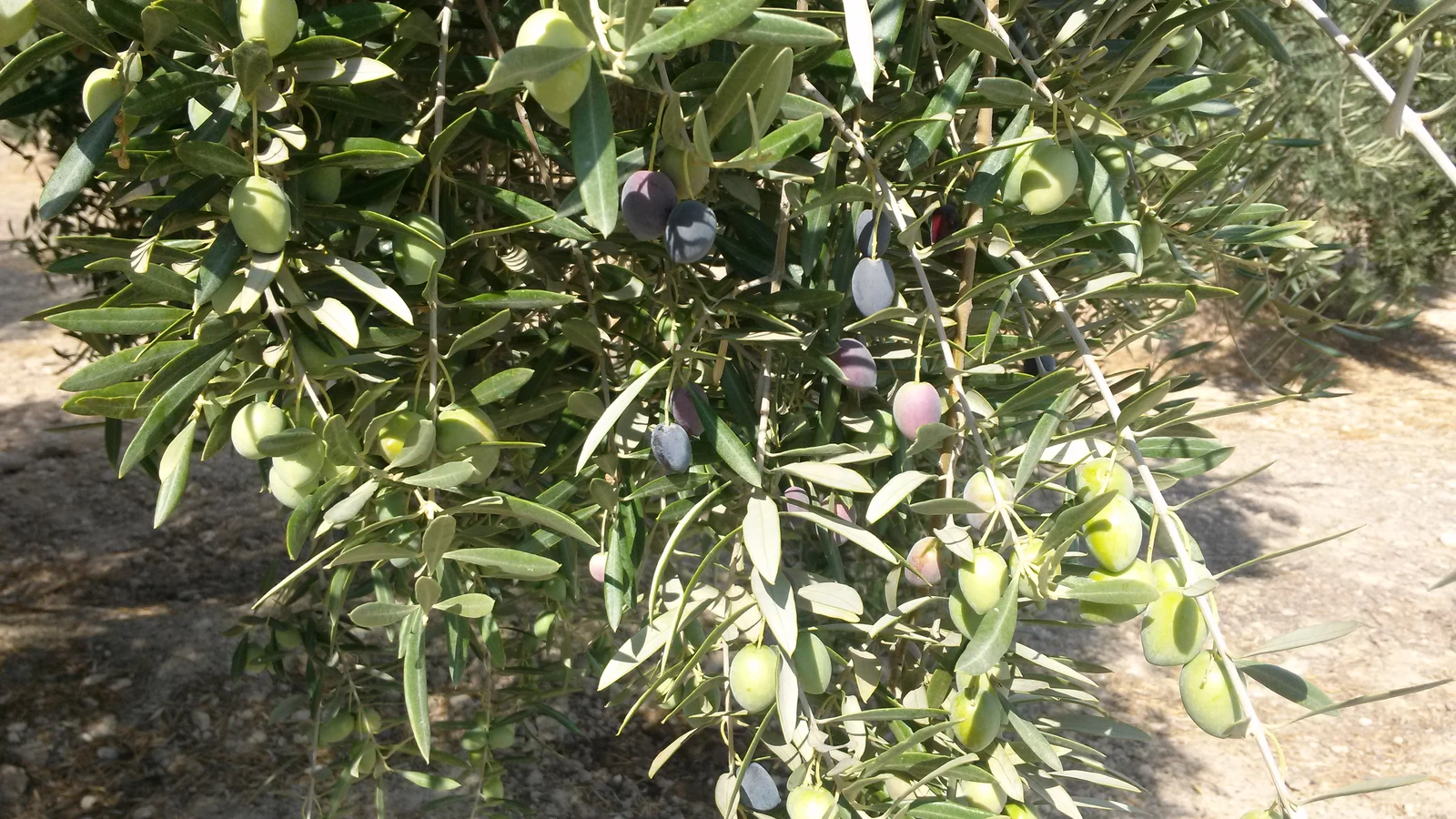
Image: Veinticuatro de Jahén, Picual olives north of Jaén, Spain (22 September 2017), CC BY-SA 4.0. Cropped to 16:9, resized and converted to WebP; the adapted image remains under the same licence. This archival image does not show the 2026 harvest or oil held under the new resolution.