
Can Humans Live Without Sleep? What Happens to the Brain After 24, 48 and 72 Hours
What happens to the brain after 24, 48 or 72 hours without sleep? Learn about microsleeps, hallucinations, recovery, and evidence-based safety.
Contents
- Can humans survive without sleep?
- What the brain does during sleep
- One sleepless night: attention and judgment
- What may happen after 24–48 hours awake
- 48–72 hours: hallucinations and disorganized thinking
- Microsleep: the brain briefly switches off
- Can caffeine replace sleep?
- Can a person die from staying awake?
- Acute versus chronic sleep deprivation
- Does one recovery night undo the damage?
- When sleeplessness needs urgent help
- Evidence-based ways to protect sleep
- The bottom line
- Sources and further reading
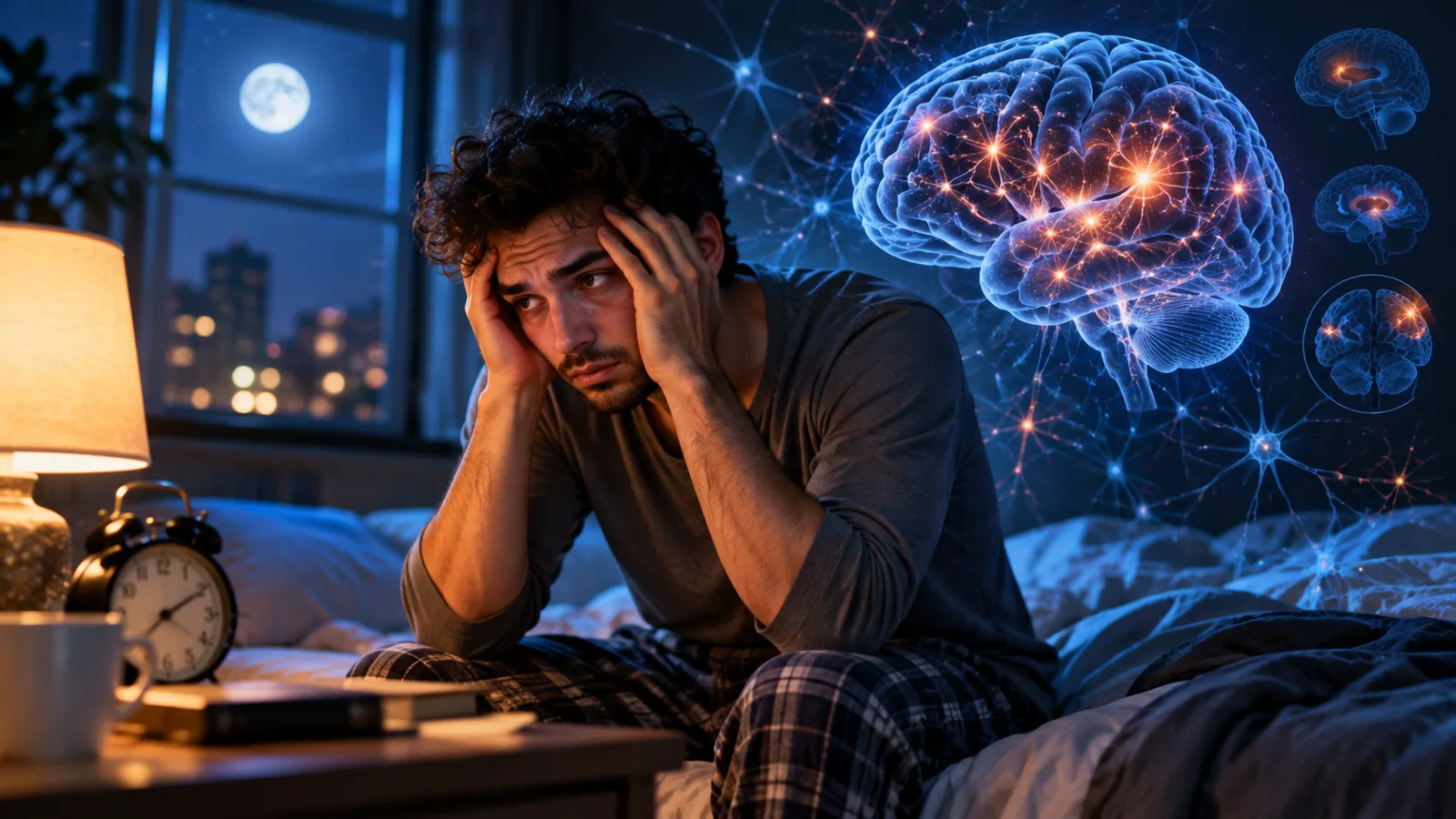
Can humans survive without sleep?
Sleep is not simply a pause in brain activity. It is a recurring biological state that supports attention, memory, emotional regulation, and physical health. Humans can remain awake for extended periods, but wakefulness is not the same as functioning safely. Researchers have not established one universal number of sleepless hours after which every person will die. Individual responses vary, and deliberately testing the limits of sleep deprivation is unsafe.
What the brain does during sleep
Sleep includes multiple stages with distinct patterns of neural activity. These stages contribute to learning, memory processing, and the regulation of emotion and alertness. Resting quietly or drinking caffeine cannot fully substitute for these functions. Importantly, a sleep-deprived person may feel more capable than their actual performance on attention and reaction-time tasks would suggest.
One sleepless night: attention and judgment
After an entire night awake, many people experience pronounced sleepiness, slower reactions, distractibility, and more frequent mistakes. Holding information in working memory or following complex instructions can become difficult. Irritability and impulsive decisions may increase. These effects matter most when driving, operating machinery, providing care, or making consequential decisions. Feeling awake is not reliable proof that performance is intact.
What may happen after 24–48 hours awake
With more prolonged total sleep loss, difficulties with concentration and time perception may become more severe. Some individuals develop visual distortions or misinterpret ordinary sensory information. A systematic review of historical sleep-deprivation studies described changes emerging within roughly 24–48 hours in some participants. This is an observational range, not a fixed countdown: symptoms vary with individual factors and the conditions of each study.
These time ranges are not a personal experiment or a reliable symptom schedule; risks begin earlier.
48–72 hours: hallucinations and disorganized thinking
Extended sleep deprivation can be associated with increasingly complex perceptual disturbances, including hallucinations and disorganized thoughts. A review published in Frontiers in Psychiatry found that severe symptoms tended to progress with time awake in the historical studies it analyzed. However, modern ethical limits prevent controlled experiments exposing volunteers to extremely long deprivation, and not everyone experiences the same symptoms on the same timetable. Hallucinations should never be treated as a normal challenge to push through.
Microsleep: the brain briefly switches off
Microsleeps are involuntary episodes of sleep that can last only a few seconds. Someone may appear awake, sometimes even with open eyes, while failing to process information. A driver can miss a signal or drift from a lane without remembering a moment of sleep. CDC occupational-health guidance warns that microsleeps cannot be reliably controlled by willpower. Loud music, open windows, or energy drinks are not dependable protection.
Can caffeine replace sleep?
Caffeine may temporarily improve subjective alertness, but it does not restore every cognitive function affected by sleep deprivation and cannot guarantee protection from microsleeps. Too much caffeine can contribute to anxiety, palpitations, and further difficulty sleeping. Short naps may temporarily reduce sleepiness for some people, yet they are not a complete solution to chronic insufficient sleep.
If you must drive or operate machinery, sleepiness alone is a reason to postpone the task.
Can a person die from staying awake?
There is no medically established universal deadline at which a healthy human necessarily dies from a lack of sleep. Reports of extreme wakefulness do not establish a safe or lethal threshold, partly because unnoticed microsleeps make complete wakefulness hard to verify. The practical dangers are serious well before any hypothetical limit: crashes, occupational errors, impaired judgment, and severe mental disturbances. Rare neurological diseases that profoundly disrupt sleep should not be confused with ordinary voluntary sleep deprivation.
Acute versus chronic sleep deprivation
Acute deprivation describes a short episode of major sleep loss. Chronic sleep restriction means repeatedly obtaining less sleep than the body needs over weeks or months. Acute deprivation rapidly impairs vigilance, while persistent short sleep is associated with problems affecting mood, metabolic health, blood pressure, and cardiovascular risk. Association does not mean sleep alone explains every illness. CDC recommends at least seven hours per night for adults aged 18–60.
Does one recovery night undo the damage?
Adequate sleep helps reverse many immediate effects of sleep loss, but recovery varies. After repeated short nights, some measures of attention and performance may take longer to normalize than subjective sleepiness. It is misleading to promise that a single long sleep will instantly repair all effects or that every missed hour can be paid back on a simple one-to-one schedule. Consistency matters more than occasional catch-up nights.
Do not treat chronic insomnia with stimulants alone; clinical assessment can identify the cause.
When sleeplessness needs urgent help
Seek urgent medical evaluation for severe confusion, hallucinations, unusual behavior, or an inability to sleep for multiple nights accompanied by worsening symptoms. Do not drive when sleepy; stop in a safe place and arrange another way home. Avoid taking sedatives without appropriate medical advice or combining them with alcohol. Persistent insomnia, loud snoring, or suspected breathing interruptions during sleep also deserve professional assessment.
Evidence-based ways to protect sleep
Keep a consistent bedtime and wake-up time, reduce bright light and screens close to bedtime, avoid late caffeine, and make the bedroom dark, quiet, and comfortable. Regular daytime activity and morning daylight may help. If sleep problems continue despite these steps, consider evaluation for insomnia, sleep apnea, medication effects, or another underlying condition rather than relying on increasingly strong stimulants or self-prescribed sleeping pills.
The bottom line
People may remain awake for long periods, but brain performance and safety can deteriorate long before severe hallucinations appear. Science does not support a universal safe duration for going without sleep. Adequate, regular sleep is an essential biological need—not an optional productivity habit.